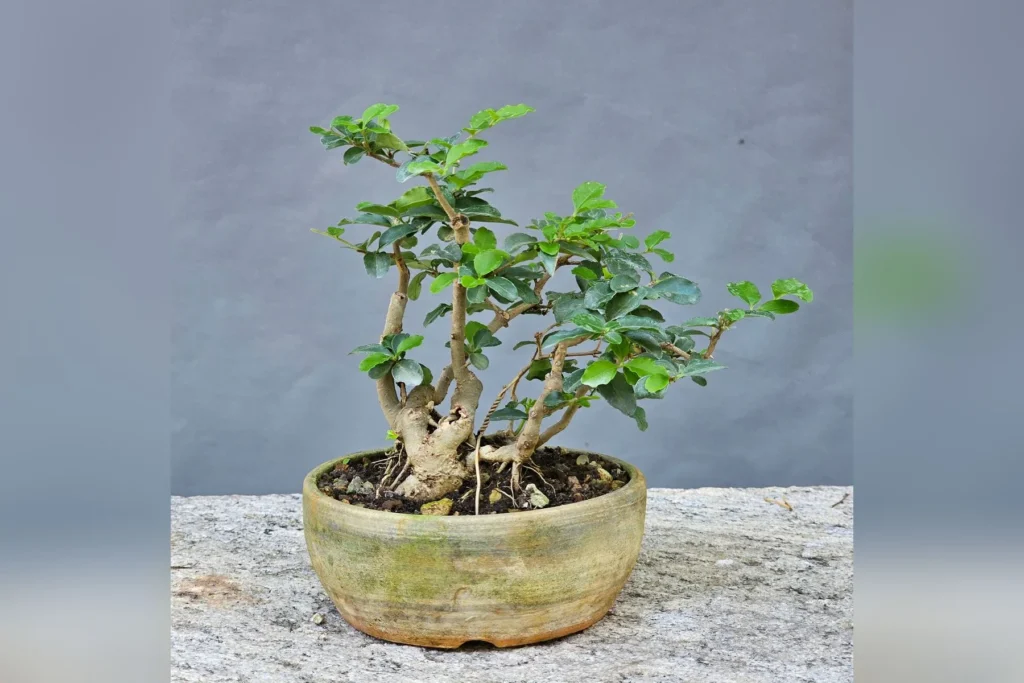
The Ligustrum vulgare, or common privet, is a semi-evergreen species admired for its adaptability, dense foliage, and small, glossy leaves. Native to Europe and parts of Asia, it thrives as both a hedge plant and an elegant bonsai specimen. Fast-growing and responsive to pruning, this tree offers beginners and experienced enthusiasts alike an engaging journey, rewarding care with lush green growth and fine ramification.
The privet at a glance
- Light
- Full sun, 6+ h direct; light afternoon shade above 30 °C
- Water
- Evenly moist — fine roots resent even brief drought
- Temperature
- Hardy to –5 °C; shelter below that
- Feeding
- Every 2 weeks, early spring to mid-autumn — a hungry grower
- Repotting
- Early spring; every 2–3 years
- Location
- Outdoors all year; semi-evergreen — some winter leaf drop is normal
A vigorous and forgiving species, the common privet can adapt to a wide range of climates and light conditions. Its flexible branches and small leaves make it ideal for various bonsai styles, especially broom, informal upright, and forest compositions. When healthy, Ligustrum vulgare develops a dense canopy and even produces clusters of small white flowers in early summer, followed by tiny black berries that add contrast and charm.
How often should I water my privet bonsai?
Watering a privet bonsai requires maintaining steady soil moisture without allowing the roots to sit in water. This species enjoys humidity and consistent hydration, especially during its active growing period from spring to early autumn. Water thoroughly whenever the top layer of soil begins to feel slightly dry, typically every one to two days in warm weather. During very hot spells or windy conditions, daily watering may be necessary to prevent leaf wilting.
In cooler months, as the tree’s growth slows, gradually reduce the frequency but never let the soil dry out completely. The common privet’s fine roots are sensitive to drought, and even brief drying can cause leaf loss. Always use a watering can with a fine rose to ensure gentle, even watering until water runs freely from the drainage holes. Consistency is key: Ligustrum vulgare prefers evenly moist conditions over cycles of dryness and soaking.
How much light does my privet bonsai need?
Your privet bonsai thrives in bright light throughout the year, ideally receiving at least six hours of direct sunlight per day. In spring and summer, full sun encourages dense leaf growth, compact internodes, and strong new shoots — the key to achieving that fine ramification typical of mature bonsai. During hot midsummer days, especially in southern climates where temperatures exceed 30 °C (86 °F), light afternoon shade helps protect the delicate leaves from drying or scorching.
In autumn, continue to keep the bonsai in a sunny position so it can store energy for winter. As temperatures drop, it may lose part of its foliage, especially in colder regions — this is natural for semi-evergreen privets. In winter, when growth slows down, the tree benefits from a cool, bright outdoor location. Avoid dark or enclosed spots: even in dormancy, the Ligustrum vulgare still needs natural light to maintain healthy buds and prepare for spring regrowth.
What’s the best temperature for my privet bonsai?
During spring and summer, warm days and mild nights provide perfect conditions for vigorous growth and dense foliage. Ensure the soil stays evenly moist, and in very hot weather, some afternoon shade will prevent leaf burn. In autumn, as temperatures begin to cool, the common privet naturally slows its growth and may shed some leaves — a normal part of its semi-deciduous nature.
In winter, Ligustrum vulgare benefits from a period of rest in cool outdoor conditions. It can withstand light frost down to around –5 °C (23 °F) without damage, but if temperatures drop lower or strong winds are expected, move it to a sheltered area such as a cold frame, greenhouse, or protected balcony. Avoid keeping it in warm indoor environments, as this disrupts its dormancy and weakens the tree.
Fertilising your privet bonsai
This is a hungry grower. Begin feeding in early spring and continue every two weeks until mid-autumn using a balanced liquid fertiliser (for example, NPK 10-10-10). For organic options, slow-release pellets applied every 4–6 weeks also work well. During active growth, consistent feeding encourages dense foliage and strong new shoots.
Stop fertilising when growth ceases in winter, resuming as soon as new buds appear in spring.
Looking for a privet pre-bonsai?
We don’t grow Ligustrum vulgare at the nursery just yet — and hearing from readers is exactly how we decide which species to grow next.
Interested in a Privet (Ligustrum vulgare)? Leave your email and we'll let you know when it's available.
Do I need to prune my privet bonsai?
Pruning the common privet is both essential and satisfying. It tolerates heavy trimming exceptionally well — even back to old wood — and quickly produces new shoots. To maintain shape, pinch or cut back new growth to two or three leaves once shoots have extended by 4–5 pairs.
Structural pruning is best done in late winter or early spring before active growth begins. Wiring is possible throughout the growing season, though young shoots harden quickly, so monitor and adjust wires regularly.
When to repot a privet bonsai?
Repot every two to three years in early spring, before new buds start to open. Ligustrum vulgare enjoys slightly acidic to neutral, well-draining soil. A good mix is equal parts akadama, pumice, and lava rock. The root system grows rapidly, so don’t hesitate to prune back one-third of the roots during repotting to encourage fine feeder roots.
After repotting, water thoroughly and place the bonsai in partial shade for one to two weeks to allow root recovery.
Chinese privet or common privet — which one do you have?
Most privet bonsai sold in garden centres and online shops are actually the Chinese privet (Ligustrum sinense), an Asian species usually marketed as an indoor bonsai. The common privet (Ligustrum vulgare) is its European cousin: the classic hedgerow plant, fully winter-hardy and strictly an outdoor tree, with the same vigorous growth and forgiving nature that make privets so popular for bonsai.
Telling them apart takes a closer look. The Chinese privet has smaller, lighter-green leaves and keeps most of its foliage in mild conditions; the common privet has slightly larger, darker, matte leaves, and in colder regions behaves almost like a deciduous tree.
Their care overlaps almost entirely — except in winter: a Chinese privet kept as an indoor bonsai needs a bright, cool spot away from heating, while a common privet should spend its dormancy outdoors. This guide is written for Ligustrum vulgare, but if you own a Chinese privet grown outdoors, the watering, pruning and repotting advice above applies just the same.
Why is my privet bonsai losing leaves?
Leaf drop is the most common privet worry — and most of the time it’s harmless. As a semi-evergreen species, the privet naturally sheds part (or in cold regions, most) of its foliage in late autumn. That’s not a sick tree; it’s a tree going to sleep.
Leaf drop during the growing season is a different signal: it usually points to the root ball having dried out — even briefly — or, less often, to waterlogged soil. Check your watering rhythm first. Indoor-kept privets also shed leaves in response to dry heated air or a sudden change of location. Once the underlying cause is corrected, the privet’s vigour means it usually re-leafs within weeks.
Common problems
Privet bonsai are hardy, but neglect can lead to problems. Yellowing leaves often point to poor drainage or underwatering, while sparse foliage may indicate lack of light or nutrients. Pests such as aphids, scale insects, or whiteflies may appear in summer — treat early with neem oil or a mild insecticidal soap. Fungal leaf spots can occur in overly humid or shaded conditions; increase airflow and remove affected leaves if needed.
With proper watering, light, and pruning balance, the Ligustrum vulgare remains one of the most dependable and rewarding species — a resilient bonsai that reflects patience, growth, and the beauty of simplicity.