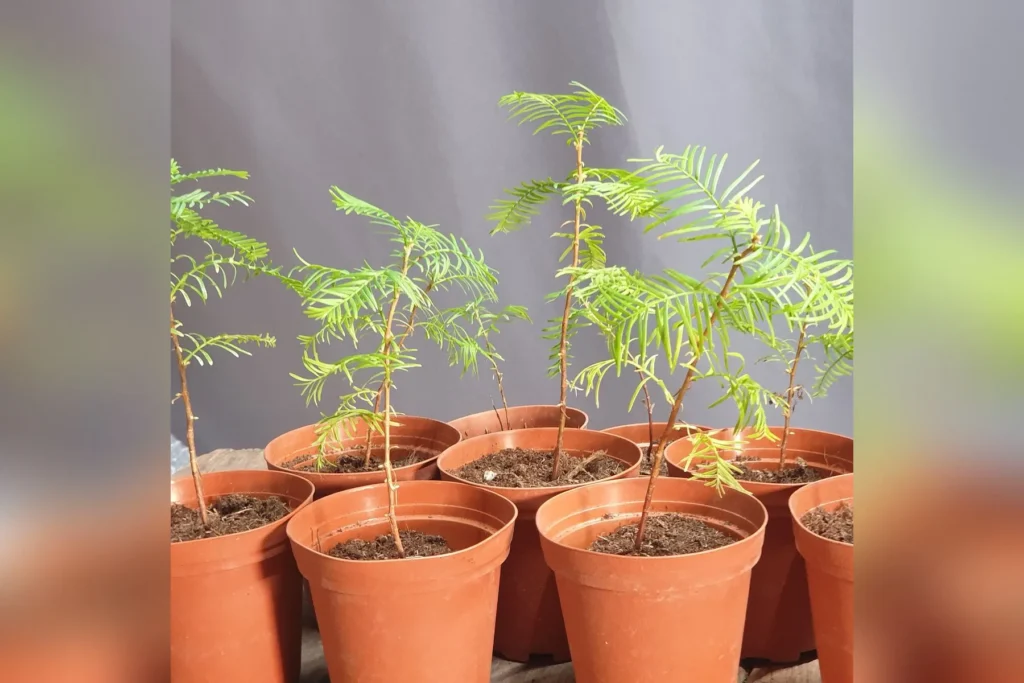
The Metasequoia glyptostroboides, also known as the dawn redwood, is one of the most ancient and majestic bonsai species in existence. Once believed to be extinct and rediscovered in China in the 1940s, it has since become a living symbol of endurance and elegance. With its fine, feather-like foliage and smooth, fluted trunk, this tree brings a sense of timelessness to any bonsai collection.
It’s particularly appreciated by enthusiasts who enjoy species that evolve dramatically through the seasons, turning from lush green in spring and summer to a warm bronze hue in autumn before shedding its needles for winter.
Metasequoia glyptostroboides at a glance
- Light
- Full sun, 6+ h direct
- Water
- Evenly moist — tolerates wet better than dry
- Temperature
- 10–28 °C; winter frost to –10 °C
- Feed
- Every 2 weeks, spring → mid-summer
- Repot
- Every 2–3 yrs (young), late winter
- Placement
- Outdoor all year
Native to central China, the dawn redwood is a deciduous conifer closely related to the bald cypress (Taxodium distichum). While both share a love for moist environments, the dawn redwood is distinguished by its opposite leaves and a more refined bark texture. It thrives in cool to mild climates and is ideal for outdoor cultivation year-round. This species grows quickly, forming a conical shape and developing a beautifully textured trunk base, making it a perfect choice for those who enjoy shaping vigorous, expressive bonsai.
Thinking about growing your own dawn redwood? Start from a seed-grown young pre-bonsai — perfect for forests and group plantings.
How often should I water my dawn redwood bonsai?
During spring and summer, when the tree grows most actively, the soil should be kept evenly moist at all times. Check the surface daily and water thoroughly as soon as it starts to feel slightly dry. In hot or windy conditions, you may even need to water twice a day. The Metasequoia glyptostroboides tolerates excess water far better than dryness, but it should never sit in stagnant water for long periods, as that can suffocate the roots.
In autumn, gradually reduce watering frequency as the foliage begins to turn golden and drop. During winter dormancy, water less often — just enough to keep the soil lightly moist so the roots don’t dry out.
How much sunlight does a dawn redwood bonsai need?
A Metasequoia glyptostroboides bonsai thrives best in full sun and should receive at least six hours of direct light every day to maintain vigorous growth, compact branching, and rich green foliage. This species loves abundant sunlight throughout the growing season: it’s a tree that truly flourishes outdoors, not indoors.
During spring and summer, place your dawn redwood in a bright, open area where it can enjoy the morning and midday sun. In regions with very hot climates, a few hours of light afternoon shade can help prevent the delicate, feathery needles from drying out. If grown in too much shade, the branches will elongate and lose density, and the tree will appear weaker overall.
In autumn, maintaining full sun exposure helps harden new wood and enhances the bark’s warm orange tone as the leaves change colour. During winter dormancy, when the tree is leafless, it can remain outdoors in a bright location, as sunlight continues to support its internal rhythm and readiness for spring.
Give it as much natural light as possible, and it will reward you with strong growth, vivid colour, and graceful seasonal transformation.
What’s the best temperature for my dawn redwood bonsai?
Its ideal temperature range is between 10 °C and 28 °C (50 °F – 82 °F), which supports steady growth and vibrant foliage throughout the growing season.
In spring and summer, warm days and cool nights provide the perfect rhythm for healthy development. The dawn redwood enjoys fresh air and humidity, so it should always be placed outdoors in a well-ventilated area. If temperatures exceed 30 °C (86 °F), provide some light afternoon shade and ensure the soil remains consistently moist to prevent needle burn.
As autumn approaches, the gradual drop in temperature triggers one of the most beautiful transformations in bonsai: the Metasequoia’s feathery leaves turn rich copper and orange before falling, marking the beginning of dormancy.
During winter, the tree prefers cold, resting conditions and can tolerate temperatures down to –10 °C (14 °F) without damage. In areas with harsher winters, it’s best to protect the roots by placing the bonsai in a cold frame, unheated greenhouse, or sheltered spot. Avoid keeping it in warm indoor environments — this would interrupt its dormancy cycle and weaken the tree over time.
Fertilising your dawn redwood bonsai
The Metasequoia glyptostroboides grows fast and responds well to regular feeding. Begin fertilising in early spring as the buds begin to swell and continue through mid-summer using a balanced fertiliser such as NPK 10-10-10. During late summer and early autumn, switch to a low-nitrogen mix (for example, 4-6-8) to help the tree prepare for dormancy and strengthen its roots before winter.
Consistent, moderate feeding promotes dense foliage and well-proportioned branch growth. Both organic pellets and diluted liquid fertilisers can be used, provided the soil remains evenly moist after application.
Start with a tree that’s ready to train
If you want to put this guide into practice, our young Metasequoia glyptostroboides pre-bonsai are grown from seed in our nursery specifically for bonsai — not garden-centre stock.
Dawn Redwood Bonsai (Metasequoia glyptostroboides) – Young Pre-Bonsai
12 €
In stockDo I need to prune my dawn redwood bonsai?
The dawn redwood is highly responsive to pruning and training, which makes it a rewarding species for bonsai design. Maintenance pruning can be carried out throughout the growing season: once new shoots have developed four to six pairs of leaves, trim them back to one or two. This technique encourages finer branching and preserves the overall silhouette. Structural pruning should take place in late winter or very early spring, before new growth starts.
The wood is flexible when young, allowing for easy wiring, but because it thickens quickly, wires must be monitored and removed promptly to avoid scarring. Metasequoia is particularly suitable for upright or forest compositions, where its elegant, towering shape can be fully appreciated.
When should I repot a dawn redwood bonsai?
Young Metasequoia bonsai should be repotted every two to three years, while older specimens can wait up to five years between repottings. The best time for this task is late winter or early spring, just before the new buds open. A soil mix that retains moisture yet drains freely is essential — a blend of akadama, pumice, and lava rock in equal parts works well.
When repotting, prune back roughly one-third of the root mass, focusing on thicker roots to promote fine feeder roots that support dense, healthy growth. After repotting, keep the bonsai in a sheltered, shaded area for two weeks, watering carefully until it resumes active growth.
Can you grow a dawn redwood bonsai forest?
Yes — and few species do it better. The dawn redwood’s naturally upright habit, fast growth and uniform silhouette make it one of the classic choices for forest plantings (yose-ue). In nature it grows in even-aged groves along riversides, so a group of slender, tapering trunks reads as authentic rather than staged.
To start one, choose an odd number of young trees of varying thickness and height, plant the strongest slightly off-centre in a shallow container, and keep the spacing irregular — tighter in the middle, looser at the edges. Because every tree in the group leafs out and turns copper at the same time, the seasonal display multiplies with each trunk. Young, seed-grown trees are ideal for this: they establish quickly and can be arranged before their trunks set.
Common Problems
If the needles turn brown or dry at the tips, it usually means the tree has been exposed to drought or extreme heat. Weak or yellowish foliage can indicate compacted roots or insufficient nutrients, both of which can be corrected with proper repotting and fertilisation. In humid conditions with poor airflow, fungal problems may appear; a preventive fungicide in spring can help keep the foliage clean and vibrant.
Overall, the species is very resilient and recovers quickly once its growing conditions are adjusted.