
Larix Decidua Bonsai Care Guide (European Larch)
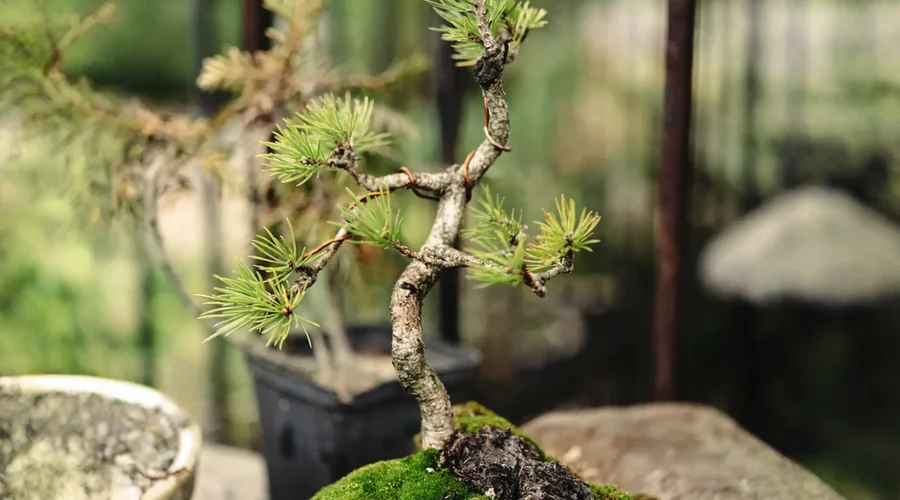
The Larix decidua, commonly known as the European Larch, is a distinctive conifer native to the Alps and Carpathians. Unlike most conifers, it is fully deciduous: its needles turn golden yellow in autumn before dropping for winter dormancy. In spring, new soft green needles emerge, creating one of the most striking seasonal transitions in the bonsai world.
As a bonsai, the European Larch blends rugged bark texture with delicate, fine needles, offering a balance of strength and grace that appeals to both beginners and experienced enthusiasts.
Larix Decidua at a glance
The European Larch thrives in cool, mountainous habitats and is exceptionally well-suited for outdoor bonsai cultivation. As one of the few deciduous conifers, it offers dramatic visual change throughout the year. Its straight, tapering trunk and flexible branches make it ideal for formal and informal upright styles. With age, the bark develops deep fissures that enhance its ancient and powerful character.
Thinking about growing your own European larch from the very beginning?
Explore our hand-selected Larix decidua Young Pre-Bonsai and start shaping your tree today.
How often should I water my Larix Decidua bonsai?
Watering a Larix decidua bonsai requires consistency. This species enjoys moisture but is sensitive to stagnant water. During the growing season (spring to early autumn), water thoroughly whenever the top layer of soil begins to dry. In warm or windy weather, this may require watering once or even twice daily, as the fine root system can dry out quickly.
In summer, steady moisture keeps the soft needles healthy and vibrant, but always ensure excellent drainage to avoid root rot. During winter dormancy, when the tree is leafless, reduce watering significantly, keep the soil only slightly damp to protect the roots. A humidity tray or light misting can help maintain stable moisture without overwatering.
How much sunlight does a Larix decidua need?
Larix decidua thrives in full sun and should receive at least six hours of direct sunlight daily during the growing season. Strong light promotes compact needle growth, sturdy branching, and the species’ vivid colour transitions, from soft green in spring to rich gold in autumn.
Because it is native to alpine environments, the European Larch loves fresh air and open space. Keep it outdoors all year in a bright, airy location. In very hot climates, light afternoon shade in midsummer helps prevent needle scorch. Avoid deep shade at all times, as insufficient light leads to weak growth and sparse foliage.
During winter, the tree remains fully outdoors, benefiting from cold temperatures that regulate its natural dormancy cycle.
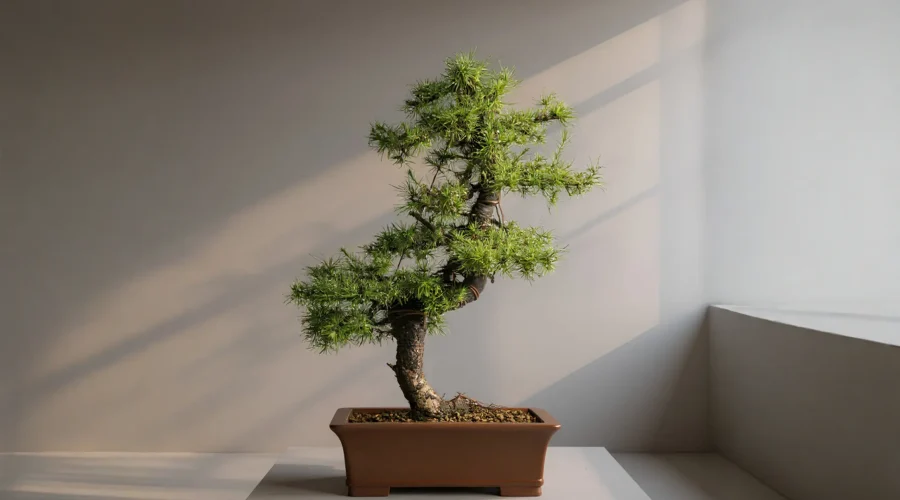
A European Larch (Larix decidua) bonsai in a brown ceramic pot styled in an informal upright form under soft evening light.
What's the best temperature for my Larix Decidua?
Larix decidua prefers cool conditions and grows best between 10 °C and 25 °C (50 °F – 77 °F). It tolerates significantly colder temperatures, down to –15 °C (5 °F), during winter dormancy.
In spring and summer, moderate warmth and strong light support vigorous growth and vibrant foliage. High temperatures above 30 °C (86 °F) can cause stress or needle browning, so provide afternoon shade and maintain consistent moisture during heatwaves.
In autumn, as temperatures drop, the needles turn golden yellow before falling, an essential part of its life cycle. During winter, leave the tree outdoors to experience the cold. Only protect the roots if temperatures stay below –15 °C for extended periods.
Fertilising your Larix Decidua
Regular fertilising promotes strong growth and dense branching. Feed every two weeks from early spring (once new needles appear) until mid-summer using a balanced fertiliser (e.g. NPK 10-10-10). Both organic pellets and liquid bonsai fertilisers work well.
In late summer, switch to a low-nitrogen formula (e.g. NPK 4-6-8) to strengthen roots and wood before winter. Stop fertilising once the needles begin turning yellow in autumn.
Do I need to prune my Larix Decidua?
The European Larch responds well to pruning and can be wired at many stages of the year. Structural pruning is best in early spring before new growth or in autumn after needle drop. Pinch back soft new shoots in spring to two or three needle pairs to maintain compact growth. When wiring, handle branches gently, while flexible, they scar easily if wired too tightly.
As the bark begins to fissure with age, monitor wires closely and remove them before they cut in. The species is ideal for dynamic, upward-oriented forms that capture natural alpine vigor.
When should I repot a Larix decidua?
Repot young trees every two years and older specimens every three to four years, ideally in early spring before bud break. Use a moisture-retentive but well-draining mix such as 50% akadama, 25% pumice, and 25% lava rock.
Avoid clay-heavy soils that hold excess water, as the roots require both oxygen and moisture. After repotting, water thoroughly and place the bonsai in partial shade for two weeks to allow recovery.
Common Problems
Although hardy, the European Larch may experience issues such as overwatering, fungal root rot, aphids, or needle cast. Ensure strong airflow, avoid overhead watering late in the day, and maintain consistent pruning. Yellowing or browning needles outside autumn often indicate underwatering or poor drainage.
With proper care, Larix decidua becomes a masterpiece of seasonal transformation, bare and sculptural in winter, fresh in spring, lush in summer, and brilliantly golden in autumn.
Written by Luca Valagussa
Founder and bonsai master of Treevaset
Formerly in finance, Luca turned his lifelong passion for bonsai into his profession to make bonsai art simple, inspiring, and accessible to everyone.