
Bonsai Apex and First Branch Explained: A Simple Guide for Beginners
If you are learning bonsai, you have probably heard terms like apex, first branch, branch order or trunk line. These concepts sound technical, but once you understand them, everything in bonsai design becomes much clearer.
In this guide, Luca explains what the apex really is, what the first branch means, how to choose the right trunk continuation, and how new branches appear. The goal is simple: help you understand your tree the same way a bonsai master sees it.
What Is the Bonsai Apex?
The apex is the highest growing point of the tree.
In nature, every tree has one main bud or one main branch that grows upward, chasing the light and becoming the top of the tree. All other branches grow more horizontally to capture sunlight.
In bonsai, the apex is simply the continuation of the trunk. You follow the trunk line upward until the point where it ends in a branch growing slightly upward. That upward-moving branch forms the apex. Understanding this is important because:
- the apex gives direction to the whole tree
- it defines the overall shape
- it creates taper when chosen correctly
- it balances the design
Even though there are rules, choosing the apex often depends on aesthetics and your vision for the tree.
Are you looking for bonsai trees that you CAN actually plant?
Explore our hand-selected Young Pre-Bonsais and start shaping your tree today.
What Is the First Branch?
The first branch is the lowest usable branch that grows from the trunk.
Your eye naturally travels from the base of the tree upward, and the first branching point it encounters is the first branch.
After that, branches appear in order:
2. second branch
3. third branch
4. fourth branch
5. and so on.
This order creates structure, rhythm and balance in the bonsai design.
How to Choose the Apex (Real Examples)
Sometimes choosing the apex is not obvious. A tree may have several branches emerging from the same point, and your decision shapes the entire design.
Luca explains how the choice changes depending on the tree’s orientation:
If you tilt the tree one way, a branch that looked horizontal may become vertical.
If you tilt it another way, a different branch becomes the most natural continuation of the trunk.
A few simple rules help guide the choice:
- the apex should not be the thinnest branch
- a branch growing from the outside of a curve is usually a good candidate
- the trunk line should flow naturally from bottom to top
- remove apex options that break that flow
For example, if one option creates an extra unnecessary curve, and another keeps a clean, natural movement, the cleaner line is usually the right choice.
How Do New Branches Form?
Not all species back-bud easily.
In the video, Luca works on an apple tree, which is not known for strong back-budding. Even so, he points out small buds that can eventually become new branches.
Where can new branches appear?
- on existing buds
- on dormant buds along the trunk
- through stimulation from light and pruning
- through grafting when necessary
For good design, Luca often wants new branches in specific positions. If the tree does not create them naturally, there is another solution.
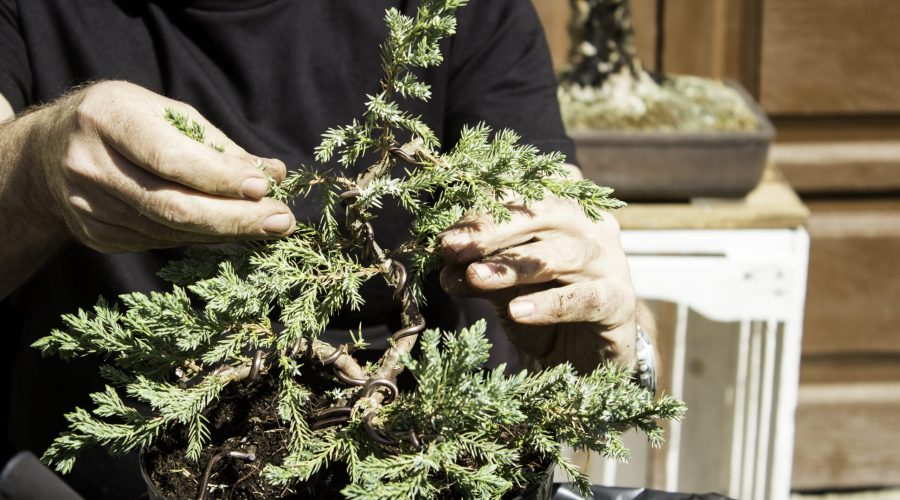
Grafting a Branch When the Tree Does Not Produce One
If the tree refuses to create a branch where you need it, you can graft one.
This is a classic bonsai technique that works by connecting the cambium layer of one branch with the cambium of the trunk.
Once the cambium of both parts grows together, the graft becomes a new branch in that exact position.
After the graft takes:
- the original connection can be cut
- only the new branch remains
- the structure becomes stronger and more natural
Grafting is especially useful in species like apple trees, which do not back-bud reliably.
Summary: Apex, First Branch and Branch Order
The apex is the continuation of the trunk and defines the top structure.
The first branch is the lowest branch your eye meets when moving up the trunk.
Good design comes from choosing a natural trunk flow, selecting the best apex, and encouraging branches in the right places.
Knowing these basics makes styling a bonsai much easier.
It is not about memorizing rules but understanding how trees grow and how to guide them.
Anyone can play bonsai with the right knowledge.
Watch the Full Video of What Is the Apex in Bonsai?
Thinking About Shaping Your First Bonsai?
Starting with the right species makes everything easier.
Written by Luca Valagussa
Founder and bonsai master of Treevaset
Formerly in finance, Luca turned his lifelong passion for bonsai into his profession to make bonsai art simple, inspiring, and accessible to everyone.