EU delivery included from €70

Bonsai Essentials

Acer Palmatum Development Knowledge Hub

Bonsai Essentials is Treevaset’s technical knowledge hub, focused on structured Acer palmatum development. Here we document cultivar behaviour, growth response, internode control, leaf characteristics, and long-term training decisions that shape how a tree evolves over time.

The goal is to provide clear, development-oriented information that supports informed decisions when working with Young Pre-Bonsai. No shortcuts, no guaranteed outcomes, just realistic guidance for growers and collectors building structure over years, not weeks.

Acer Palmatum Cultivar Behaviour & Development

Acer palmatum is structurally versatile, but cultivar behaviour varies significantly. Differences in vigour, internode length, leaf response, back-budding tendency, and seasonal rhythm directly affect training strategy. These articles focus on technical behaviour and long-term development logic.

Deshojo is the most popular Japanese maple for bonsai — and for good reason. Explore its spring colour, growth behaviour, bark character, development strategy and why its ability to adapt leaf and internode size to bonsai culture makes it the benchmark cultivar.
Arakawa and Allen's Gold are the only two Japanese maples with rough, pine-bark character. Compare bark development, seasonal colour, growth behaviour and development considerations to choose the right rough bark cultivar for your bonsai.
Compare Seigen, Beni Chidori and Orihime for bonsai development. This structural guide analyses internode behaviour, vigour and growth patterns to help you choose the right Acer palmatum cultivar for your development phase.
Technical evaluation of Acer palmatum bonsai suitability, analysing cultivar differences, structural traits and long-term development potential in Young Pre-Bonsai material.
Technical guide to Acer palmatum bonsai development, covering growth behaviour, internode dynamics, back-budding response and structural training phases for Young Pre-Bonsai material.

Structural Development Fundamentals for Young Pre-Bonsai

Before cultivar-specific decisions matter, structural principles must be understood. This section covers the foundations that govern bonsai development: how growth is directed, how structure is built, and why timing and technique matter more than surface aesthetics.

These fundamentals apply across species, but they are especially relevant when developing Acer palmatum from Young Pre-Bonsai material.

How to summer prune an Acer buergerianum bonsai and check nebari development one year after a tourniquet incision. Includes the two-leaf rule, back-bud strategy, and the wire mistake that cost a full growing season.
Air layering gives you radial nebari from day one — skipping years of corrective root work. Luca walks through the full technique on Acer palmatum: the cut, the substrate choice, and how to separate and pot for the best results.
In a sokan bonsai, the son trunk almost always outgrows the father. Luca walks through the exact pruning sequence to rebalance energy on a twin trunk Acer palmatum seedling after spring repotting.
Thread grafting is one of the most precise bonsai techniques. This guide explains how to create a branch exactly where you want it, how the graft fuses, and when to cut the original branch.
Understanding the bonsai apex and first branch is essential for good tree structure. This beginner guide explains trunk continuation, branch order, apex selection, and how new branches form.

Explore Our Acer Palmatum Cultivars

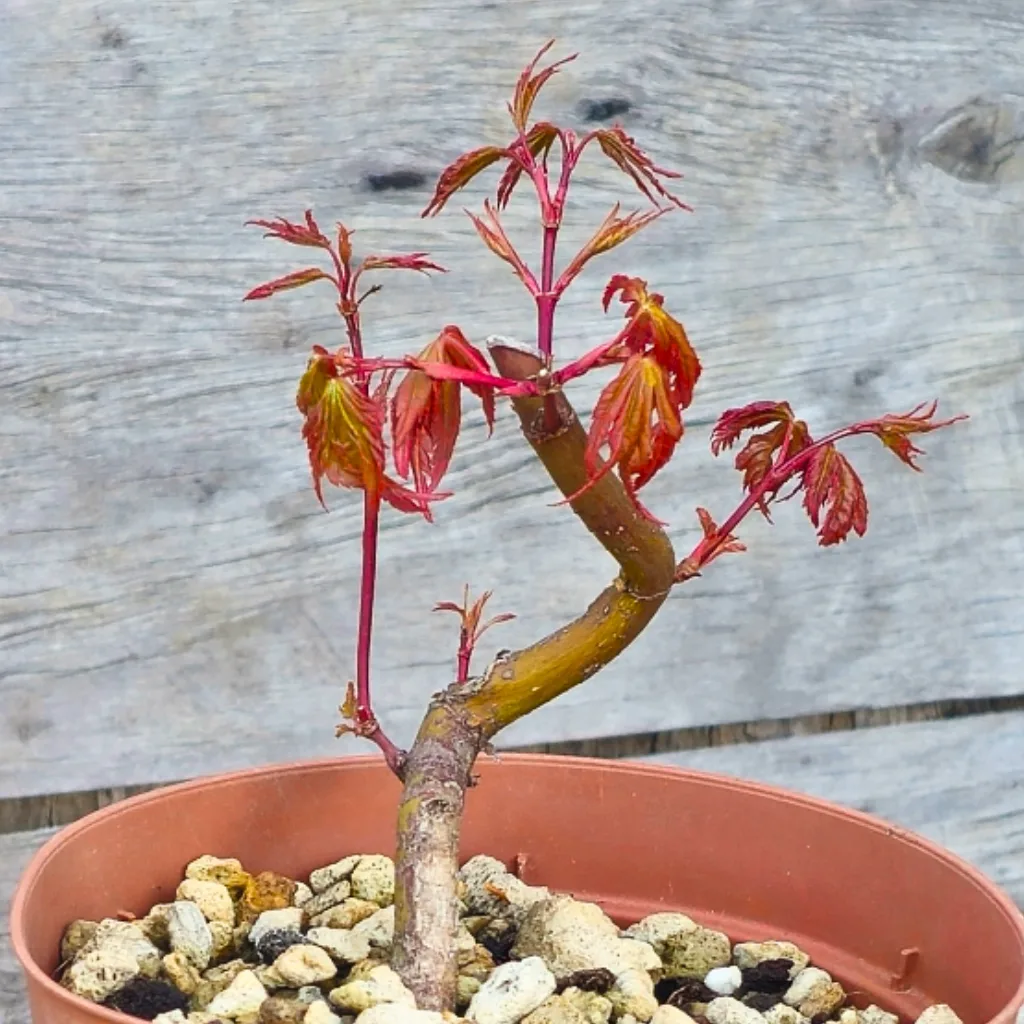
If you are evaluating cultivar behaviour or planning your next development project, you can review our current selection of Acer palmatum cultivars available as Young Pre-Bonsai. Each listing includes structured information about development phase and growth characteristics. Illustrative reference images are provided. Seasonal variation may occur.

Seasonal variation may occur. Each tree is unique and should be evaluated individually. The information provided is intended to support technical decisions during development and does not guarantee a specific final appearance.