
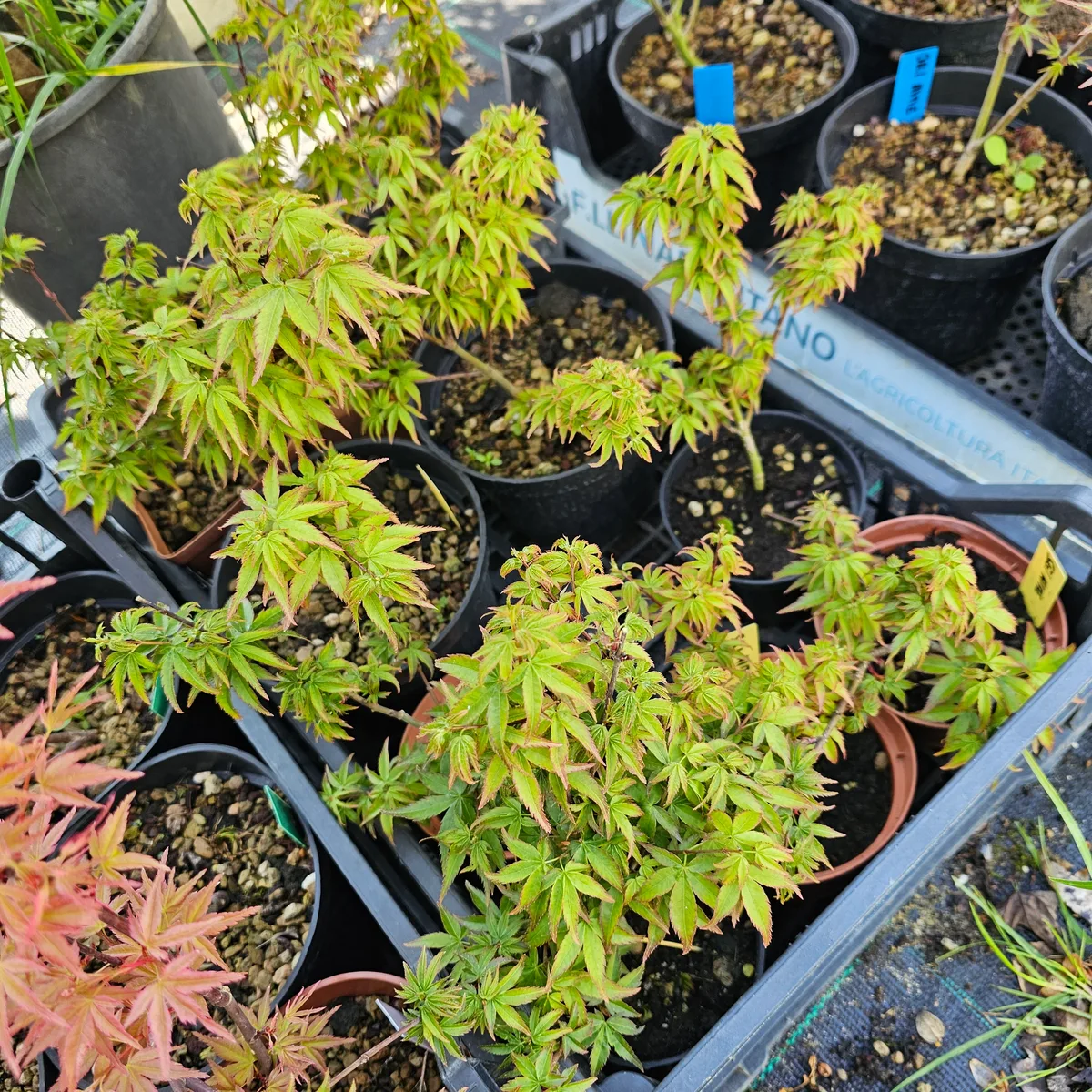
Note for buyers: Each tree is unique. Photos are provided for reference only. Some images may show a wired plant to illustrate potential shaping. The tree you receive will be natural and unwired. Upon request, we can provide current photos from the available batch before purchase.
Acer palmatum 'Sei Hime' — Characteristics & Bonsai Use
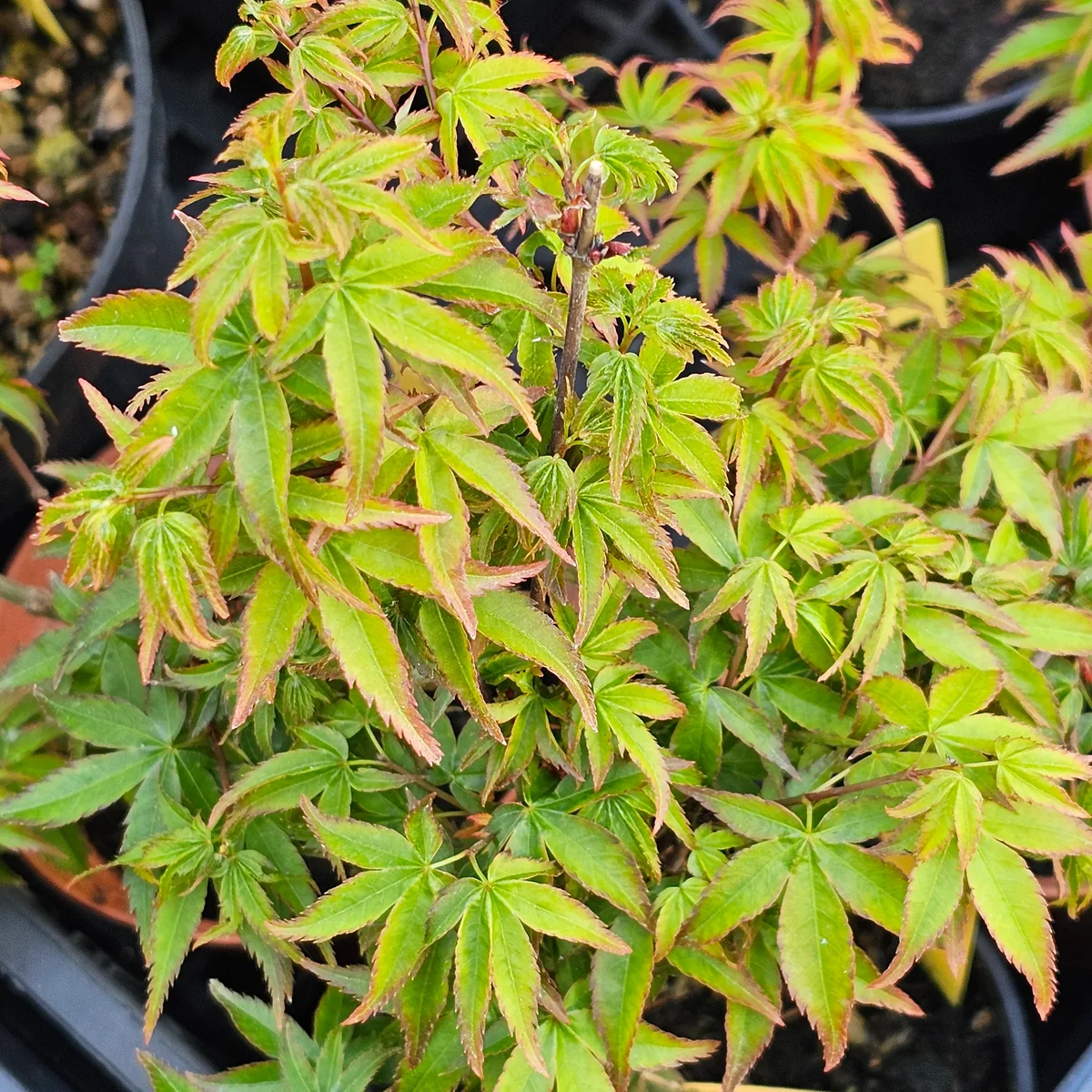
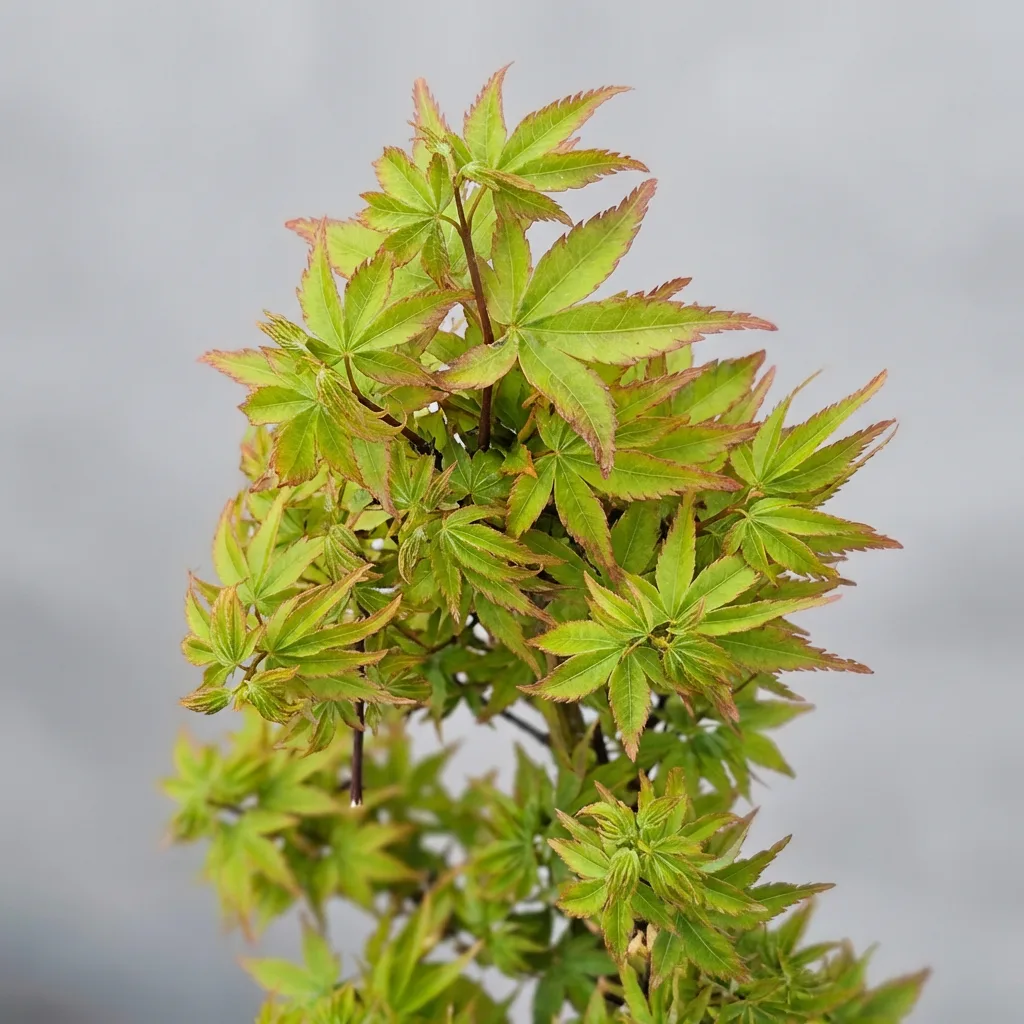
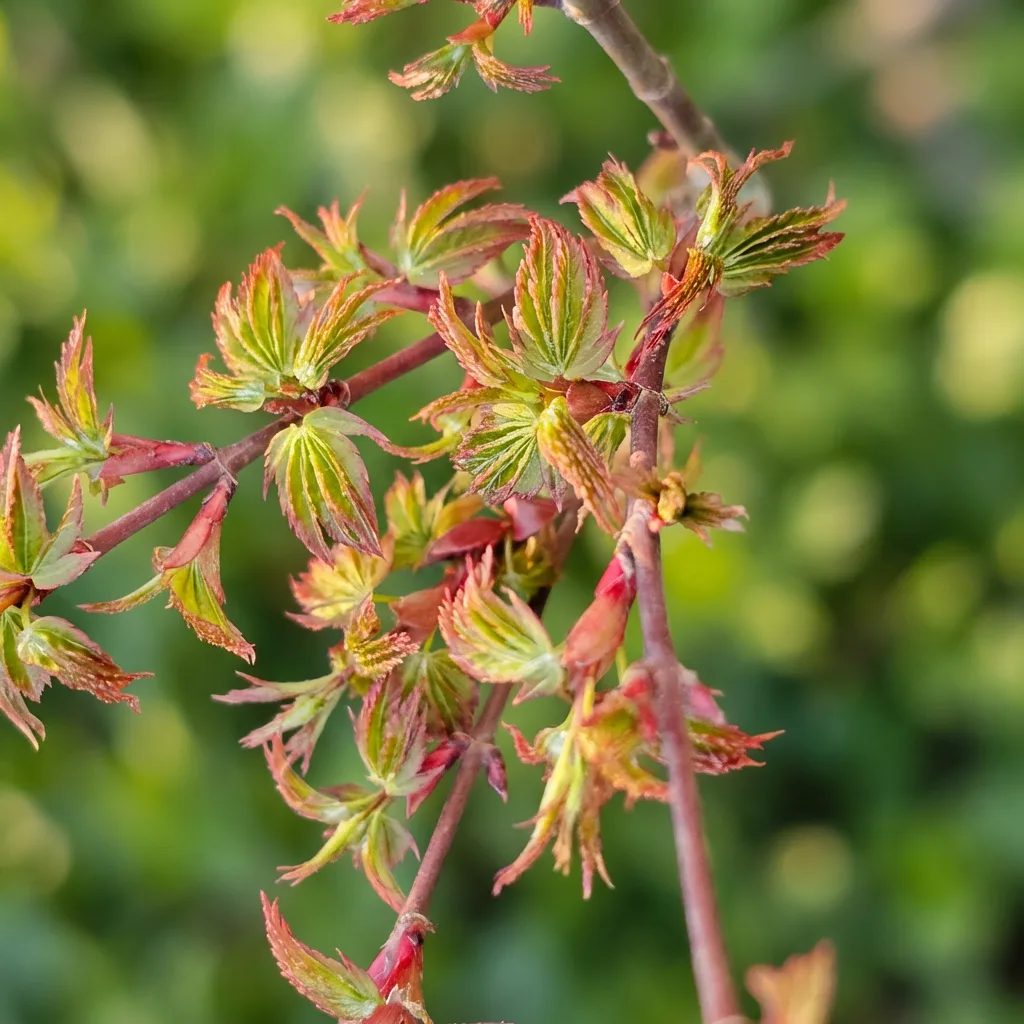
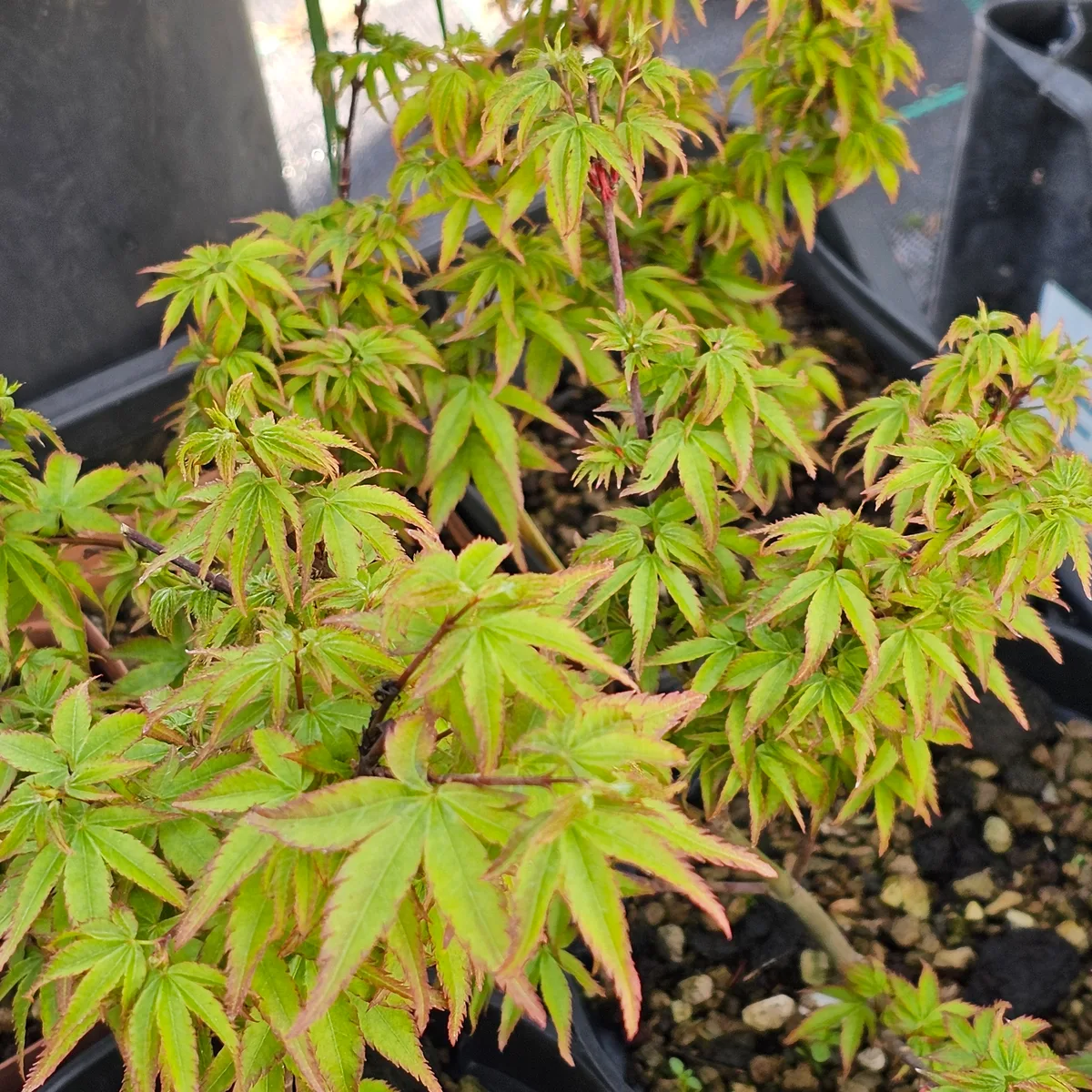
Leaf size is a consistent trait: small, five-lobed, and proportionate to the scale the cultivar naturally tends toward. Internodes are short, which supports fine ramification over time with controlled pruning. Seasonally, ‘Sei Hime’ performs well: spring emergence brings very light green, almost yellow tones that give the tree a delicate, luminous quality. Summer foliage deepens with sun exposure, and autumn transitions to orange and yellow before leaf drop. Bark is smooth throughout, progressing from light green (almost yellow on young shoots) to grey with maturity. In open ground, the cultivar reaches just 1 to 2 metres — naturally compact and easy to maintain at bonsai scale.
For bonsai purposes, ‘Sei Hime’ is best developed in informal upright or literati styles at shohin scale. Its growth habit does not lend itself to rapid structural decisions, but rewards well-planned, patient development. As a collection piece, it pairs naturally with Acer buergerianum: the trident maple’s vigour and structural scale contrast well with the refined miniature character of ‘Sei Hime’, covering two different registers of Japanese maple bonsai work.
- Deciduous dwarf Japanese maple with naturally small leaves and compact internode spacing.
- Particularly well suited for shohin bonsai where fine ramification and refined proportions are the priority.
- Delivered at a minimum height of approx. 13 cm measured from soil line to apex.
Acer palmatum 'Sei Hime'
Plant origin: Japan
Sunlight
Good light exposure with protection from intense midday sun in warm climates.
Watering
Keep soil consistently moist with good drainage; do not allow to dry out completely.
Fertilization
Light, balanced feeding throughout the growing season; reduce in summer heat.
Repotting
Every 2–3 years in early spring before bud break.
Soil preference
Slightly acidic to neutral, free-draining substrate; akadama-based mix recommended.
Pruning & Wiring
Prune selectively after new shoots harden; wire in autumn once leaves have dropped.
Why buy from Treevaset?
Grown specifically for bonsai
Our trees are cultivated from seed or cuttings with bonsai development in mind from the very beginning, not adapted later from ornamental nursery stock.
European distribution, limited batches
Selected Acer palmatum cultivars are made available in small, controlled batches, suitable for individual growers as well as clubs and collections.
Non-grafted, true-to-type plants
We only offer non-grafted cultivars to ensure consistent leaf size, internode length, and long-term behaviour true to each variety.
Support from experienced growers
We provide real, practical advice before and after purchase, based on hands-on experience.
Acer palmatum ‘Sei Hime’ – Japanese Maple for Bonsai (Young Pre-Bonsai)
Sei Hime is a dwarf Japanese maple cultivar valued for its naturally miniaturised leaf size, compact internode spacing, and clean seasonal colour transitions. As a young pre-bonsai, it offers a solid starting point for shohin development with the patience-rewarding qualities typical of dwarf Acer palmatum. Non-grafted, cutting-propagated plants to preserve the true characteristics of the cultivar.
35,00 €
Availability: In stock
Secure payments with:
Healthy Arrival Guarantee
Note for buyers: Each tree is unique. Photos are provided for reference only. Some images may show a wired plant to illustrate potential shaping. The tree you receive will be natural and unwired. Upon request, we can provide current photos from the available batch before purchase.
Acer palmatum ‘Sei Hime’ – Japanese Maple for Bonsai (Young Pre-Bonsai)
Sei Hime is a dwarf Japanese maple cultivar valued for its naturally miniaturised leaf size, compact internode spacing, and clean seasonal colour transitions. As a young pre-bonsai, it offers a solid starting point for shohin development with the patience-rewarding qualities typical of dwarf Acer palmatum. Non-grafted, cutting-propagated plants to preserve the true characteristics of the cultivar.
35,00 €
Availability: In stock
- Healthy Arrival Guarantee
Acer palmatum 'Sei Hime' — Characteristics & Bonsai Use
Leaf size is a consistent trait: small, five-lobed, and proportionate to the scale the cultivar naturally tends toward. Internodes are short, which supports fine ramification over time with controlled pruning. Seasonally, ‘Sei Hime’ performs well: spring emergence brings very light green, almost yellow tones that give the tree a delicate, luminous quality. Summer foliage deepens with sun exposure, and autumn transitions to orange and yellow before leaf drop. Bark is smooth throughout, progressing from light green (almost yellow on young shoots) to grey with maturity. In open ground, the cultivar reaches just 1 to 2 metres — naturally compact and easy to maintain at bonsai scale.
For bonsai purposes, ‘Sei Hime’ is best developed in informal upright or literati styles at shohin scale. Its growth habit does not lend itself to rapid structural decisions, but rewards well-planned, patient development. As a collection piece, it pairs naturally with Acer buergerianum: the trident maple’s vigour and structural scale contrast well with the refined miniature character of ‘Sei Hime’, covering two different registers of Japanese maple bonsai work.
- Deciduous dwarf Japanese maple with naturally small leaves and compact internode spacing.
- Particularly well suited for shohin bonsai where fine ramification and refined proportions are the priority.
- Delivered at a minimum height of approx. 13 cm measured from soil line to apex.
Acer palmatum 'Sei Hime'
Plant origin: Japan
Sunlight
Good light exposure with protection from intense midday sun in warm climates.
Watering
Keep soil consistently moist with good drainage; do not allow to dry out completely.
Fertilization
Light, balanced feeding throughout the growing season; reduce in summer heat.
Repotting
Every 2–3 years in early spring before bud break.
Soil preference
Slightly acidic to neutral, free-draining substrate; akadama-based mix recommended.
Pruning & Wiring
Prune selectively after new shoots harden; wire in autumn once leaves have dropped.
Why buy from Treevaset?
Our trees are cultivated from seed or cuttings with bonsai development in mind from the very beginning, not adapted later from ornamental nursery stock.
We only offer non-grafted cultivars to ensure consistent leaf size, internode length, and long-term behaviour true to each variety.
Selected Acer palmatum cultivars are made available in small, controlled batches, suitable for individual growers as well as clubs and collections.
We provide real, practical advice before and after purchase, based on hands-on experience.
Compare acer palmatum cultivars for bonsai
| Cultivar | Leaf size | Internodes | Growth habit | Spring Colour | Bark | Adult Size | Best For |
|---|---|---|---|---|---|---|---|
Very small | Short | Dwarf, compact | Light green, bronze margins | Smooth | 1–2m | Shohin, mame | |
Small | Very short | Dwarf, compact | Green, pink-red margins | Smooth | 1–2m | Shohin, mame, forest | |
Small | Short | Dwarf, compact | Yellow-green | Smooth | 1–2m | Shohin, literati | |
Medium | Medium | Semi-dwarf, upright | Red-purple | Smooth | 1–2m | Shohin, display | |
Medium | Medium | Semi-dwarf, upright | Pink to orange | Smooth | 2–4m | Training, medium bonsai | |
Medium | Medium | Semi-dwarf, upright | Light red, pink tones | Smooth | 2–4m | Training, medium bonsai | |
Medium | Medium | Upright | Orange to yellow | Smooth | 1–2m | Shohin, medium bonsai | |
Medium | Medium | Upright, fast | Emerald green, yellow accents | Smooth | 2–4m | Trunk building, informal upright | |
Large | Long | Upright, vigorous | Deep red | Smooth | 2–4m | Refinement, display | |
Large | Long | Upright, vigorous | Golden-chartreuse, pink margins | Rough | 3–5m | Trunk building, informal upright | |
Large | Long | Upright, vigorous | Light green, red margins | Rough (corky) | 3–5m | Trunk building, informal upright |
Feedback from growers
 ★★★★★
Translated from Italian
★★★★★
Translated from Italian
This bonsai had quite a story. It arrived in poor condition, not due to the seller but because the courier took longer than expected. Treevaset was extremely helpful and immediately available to resolve the situation. Highly recommended. I’ve purchased from them multiple times and I will definitely do so again.
 ★★★★★
★★★★★
Translated from German
Friendly communication and fast delivery. At first, it wasn’t clear to me that the seller ships from Italy, which made me hesitant when ordering plants. However, the plants arrived in excellent condition thanks to very careful packaging.
★★★★★
Translated from Italian
The courier was delayed, but the plant arrived healthy thanks to excellent packaging. A very promising larch with good movement and already well-developed foliage. It has a subtle literati-style character that can be further enhanced. It deserves a proper, well-chosen pot. Very satisfied.
 ★★★★★
★★★★★
Original review
Trustworthy and honest seller. Well wrapped. Well received item. Recommended 100%. Ringraziare tanti.
 ★★★★★
★★★★★
Translated from German
Very good quality, securely packaged and fast delivery.
 ★★★★★
★★★★★
Translated from French
Frequently Asked Questions (FAQs)
Is Acer palmatum Sei Hime suitable for bonsai?
What is the difference between Sei Hime and other dwarf cultivars like Koto Hime?
Why does it matter that Sei Hime is cutting-propagated?
How rare is Acer palmatum Sei Hime?
Can I grow Sei Hime indoors as a bonsai?
What happens if my bonsai arrives damaged or in poor condition?
Every order is covered by our Healthy Arrival Guarantee. If your tree arrives damaged or in poor condition due to shipping, we replace it or issue a full refund — no questions asked. All trees are carefully packed with protective materials designed for live plant transport across Europe.
Can I request photos of the exact tree before ordering?
Yes. Contact us via email or WhatsApp and we will send you current photos of available trees. Each plant is unique, and we are happy to help you choose the one that best matches your development goals and experience level.
Explore more specimens in our Young Pre-Bonsai collection.