EU delivery included from €70

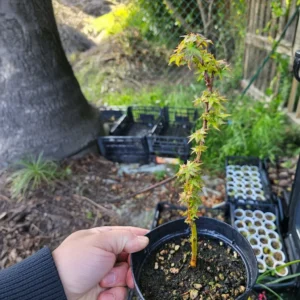
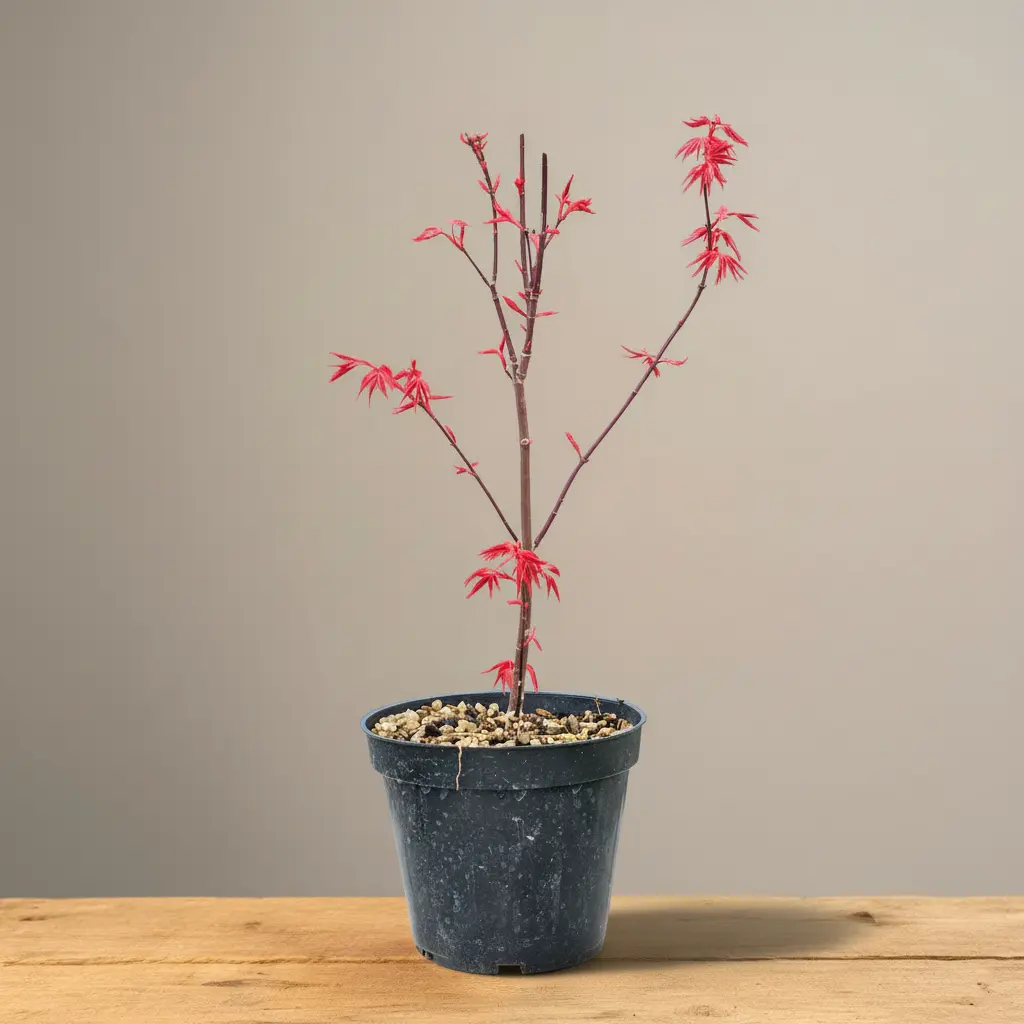
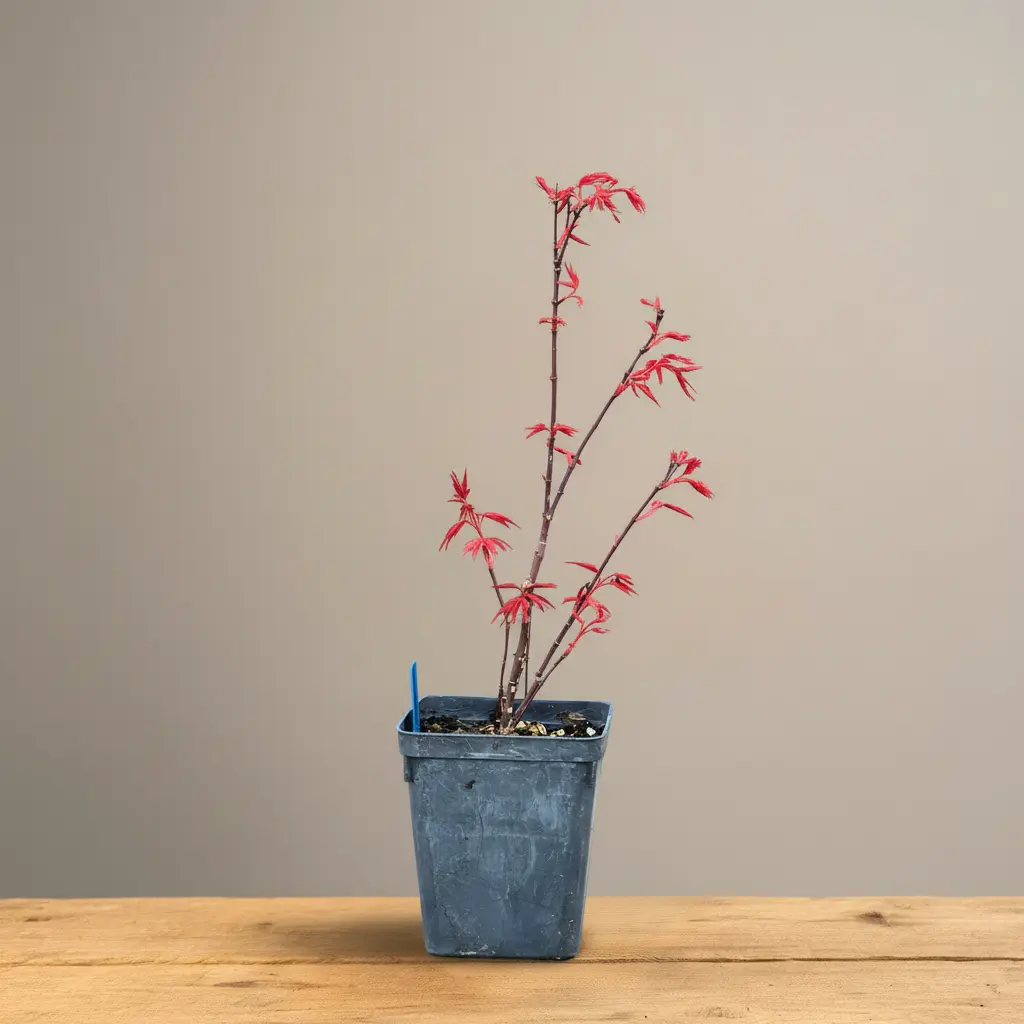
Note for buyers: Each tree is unique. Photos are provided for reference only. Some images may show a wired plant to illustrate potential shaping. The tree you receive will be natural and unwired. Upon request, we can provide current photos from the available batch before purchase.

Acer palmatum ‘Deshojo’ — Characteristics & Bonsai Use

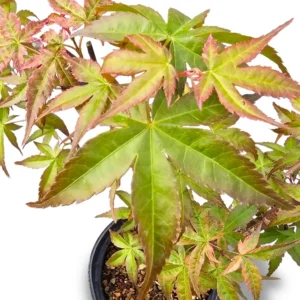
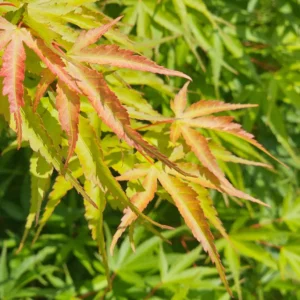
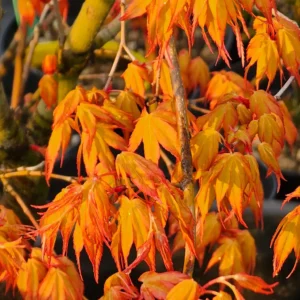
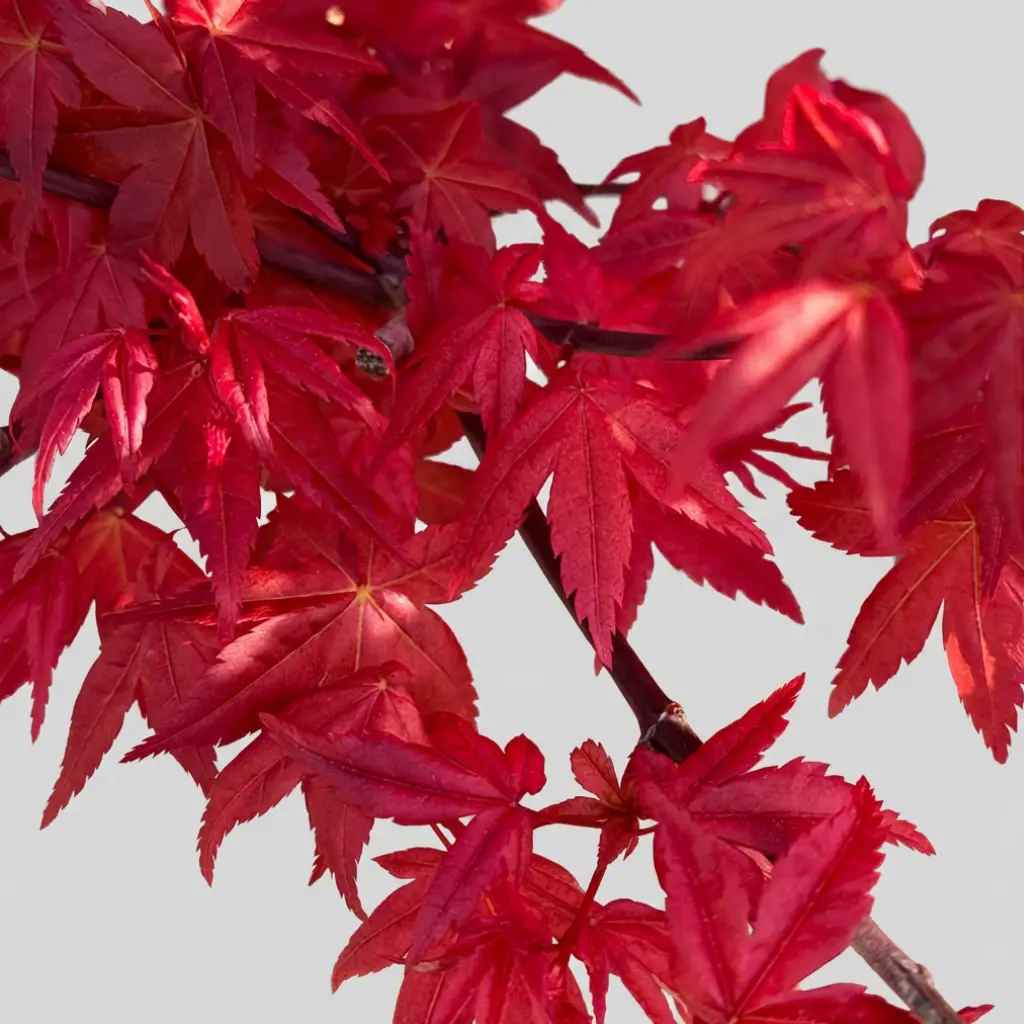
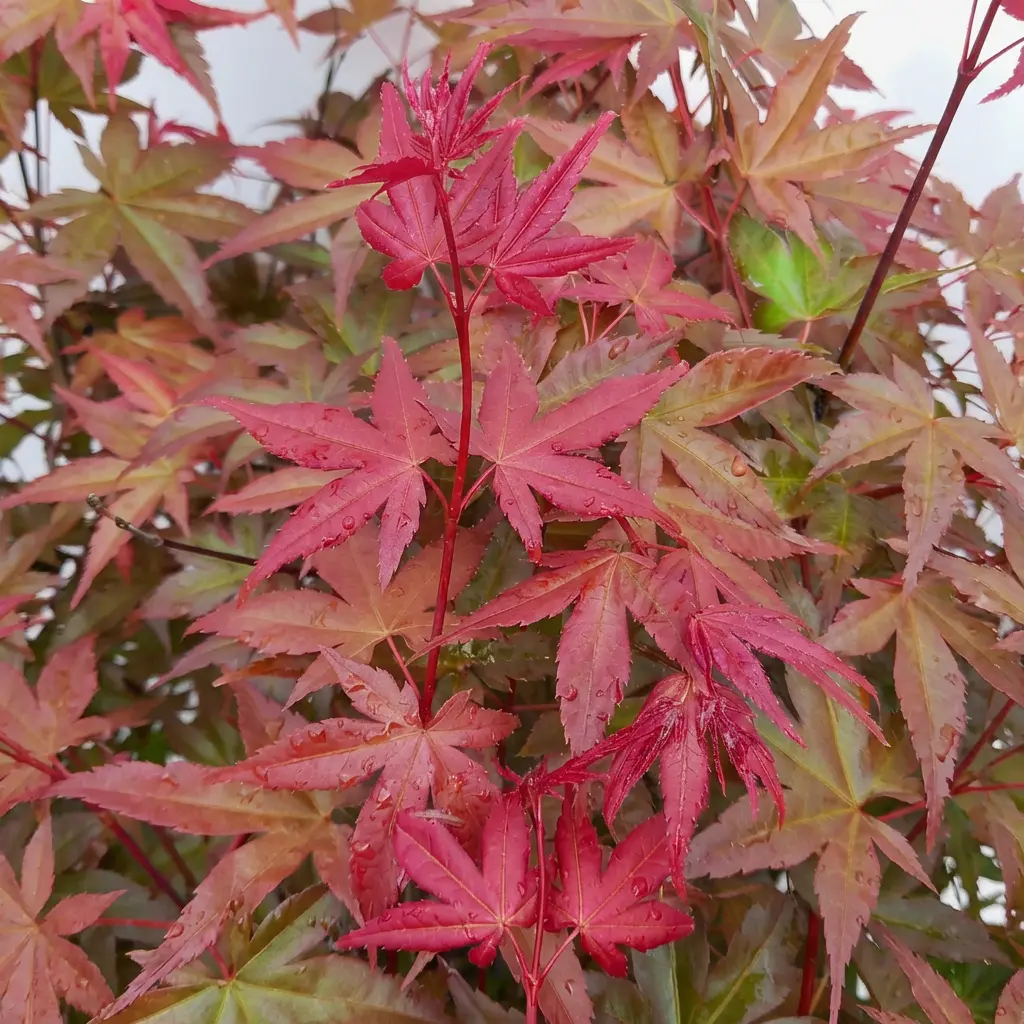
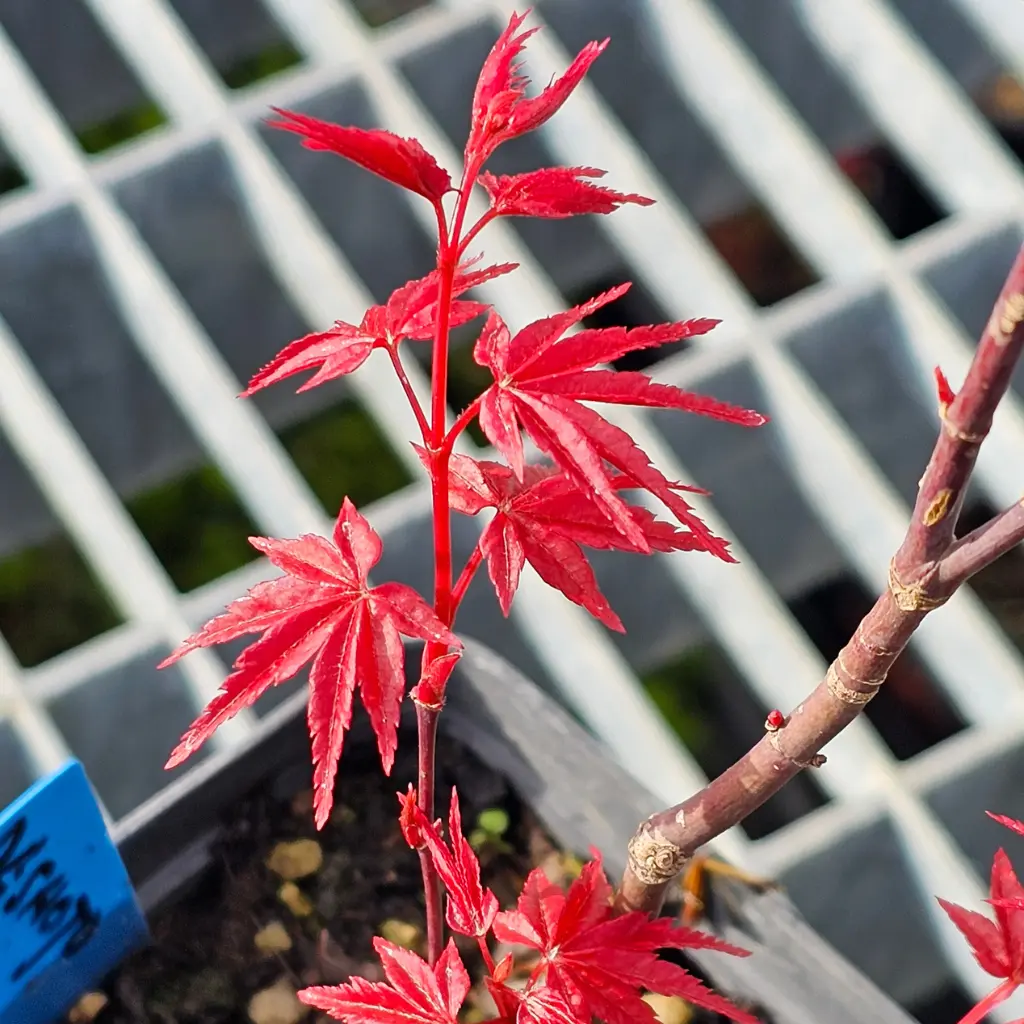
‘Deshojo’ is a great classic for bonsai — this traditional Japanese cultivar is the most popular variety among maple bonsai enthusiasts, and for good reason. New foliage emerges in deep red with pink tones, then transitions to dark green through the growing season before developing orange to red hues in autumn. Its spring colour is simply stunning, and its ability to adapt leaf and internode size to bonsai culture makes it an evergreen among deciduous cultivars.

Growth is fast and vigorous with an upright habit and naturally long internodes — characteristics that require active management but reward growers with rapid structural development. Leaf size is large in open growth but reduces effectively with proper technique. Bark is smooth, displaying red or green tones depending on sun exposure. In open ground, ‘Deshojo’ reaches 2 to 4 metres.

For bonsai purposes, the combination of vigour, colour intensity, and proven responsiveness to training make ‘Deshojo’ one of the most reliable cultivars for building structure from a young stage. It works across a wide range of styles and sizes, from medium compositions to more ambitious development projects where trunk thickening is a priority.
Cultivation note: ‘Deshojo’ needs active internode management — its natural vigour pushes long growth that must be controlled with timely pruning. Pinch or cut new shoots early in the season to keep proportions tight. The deep red spring colour intensifies with good light, but this cultivar is sensitive to strong midday sun in hot climates and can scorch. Bark colour (red vs green) varies with sun exposure — both are normal.
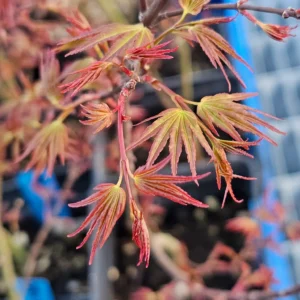
Acer palmatum Deshojo bonsai with intense red spring foliage close-up

Acer palmatum ‘Beni Chidori’

Plant origin: Japan

Sunlight

Full sun to partial shade, with protection from intense midday sun to preserve leaf colour.

Watering

Keep soil consistently moist with good drainage.

Fertilization

Regular feeding during the growing season to support balanced growth and colour expression.

Repotting

Every 2–3 years in early spring, before bud break.

Soil preference

Slightly acidic to neutral, free-draining substrate.

Pruning & Wiring

Prune after shoot hardening to maintain structure and support fine ramification.

Why buy from Treevaset?

Grown specifically for bonsai

Our trees are cultivated from seed or cuttings with bonsai development in mind from the very beginning, not adapted later from ornamental nursery stock.

European distribution, limited batches

Selected Acer palmatum cultivars are made available in small, controlled batches, suitable for individual growers as well as clubs and collections.

Non-grafted, true-to-type plants

We only offer non-grafted cultivars to ensure consistent leaf size, internode length, and long-term behaviour true to each variety.

Support from experienced growers

We provide real, practical advice before and after purchase, based on hands-on experience.

Acer palmatum ‘Deshojo’ – Japanese Maple for Bonsai (Young Pre-Bonsai)

Deshojo is the most popular traditional Japanese maple cultivar for bonsai, prized for its extraordinary deep red spring flush and proven adaptability to bonsai culture. Fast, vigorous growth builds structure quickly while leaf and internode size reduce effectively with training. Non-grafted, cutting-propagated plants to preserve the true characteristics of the cultivar.

Price range: 30,00 € through 45,00 €

Secure payments with:

Healthy Arrival Guarantee

Note for buyers: Each tree is unique. Photos are provided for reference only. Some images may show a wired plant to illustrate potential shaping. The tree you receive will be natural and unwired. Upon request, we can provide current photos from the available batch before purchase.

Acer palmatum ‘Deshojo’ – Japanese Maple for Bonsai (Young Pre-Bonsai)

Deshojo is the most popular traditional Japanese maple cultivar for bonsai, prized for its extraordinary deep red spring flush and proven adaptability to bonsai culture. Fast, vigorous growth builds structure quickly while leaf and internode size reduce effectively with training. Non-grafted, cutting-propagated plants to preserve the true characteristics of the cultivar.

Price range: 30,00 € through 45,00 €

Acer palmatum ‘Deshojo’ — Characteristics & Bonsai Use

‘Deshojo’ is a great classic for bonsai — this traditional Japanese cultivar is the most popular variety among maple bonsai enthusiasts, and for good reason. New foliage emerges in deep red with pink tones, then transitions to dark green through the growing season before developing orange to red hues in autumn. Its spring colour is simply stunning, and its ability to adapt leaf and internode size to bonsai culture makes it an evergreen among deciduous cultivars.

Growth is fast and vigorous with an upright habit and naturally long internodes — characteristics that require active management but reward growers with rapid structural development. Leaf size is large in open growth but reduces effectively with proper technique. Bark is smooth, displaying red or green tones depending on sun exposure. In open ground, ‘Deshojo’ reaches 2 to 4 metres.

For bonsai purposes, the combination of vigour, colour intensity, and proven responsiveness to training make ‘Deshojo’ one of the most reliable cultivars for building structure from a young stage. It works across a wide range of styles and sizes, from medium compositions to more ambitious development projects where trunk thickening is a priority.
Cultivation note: ‘Deshojo’ needs active internode management — its natural vigour pushes long growth that must be controlled with timely pruning. Pinch or cut new shoots early in the season to keep proportions tight. The deep red spring colour intensifies with good light, but this cultivar is sensitive to strong midday sun in hot climates and can scorch. Bark colour (red vs green) varies with sun exposure — both are normal.
Acer palmatum Deshojo bonsai with intense red spring foliage close-up

Acer palmatum ‘Beni Chidori’

Plant origin: Japan

Sunlight

Full sun to partial shade, with protection from intense midday sun to preserve leaf colour.

Watering

Keep soil consistently moist with good drainage.

Fertilization

Regular feeding during the growing season to support balanced growth and colour expression.

Repotting

Every 2–3 years in early spring, before bud break.

Soil preference

Slightly acidic to neutral, free-draining substrate.

Pruning & Wiring

Prune after shoot hardening to maintain structure and support fine ramification.

Why buy from Treevaset?

Compare acer palmatum cultivars for bonsai

Cultivar Leaf size Internodes Growth habit Spring Colour Bark Adult Size Best For

Very small

Short

Dwarf, compact

Light green, bronze margins

Smooth

1–2m

Shohin, mame

Small

Very short

Dwarf, compact

Green, pink-red margins

Smooth

1–2m

Shohin, mame, forest

Small

Short

Dwarf, compact

Yellow-green

Smooth

1–2m

Shohin, literati

Medium

Medium

Semi-dwarf, upright

Red-purple

Smooth

1–2m

Shohin, display

Medium

Medium

Semi-dwarf, upright

Pink to orange

Smooth

2–4m

Training, medium bonsai

Medium

Medium

Semi-dwarf, upright

Light red, pink tones

Smooth

2–4m

Training, medium bonsai

Medium

Medium

Upright

Orange to yellow

Smooth

1–2m

Shohin, medium bonsai

Medium

Medium

Upright, fast

Emerald green, yellow accents

Smooth

2–4m

Trunk building, informal upright

Large

Long

Upright, vigorous

Deep red

Smooth

2–4m

Refinement, display

Large

Long

Upright, vigorous

Golden-chartreuse, pink margins

Rough

3–5m

Trunk building, informal upright

Large

Long

Upright, vigorous

Light green, red margins

Rough (corky)

3–5m

Trunk building, informal upright

Feedback from growers

AmericoItalian ★★★★★ Translated from Italian

This bonsai had quite a story. It arrived in poor condition, not due to the seller but because the courier took longer than expected. Treevaset was extremely helpful and immediately available to resolve the situation. Highly recommended. I’ve purchased from them multiple times and I will definitely do so again.

Young Pre-Bonsai

PatfowGerman ★★★★★
Translated from German

Friendly communication and fast delivery. At first, it wasn’t clear to me that the seller ships from Italy, which made me hesitant when ordering plants. However, the plants arrived in excellent condition thanks to very careful packaging.

Young Pre-Bonsai

OtreblaidurItalian ★★★★★
Translated from Italian

The courier was delayed, but the plant arrived healthy thanks to excellent packaging. A very promising larch with good movement and already well-developed foliage. It has a subtle literati-style character that can be further enhanced. It deserves a proper, well-chosen pot. Very satisfied.

Young Pre-Bonsai

JesusSpanish ★★★★★
Original review

Trustworthy and honest seller. Well wrapped. Well received item. Recommended 100%. Ringraziare tanti.

Bonsai

TerabosaGerman (Austria) ★★★★★
Translated from German

Very good quality, securely packaged and fast delivery.

Young Pre-Bonsai

JkiodFrench ★★★★★
Translated from French

Arrived in excellent condition, exactly as shown in the photos. Fast delivery. Impeccable.

Bonsai


Frequently Asked Questions (FAQs)

Is Acer palmatum Deshojo the best Japanese maple for bonsai?
Deshojo is the most popular Japanese maple for bonsai, and for good reason. Its vigorous growth builds trunk quickly, the deep red spring colour is spectacular, and it adapts leaf and internode size to bonsai culture better than most cultivars. However, “best” depends on your goals — the same vigour that makes it great for trunk building requires strict control during refinement. For a complete analysis, see our Deshojo bonsai guide.
Deshojo is larger, faster and more vigorous (mature size 2–4m) with long internodes and deep red spring colour. Beni Chidori is semi-dwarf with medium internodes and a pink-to-orange spring flush — more manageable but less dramatic. Deshojo is the classic choice for trunk development; Beni Chidori suits growers who want colour without the internode management challenges. See our cultivar comparison.
Cutting-propagated Deshojo grows on its own roots with consistent vigour from base to apex. Grafted trees have a different rootstock below the graft, which creates a visible line at the trunk base and mismatched growth energy. For bonsai, where natural trunk taper, bark continuity and root spread (nebari) are critical, own-root plants are far superior.
Deshojo’s vigour is an advantage here. Trunk caliper builds noticeably faster than with compact cultivars — meaningful thickening in 2–3 years of free growth. Ramification develops well with consistent clip-and-grow technique over 3–5 years. Full display-quality refinement typically takes 8–12 years from young material. The vigorous growth phase is actually shorter than with slower cultivars because the trunk develops quickly. See our development guide for detailed timelines.
No. Deshojo is a temperate outdoor tree that requires cold winter dormancy below 10°C. The spectacular deep red spring flush — the cultivar’s defining trait — only develops after a proper cold rest period. Without it, spring colour fades to dull pink and growth becomes weak. Keep outdoors year-round, protect from severe frost below -10°C.

Every order is covered by our Healthy Arrival Guarantee. If your tree arrives damaged or in poor condition due to shipping, we replace it or issue a full refund — no questions asked. All trees are carefully packed with protective materials designed for live plant transport across Europe.

Yes. Contact us via email or WhatsApp and we will send you current photos of available trees. Each plant is unique, and we are happy to help you choose the one that best matches your development goals and experience level.

Explore more specimens in our Young Pre-Bonsai collection.