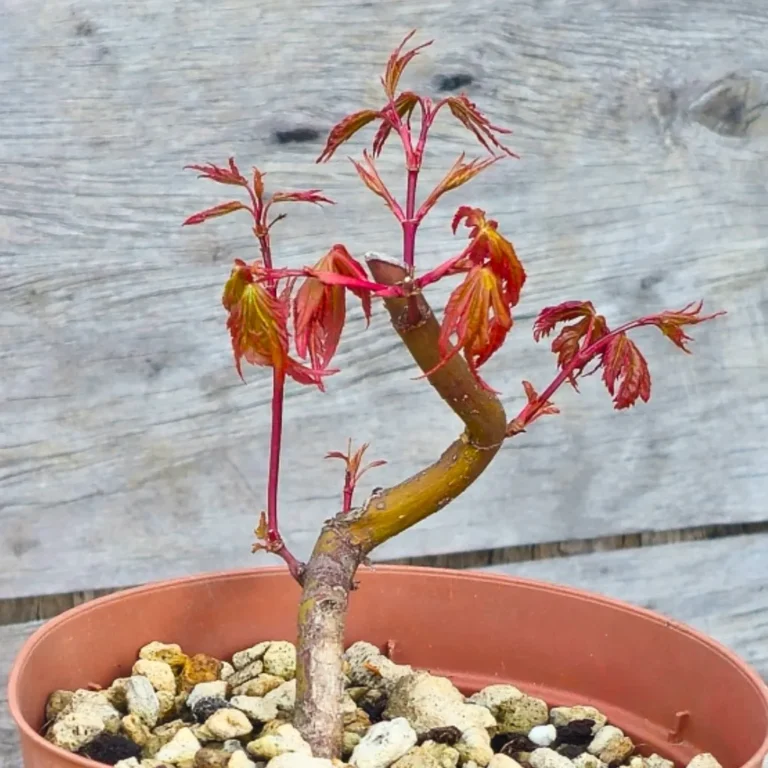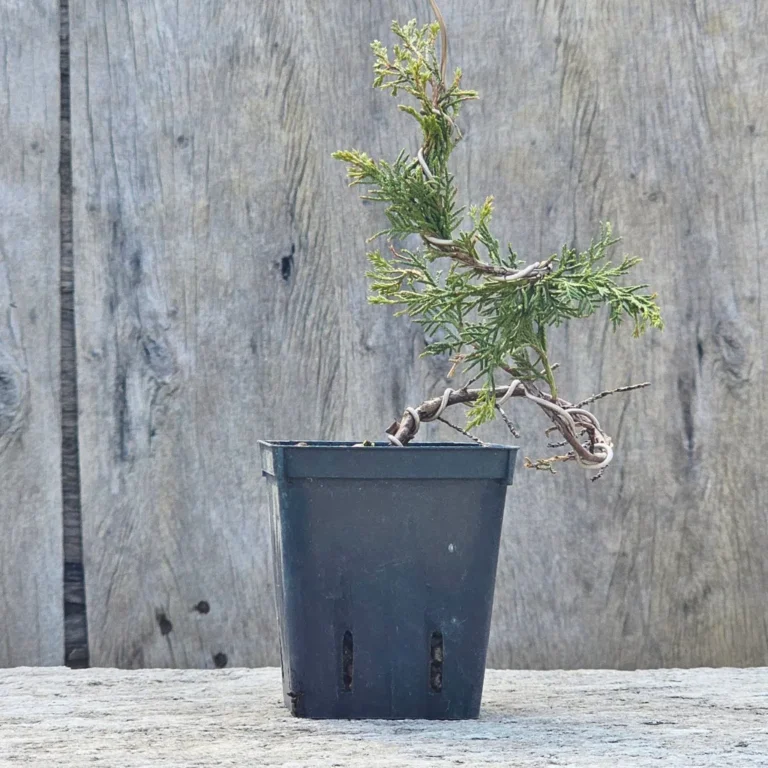
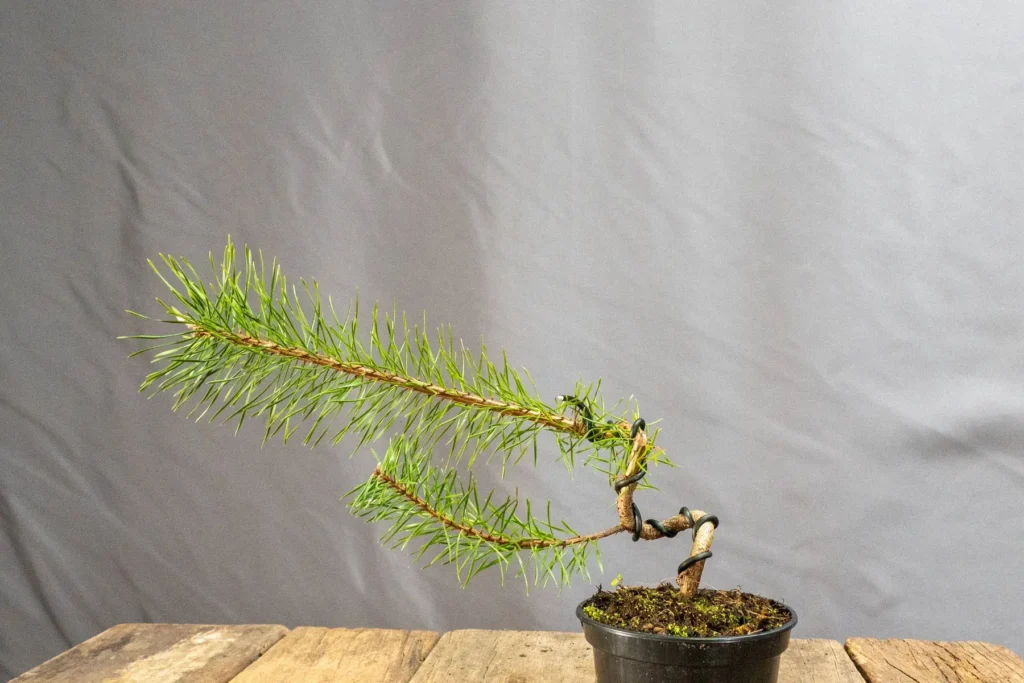
The Pinus sylvestris, commonly known as the Scots Pine, is one of the most iconic conifer species in the bonsai world. Native to Europe and Asia, it is valued for its rugged reddish-brown bark, resilient character, and the ability to convey age and strength even at a young stage. Its naturally twisting branches and elegant silhouette make it a favorite among bonsai artists who appreciate trees with presence, character, and long-term potential.
Pinus sylvestris at a glance
- Light
- Full sun, 6–8 h direct
- Water
- On the dry side, never bone-dry
- Temperature
- 10–25 °C; frost-hardy to –15 °C
- Feed
- Every 2 weeks, spring → late summer
- Repot
- Every 3–5 yrs, early spring
- Placement
- Outdoor all year
In the wild, the Scots pine thrives in windswept mountains and rocky, nutrient-poor soils. These conditions shaped a species that is naturally hardy, adaptable, and perfectly suited for outdoor bonsai cultivation. As the tree matures, the bark develops deep fissures and a warm, reddish tone that enhances its sense of age. Young branches are flexible and ideal for classical bonsai styles such as formal upright (Chokkan), informal upright (Moyogi), and slanting (Shakan).
Thinking about growing your own Scots pine from the very beginning? Explore our hand-selected Pinus sylvestris Young Pre-Bonsai and start shaping your tree today.
How often should I water my Scots pine bonsai?
Watering a Scots pine bonsai requires a balance between moisture and drainage. Pinus sylvestris prefers slightly drier conditions compared to most deciduous bonsai, but the soil should never be allowed to dry out completely. During the growing season (spring to early autumn), water thoroughly when the top layer of soil begins to feel dry. In warm periods, this often means watering every one to two days, depending on climate and pot size.
Always water until excess flows freely from the drainage holes, this ensures the entire root system is hydrated and helps prevent salt buildup. In hot or windy weather, daily watering may be necessary. In cooler or more humid conditions, reduce the frequency accordingly.
During winter dormancy, water significantly less, but keep the soil slightly moist to protect the fine feeder roots. Scots pines are sensitive to stagnant water, so good drainage and airflow around the pot are essential throughout the year.
How much sunlight does a Scots pine bonsai need?
Pinus sylvestris thrives in full sun, and abundant natural light is crucial for its strength and compact growth. Aim for six to eight hours of direct sunlight each day. This encourages shorter needles, denser branching, and strong bud development.
In spring and summer, place your Scots pine outdoors in a bright, open location with plenty of airflow. In very hot climates, light afternoon shade can help prevent needle scorch, especially on young or recently repotted trees. Good ventilation also helps prevent fungal issues and keeps the foliage healthy.
In autumn, continued full sun exposure helps harden the new growth for winter. During dormancy, the tree can remain outdoors in a bright, protected area. Scots pines are naturally frost-resistant and benefit from exposure to cold temperatures, which reinforces their natural seasonal rhythm.
What’s the best temperature for my Scots pine bonsai?
The optimal temperature range for Pinus sylvestris during the growing season is 10 °C to 25 °C (50 °F – 77 °F). The species tolerates summer heat and winter frost well when properly cared for.
Warm days and cool nights in spring and summer support balanced growth. Temperatures up to 32 °C (90 °F) are manageable with adequate airflow and slightly increased humidity around the foliage. Avoid water stagnation, as it reduces oxygen availability to the roots.
As autumn arrives, the tree slows its growth and prepares for dormancy. This transition strengthens the needles and hardens new wood in preparation for the following spring. During winter, Scots pines can tolerate temperatures well below freezing, down to approximately –15 °C (5 °F) for short periods. In regions with severe frost or dry winter winds, protect the root system by placing the tree in a cold frame, unheated greenhouse, or sheltered outdoor spot.
Fertilising your Scots pine bonsai
The Scots pine is a steady but nutrient-hungry grower. Begin fertilising in early spring as the candles extend, and continue through late summer. A balanced fertiliser (such as NPK 10-10-10) works well. Many growers switch to a low-nitrogen blend in late summer to promote root strength and improve winter hardiness. Organic fertilisers, including pellets or cakes, provide slow, consistent feeding and support soil micro-organisms.
Avoid heavy fertilising in early summer, as it can lead to long needles and coarse growth. Moderate, regular feeding maintains refined structure and balanced energy distribution.
Start with a tree that’s ready to train
If you want to put this guide into practice, our young Pinus sylvestris pre-bonsai are grown specifically for bonsai — not garden-centre stock.
Scots Pine Bonsai (Pinus sylvestris) – Young Pre-Bonsai
12 €
In stockDo I need to prune my Scots pine bonsai?
Pruning and wiring a Scots pine bonsai require observation and timing. Maintenance pruning is performed throughout the growing season by pinching or cutting new candles to control elongation and maintain balance between upper and lower branches. Structural pruning is best done in late autumn or early spring before active growth begins.
When pinching candles, always start with the strongest to distribute energy evenly across the tree. Older needles can be thinned in late summer to improve light penetration and encourage back-budding — an essential step in creating dense foliage pads.
When should I repot a Scots pine bonsai?
Repotting is typically required every three to five years, depending on the tree’s age and root development. The best time is early spring, just before the new candles extend. Pines dislike excessive root disturbance, so prune only the outer portion of the root mass and preserve as many fine roots as possible.
A free-draining soil mix is essential. A blend of akadama, pumice, and lava rock in equal parts works exceptionally well.
After repotting, water thoroughly and keep the tree in a shaded, sheltered location for roughly two weeks until growth resumes. Avoid fertilising for the first month to allow the roots to recover.
Does this guide work for other pines?
Broadly, yes — the core rhythm of pine bonsai care (full sun, restrained watering, working the candles as they extend) applies to most pines grown as bonsai. But each species sets its own pace. The Japanese black pine (Pinus thunbergii) is more vigorous and tolerates stronger techniques such as full decandling. The Japanese white pine (Pinus parviflora) is slower and softer, producing a single, more delicate flush of growth. The mugo pine (Pinus mugo), the Scots pine’s alpine cousin, stays naturally compact and buds back readily on older wood.
The Scots pine sits comfortably in the middle: one flush of growth per year, flexible young branches and reliable back-budding wherever light reaches the inner tree — which is exactly what makes it such a forgiving pine to learn on.
Working with a mugo instead? We’ve written a dedicated Mugo Pine Bonsai Care Guide — the watering and pruning windows differ in a few points that matter.
Common Problems
Overwatering and poor drainage are the most frequent causes of health issues in Pinus sylvestris bonsai. Yellowing needles often point to root stress or nutrient imbalance. Weak, elongated shoots may indicate insufficient sunlight. Fungal problems such as needle cast can occur in humid conditions but are easily prevented with proper airflow and careful watering.
With patience and respect for its natural rhythm, the Scots pine becomes one of the most rewarding and dignified bonsai species, a tree that embodies strength, endurance, and the timeless connection between human hands and nature.