EU delivery included from €70 · Shipped to 18 countries

Air-Layered Acer palmatum ‘Kotohime’ – Japanese Maple with Ready Nebari

An air-layered ‘Kotohime’ starts where a cutting hopes to arrive: radial nebari and real trunk caliper from day one. Same dwarf Japanese maple, same true-to-type guarantee — never grafted, air-layered on our own mother plants.

60 

You receive an established, independently rooted plant at least 25 cm tall, from the current air-layer batch — photos are representative.

Availability: Only 1 left in stock

Secure payments with:

Before you buy

Each tree is unique and photos are for reference. You can request current photos of available trees before buying.

Care details

Sun

Good light exposure with protection from strong midday sun in warmer climates.

Water

Keep soil consistently moist with excellent drainage.

Feed

Light, balanced feeding during the growing season to support slow, controlled growth.

Repot

Every 2–3 years in early spring, before bud break.

Soil

Slightly acidic to neutral, free-draining substrate.

Prune

Prune selectively after shoot hardening to preserve compact internodes and structure.

Plan its future

Every tree has more than one path. Book a 1-to-1 consultation with Luca to map out styling and next steps for this exact material, from €29.

Complete your collection

You may also like…

Air-Layered Acer palmatum 'Kotohime' — Characteristics & Bonsai Use

Every plant in this listing is a ‘Kotohime’ air layer: a section of one of our established mother trees, rooted while still on the plant and then separated as an independent maple. It is the same dwarf Japanese maple we sell as a young cutting — but it starts from a very different point.

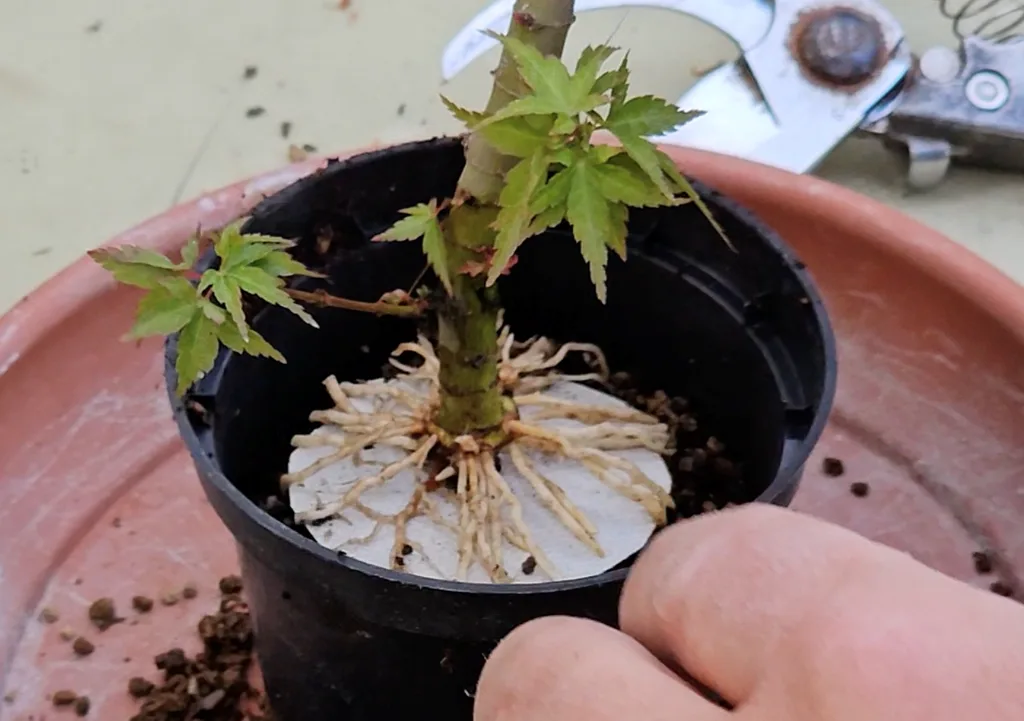
Air layering solves the two problems that take longest to fix in bonsai. The ring cut forces new roots to emerge in an even circle around the trunk, so the plant begins life in a pot with a flat, radial nebari instead of the one-sided root base most young material needs years of corrective work to overcome. And because the layered section comes off a mature branch, it carries real trunk caliper and older bark — structure a cutting of the same height simply cannot have.

Cutting starter Air layer
Starting material Current-season shoot Branch of a mature tree
Nebari You build it over years Radial ring, already formed
Trunk Pencil-thin Real caliper and older bark
Price 25 € — see the starter 60 €

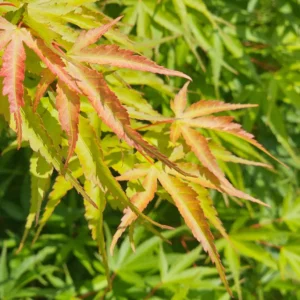
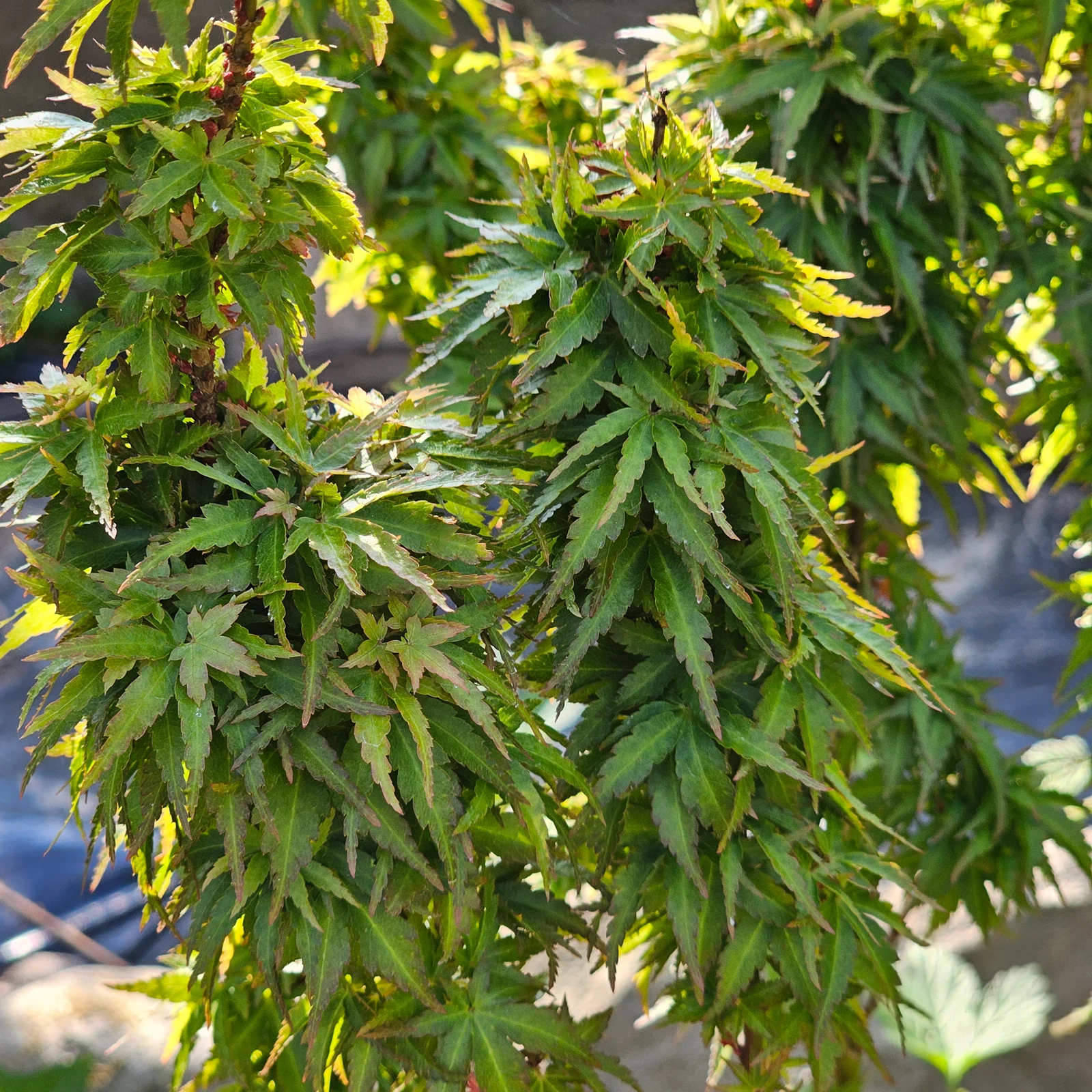
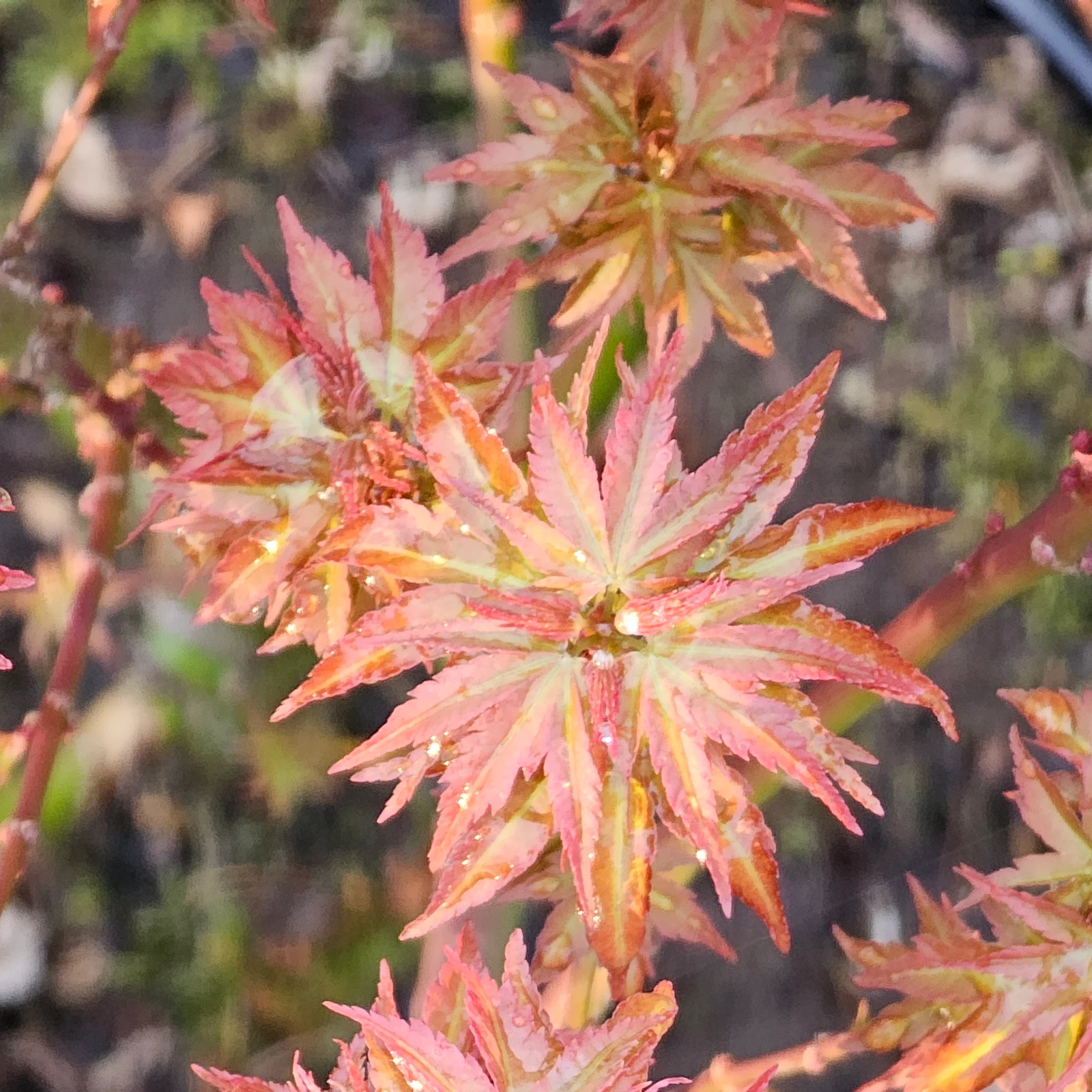
The cultivar itself needs little introduction: ‘Kotohime’ is one of the most versatile dwarf Japanese maples, with very short internodes and tiny leaves that allow pads, negative spaces and canopy control closer to a dense conifer than to a typical deciduous tree. New foliage emerges green edged with pink and red, and autumn turns the whole canopy deep red. On an air-layered base, that fine ramification work starts on top of a trunk and root system that already look established.

We document the whole process — and why we consider it worth the extra cost — in our guide to air layering Japanese maples for nebari. If you would rather start from zero and build every stage yourself, the young ‘Kotohime’ cutting starter is the same cultivar at its earliest point.

Cultivation note: Treat a freshly potted air layer as an established young tree, not a fragile one — normal ‘Kotohime’ care applies. Give it its first season to consolidate in the container before heavy root work, then develop it as you would any promising pre-bonsai: the difference is that the base you are building on is already solved.

Why buy from Treevaset

Grown specifically for bonsai

not garden-centre stock.

European distribution, limited batches

shipped EU-wide — no customs, no import risk.

Support from experienced growers

Luca answers personally.

Air-layered from mature stock

mature bark and real character from year one.

Compare Japanese maple cultivars

CultivarLeaf sizeInternodesGrowth habitSpring colourBarkAdult size
OrihimeVery smallShortDwarf, compactLight green, bronze marginsSmooth1–2m
KotohimeSmallVery shortDwarf, compactGreen, pink-red marginsSmooth1–2m
Sei HimeSmallShortDwarf, compactYellow-greenSmooth1–2m
SeigenMediumMediumSemi-dwarf, uprightRed-purpleSmooth1–2m
Beni ChidoriMediumMediumSemi-dwarf, uprightPink to orangeSmooth2–4m
Beni TsukasaMediumMediumSemi-dwarf, uprightLight red, pink tonesSmooth2–4m
KatsuraMediumMediumUprightOrange to yellowSmooth1–2m
UkonMediumMediumUpright, fastEmerald green, yellow accentsSmooth2–4m
DeshojoLargeLongUpright, vigorousDeep red, pink tonesSmooth2–4m
Allen’s GoldLargeLongUpright, vigorousGolden-chartreuse, pink-red marginsRough3–5m
ArakawaLargeLongUpright, vigorousLight green, red marginsRough (corky)3–5m

Feedback from growers

★★★★★ 4.9/5 · 100+ verified reviews on eBay

Markus ★★★★★ Google · Translated from German

Super personal service and wonderful rare Acer varieties. When the courier had delivery problems, Luca was easy to reach and immediately arranged a replacement. Absolute recommendation!

Acer Palmatum Cultivars
Silpap ★★★★★ eBay · Translated from Italian

Extremely happy with my Acer palmatum — it's exactly what I wanted. Serious, kind and competent, with an excellent quality-price ratio. I'll definitely buy again.

Young Pre-Bonsai
Matlor ★★★★★ eBay · Translated from German

Very well packaged, a beautiful larch, exactly as described. Clear recommendation.

Outdoor Bonsai
Airvik ★★★★★ eBay · Translated from Italian

Everything perfect — the little plant arrived well packed and healthy, and I used it right away for a root graft.

Young Pre-Bonsai
Kirogalgo ★★★★★ eBay · Translated from French

A lovely larch with a beautiful trunk base. Perfect packaging and fast shipping.

Young Pre-Bonsai
Roberto ★★★★★ Google · Translated from Italian

Excellent seller — professional, kind, and the bonsai arrived perfect and healthy. Bomb-proof packaging, highly recommended!

Bonsai

FAQs

What exactly is an air layer?
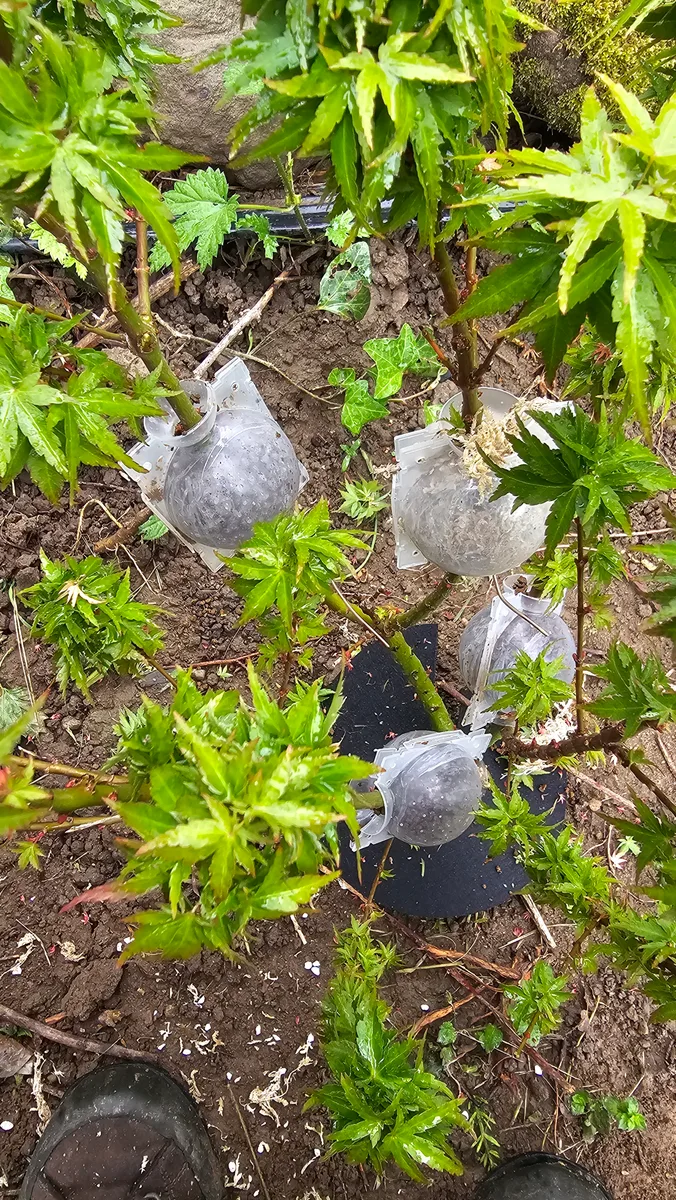
A propagation technique. A ring of bark is removed on a branch of the mother tree; roots form at the cut while the branch is still attached and fed by the tree, and once the root ball is established the branch is separated and potted as an independent plant. The result keeps the trunk, bark and maturity of the branch it came from. We document the full process in our air-layering guide.
You are paying for development you no longer have to do. A cutting starts from zero: pencil-thin trunk, roots wherever they happen to emerge. An air layer starts with the caliper and bark of a mature branch — typically three to four years old — and a radial root base induced at the cut. In bonsai terms those are the two slowest things to build — the price difference reflects development, not size.
It is different by construction. On a cutting, roots emerge wherever they happen to form, and building an even, radial base takes many seasons of selective root work. The air-layer ring forces roots to appear around the whole circumference, so the radial base that defines good nebari is there from the start. It still benefits from normal root work at repotting — but you are refining a good base, not correcting a flawed one.
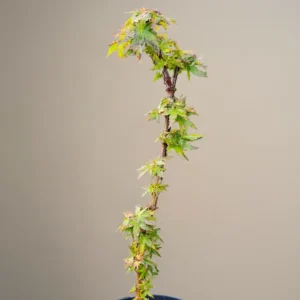
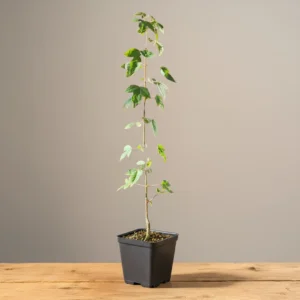
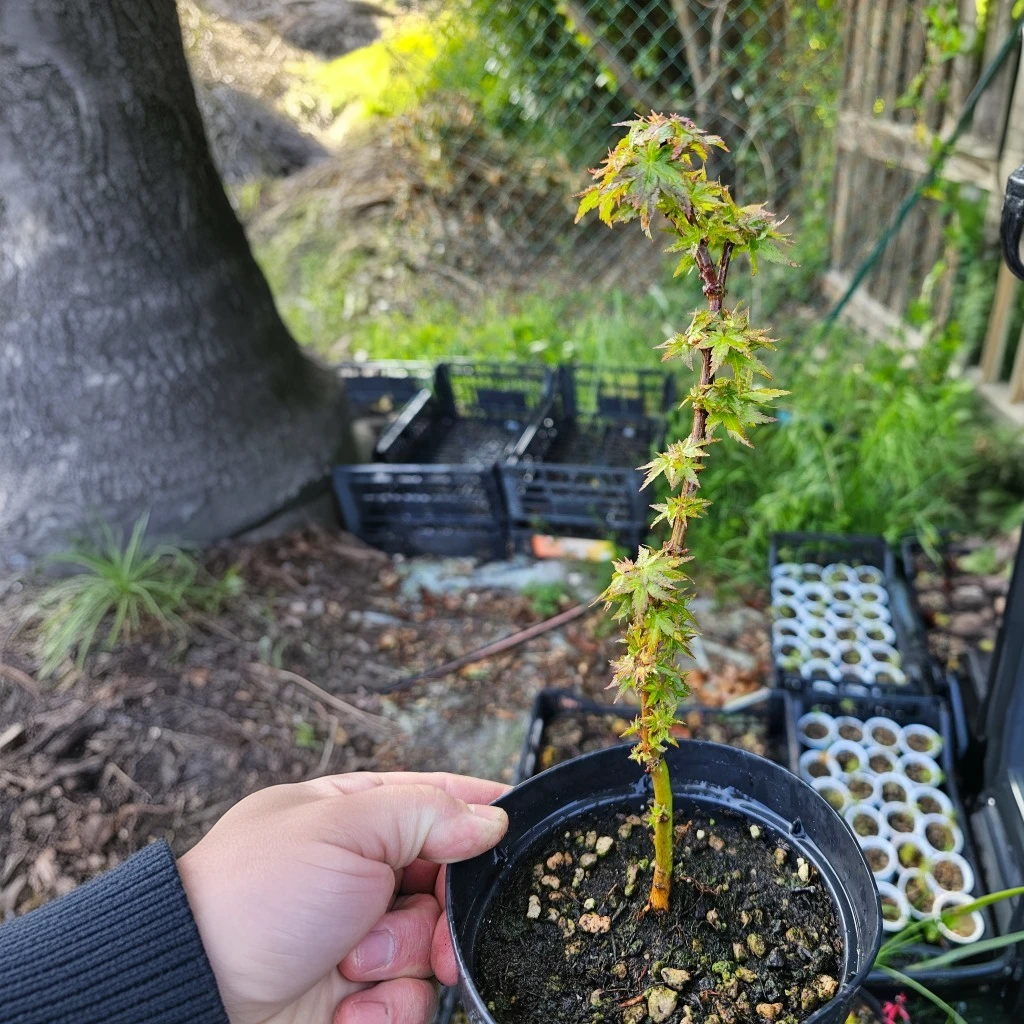
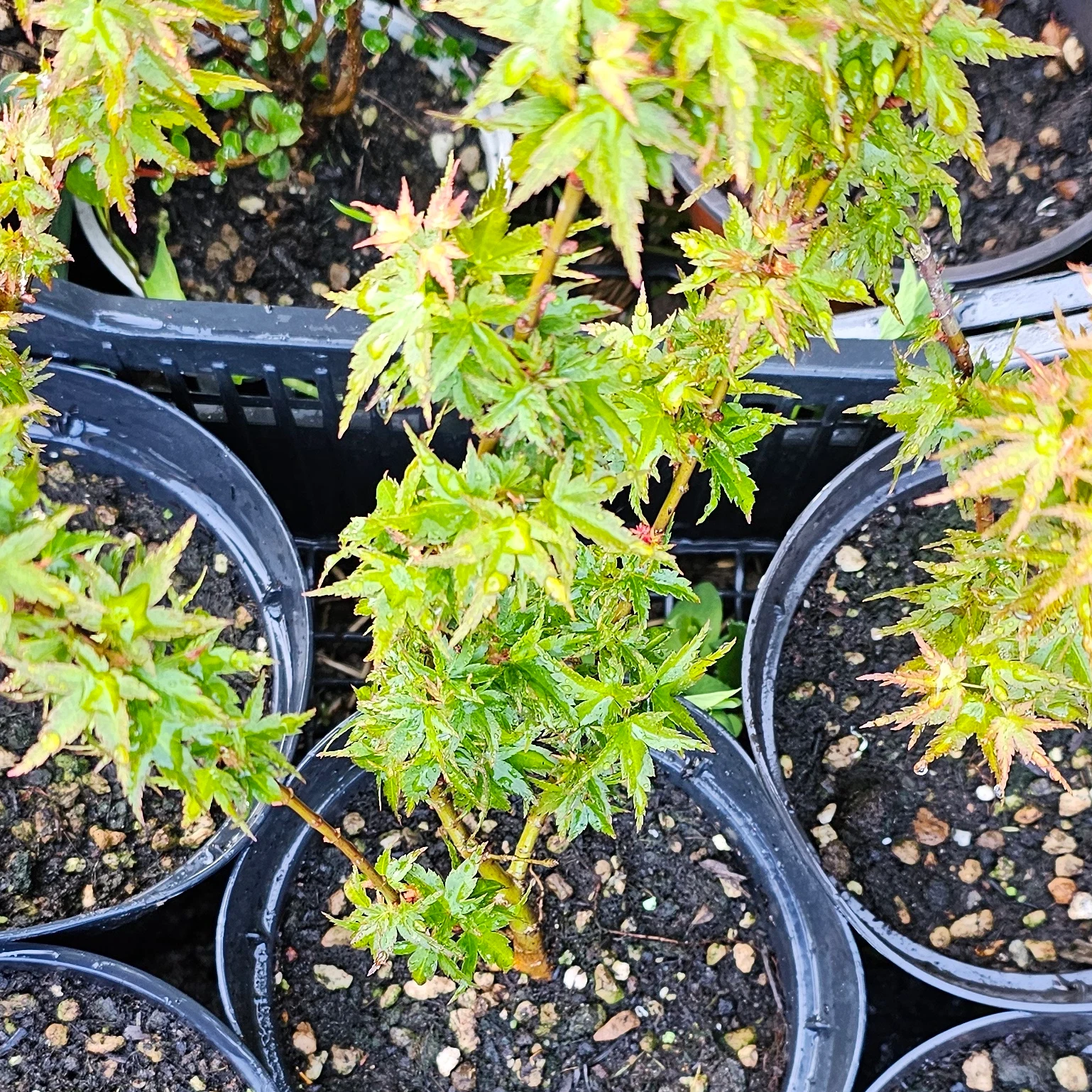
One of the air-layered ‘Kotohime’ plants from the current batch: independently rooted and established in its container. Photos are representative of the batch. Care is identical to any ‘Kotohime’ — see the care summary on this page.
‘Kotohime’ suits shohin, mame and group plantings, and its short internodes let you shape pads and negative spaces almost like a dense conifer. With the established base of an air layer, it is also strong material for designs where the trunk line and nebari are on show from the first styling.

Related products

Air-layered Acer palmatum 'Kotohime' pre-bonsai in its container — the plant you receive

Air-Layered Acer palmatum ‘Kotohime’ – Japanese Maple with Ready Nebari

60