EU delivery included from €70

Flowering Quince Bonsai ‘Chojubai’ (Chaenomeles japonica)

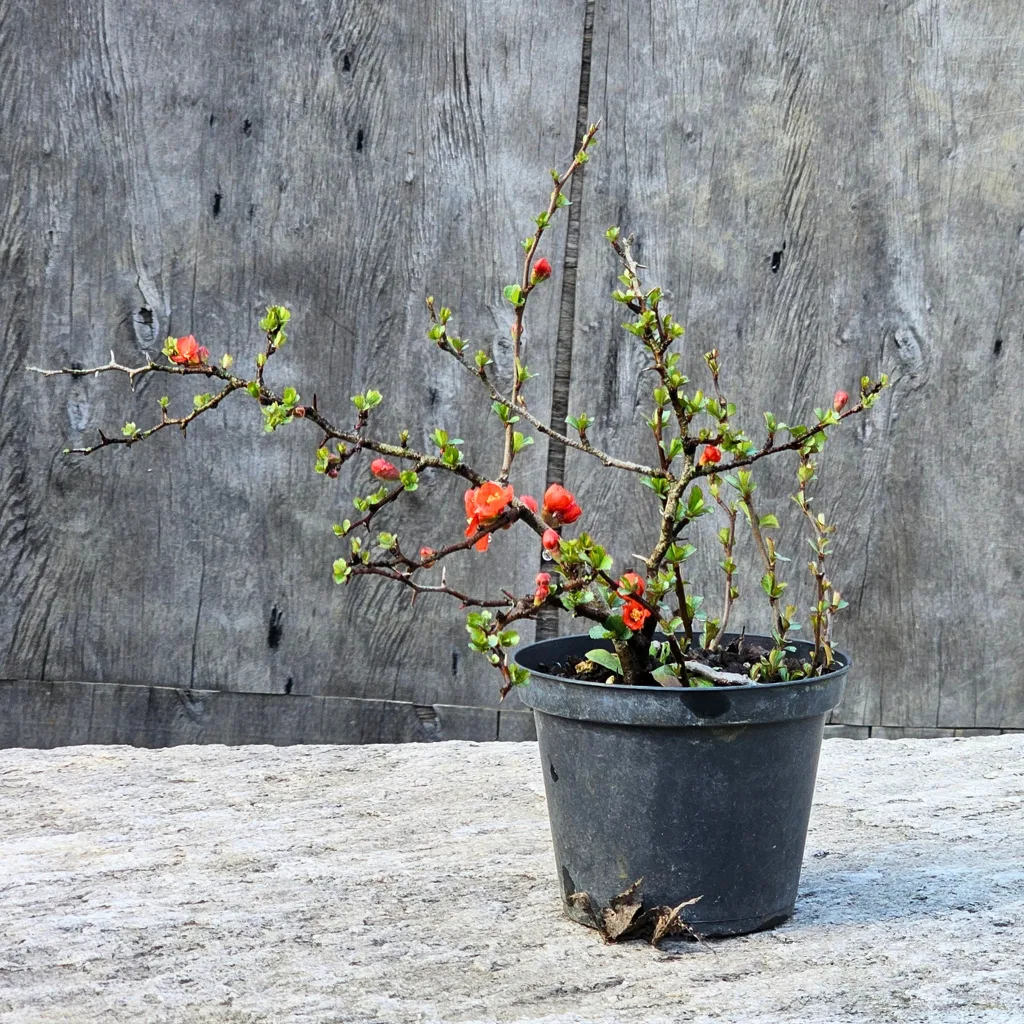
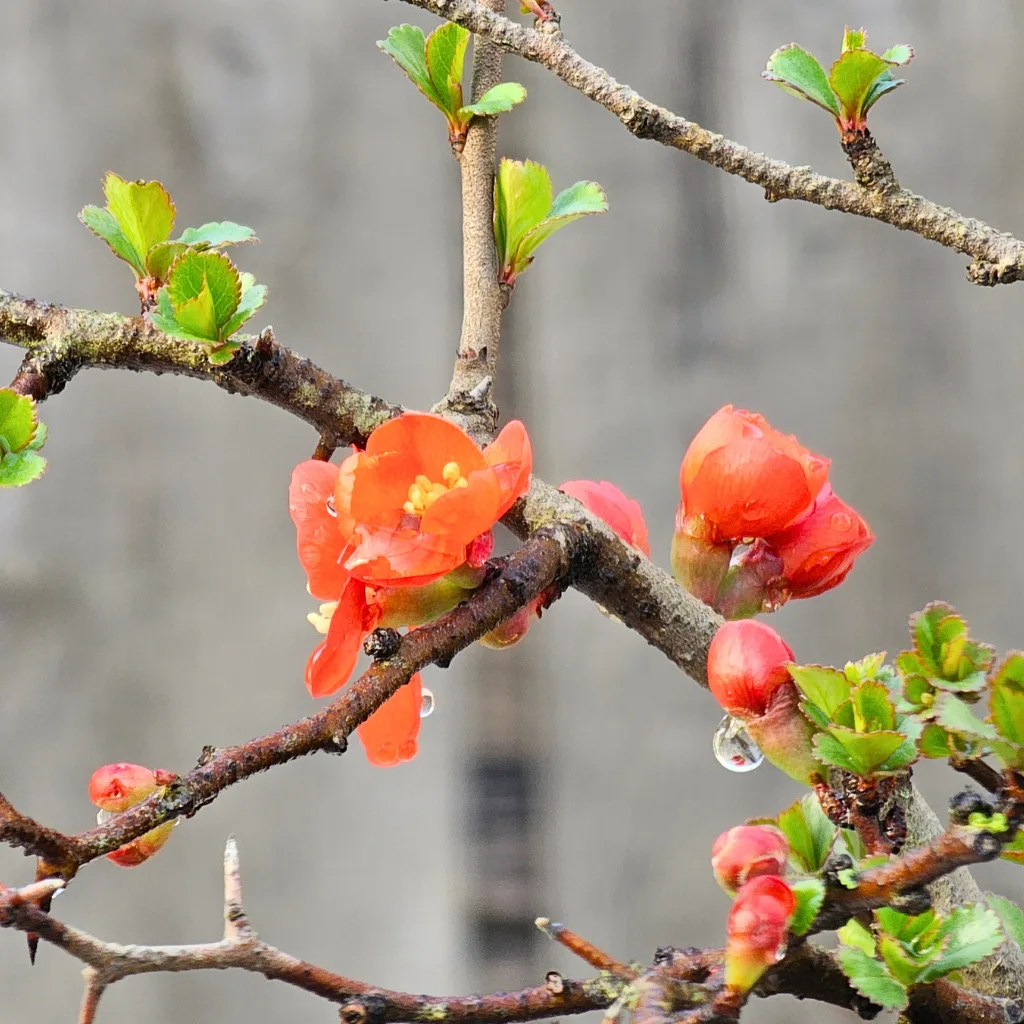
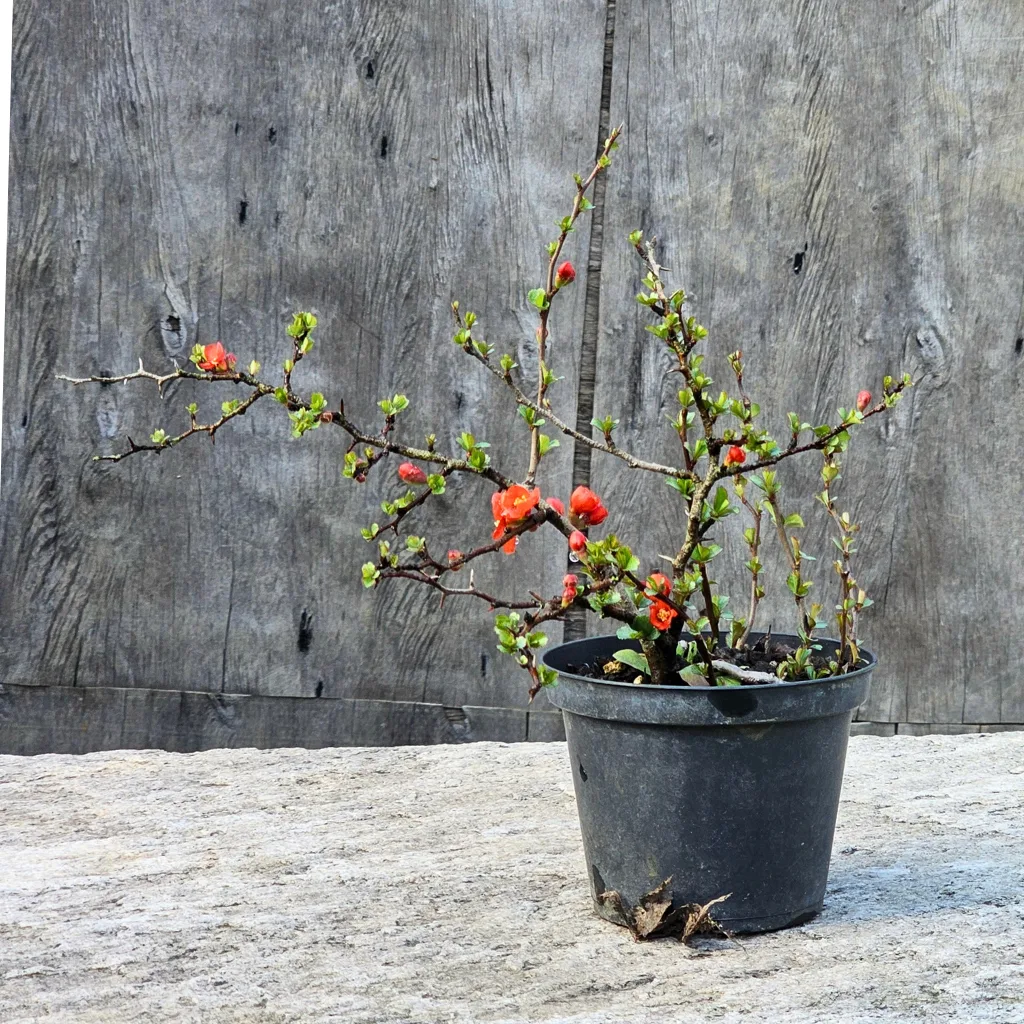
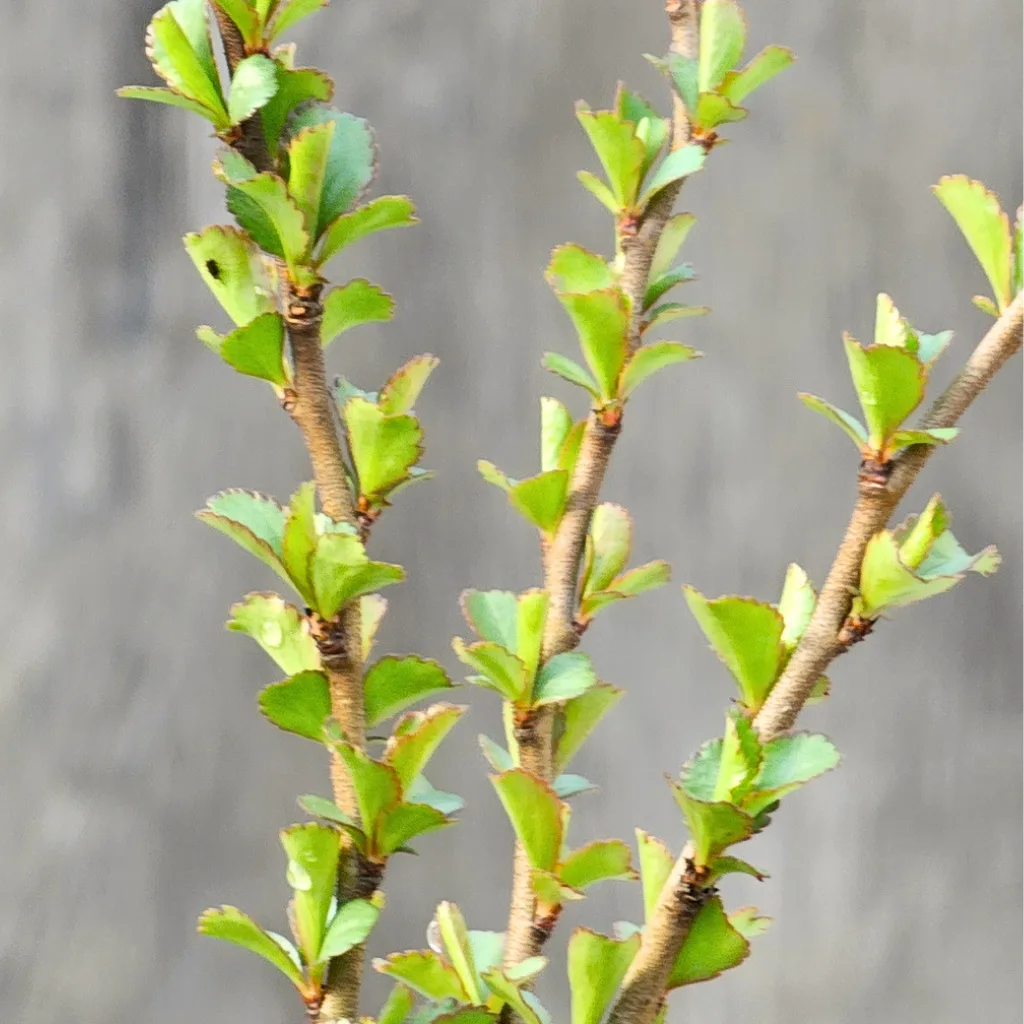
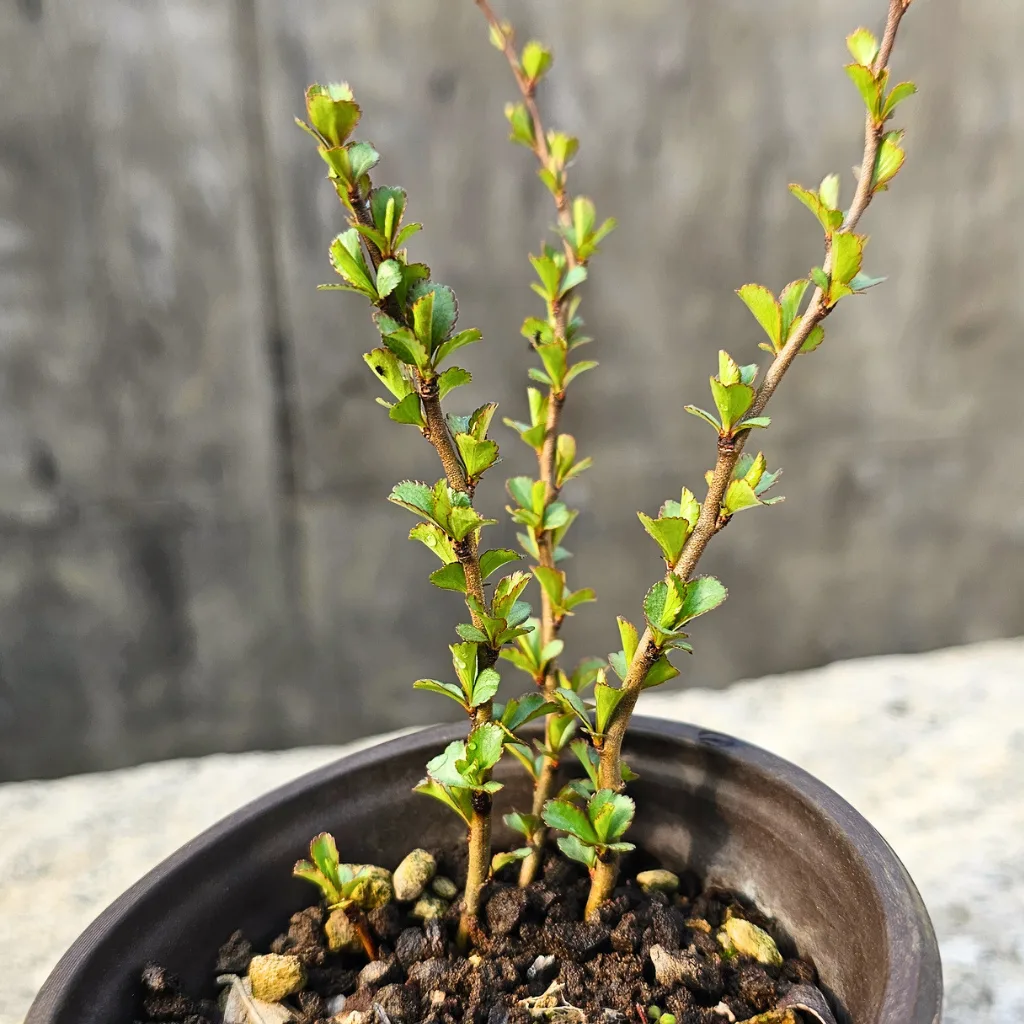
Chojubai is the dwarf form of Chaenomeles japonica, the most coveted flowering quince in bonsai: fingernail-sized leaves, thorny twigs and a mass of red spring flowers on a naturally small, multi-trunked tree. This is our red-flowered selection, offered as a young rooted cutting or an older flowering specimen. Own-rooted and cutting-propagated in our nursery — never grafted, never imported.

Price range: 25,00 € through 75,00 €

All sizes refer to minimum height from soil to apex.
Secure payments with:

Before you buy

Each tree is unique and photos are for reference. You can request current photos of available trees before buying.

Care details

Sun

Full sun to light afternoon shade — sun drives the flowering.

Water

Keep evenly moist — never dry in flower; avoid hard limy water.

Feed

Feed regularly through the growing season, easing off during peak bloom.

Repot

Every 2–3 years in early spring, after flowering, before strong growth.

Soil

Neutral to slightly acidic, free-draining.

Prune

Prune selectively after the main flush; mind the thorns when wiring.

Complete your collection

You may also like…

Chaenomeles japonica 'Chojubai' — Flowering Quince in Bonsai

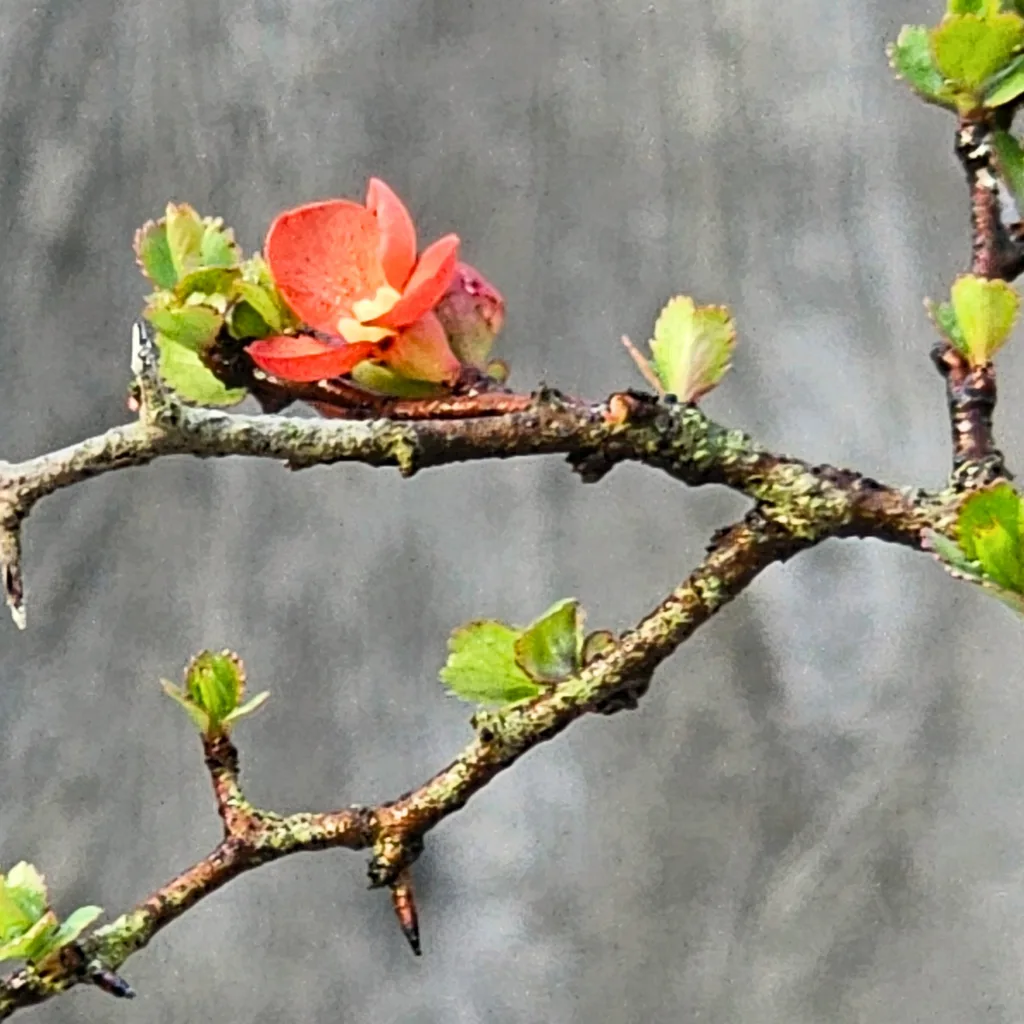
Chojubai is the dwarf, or nana, form of Chaenomeles japonica — the Japanese flowering quince — and one of the most sought-after subjects in small-size bonsai. It is not a single clone but a family of dwarf selections, and there is little firm information out there on how many exist — so the one thing we promise is the flower: ours is the red-flowered form. A member of the rose family and a close relative of quince, apple and the flowering cherries, it packs the whole character of a full-sized flowering quince into a miniature: leaves the size of a fingernail, twigs that branch in dense zig-zags, and fine thorns along the shoots.

What makes the dwarf form so prized for bonsai is its hormonal balance. The nana form grows with little vigour in the top but flowers with extraordinary generosity, opening waxy red blooms on the old wood — often several times a season — and setting small, fragrant yellow fruits. Because the internodes are so short, careful, repeated pruning builds a very dense branch structure quickly; the twiggy, flower-studded silhouette you see on show trees is the direct reward of that patient work. Left alone it stays small: the whole species has a strong basal dominance, rarely pushing past 30–40 cm, and instead throws new shoots from the base — which is exactly why Chojubai is so naturally suited to multi-trunk, clump and root-connected group styles rather than a single formal trunk.

This listing offers our red-flowered Chojubai in two sizes of the same selection: a young rooted cutting — the ideal, inexpensive way to start a mame or to build from zero — and an older, already-flowering specimen with established structure and the character bark. Both are grown on their own roots in our nursery from our own cuttings. For seasonal care, feeding around flowering and how we build ramification, see our Chaenomeles japonica bonsai care guide.

Cultivation note: Chojubai flowers on old and short spur wood, so resist shearing everything back in one go — prune selectively after the main flush and let the spurs build. The shoots carry fine thorns; wire and handle with a little care. Its one real weakness is chlorosis in hard, limy water and vigorous suckering from the base, which you can either remove or use to develop a clump.

Why buy from Treevaset

Grown specifically for bonsai

not garden-centre stock.

European distribution, limited batches

shipped EU-wide — no customs, no import risk.

Support from experienced growers

Luca answers personally.

Non-grafted, true-to-type plants

cutting-propagated to preserve the cultivar.

Feedback from growers

Americo Italian ★★★★★Translated from Italian

This bonsai had quite a story. It arrived in poor condition, not due to the seller but because the courier took longer than expected. Treevaset was extremely helpful and immediately available to resolve the situation. Highly recommended. I’ve purchased from them multiple times and I will definitely do so again.

Young Pre-Bonsai
Patfow German ★★★★★Translated from German

Friendly communication and fast delivery. At first, it wasn’t clear to me that the seller ships from Italy, which made me hesitant when ordering plants. However, the plants arrived in excellent condition thanks to very careful packaging.

Young Pre-Bonsai
Otreblaidur Italian ★★★★★Translated from Italian

The courier was delayed, but the plant arrived healthy thanks to excellent packaging. A very promising larch with good movement and already well-developed foliage. It has a subtle literati-style character that can be further enhanced. It deserves a proper, well-chosen pot. Very satisfied.

Young Pre-Bonsai
Jesus Spanish ★★★★★Original review

Trustworthy and honest seller. Well wrapped. Well received item. Recommended 100%. Ringraziare tanti.

Bonsai
Terabosa German (Austria) ★★★★★Translated from German

Very good quality, securely packaged and fast delivery.

Young Pre-Bonsai
Jkiod French ★★★★★Translated from French

Arrived in excellent condition, exactly as shown in the photos. Fast delivery. Impeccable.

Bonsai

FAQs

What makes Chojubai different from an ordinary flowering quince?
Chojubai is the dwarf (nana) form of Chaenomeles japonica. Everything is smaller and denser: fingernail leaves, very short internodes, and far more flowers than the garden shrub. That miniaturisation is why it is one of the classic subjects for shohin and mame bonsai — a full flowering quince in the palm of your hand.
The 7 cm plant is a young rooted cutting — the inexpensive way to start a mame, a clump or a group planting and to train from the very beginning. The 17 cm plant is an older, already-flowering specimen with established structure. Same red-flowered selection, two starting points.
Yes, but barely. It carries thorns like other flowering quinces, but on Chojubai they’re very small and not really stingy — nothing to worry about when wiring, pruning or repotting.
It flowers red on old and short spur wood, typically from late winter into spring, and often repeats through the season — and even the small size should flower, and set its small, fragrant yellow fruits, in the first year after you get it. The key is not to shear all the spur wood off at once — prune selectively after the main flush so the flowering spurs build up year on year.
The plant does the “small” for you — the whole species rarely exceeds 30–40 cm and dominates from the base. Your job is the density: short internodes reward regular, selective pruning with a very fine branch structure, and basal shoots can be removed or used to build a clump. Full seasonal detail is in our Chaenomeles japonica bonsai care guide.
Flowering quince bonsai 'Chojubai' (Chaenomeles japonica) in red flower

Flowering Quince Bonsai ‘Chojubai’ (Chaenomeles japonica)

Price range: 25,00 € through 75,00 €