
Acer palmatum cultivars for bonsai
Rare Japanese maple varieties available as young pre-bonsai
Acer palmatum (Japanese maple) cultivars are among the most valued choices for bonsai due to their refined leaf structure, short internodes and predictable growth behaviour. Unlike seed-grown material, selected cultivars offer consistent characteristics that allow precise control over size, branching and overall design.
At Treevaset, we specialise in Acer palmatum cultivars grown specifically for bonsai development and offered as young pre-bonsai. This page presents our curated selection of Japanese maple cultivars currently available in Europe, chosen for growers who value structure, control and long-term potential.
Why Acer palmatum cultivars matter in bonsai
Choosing the right cultivar is a fundamental decision in bonsai. Different Acer palmatum cultivars respond differently to pruning, wiring and seasonal management, directly influencing the final size and refinement of the tree.
Well-selected Japanese maple cultivars offer:
Naturally reduced leaf size and refined foliage
Shorter internodes compared to seed-grown maples
Stable and recognisable growth habits
Proven suitability for shohin and compact bonsai
Predictable seasonal behaviour without sacrificing structure
Selecting a cultivar is not about rarity alone, but about how reliably it performs under bonsai techniques over time.
Available Acer palmatum cultivars
Below you will find the Acer palmatum cultivars currently available. Each cultivar has its own dedicated page with detailed information about growth behaviour, bonsai suitability and availability.
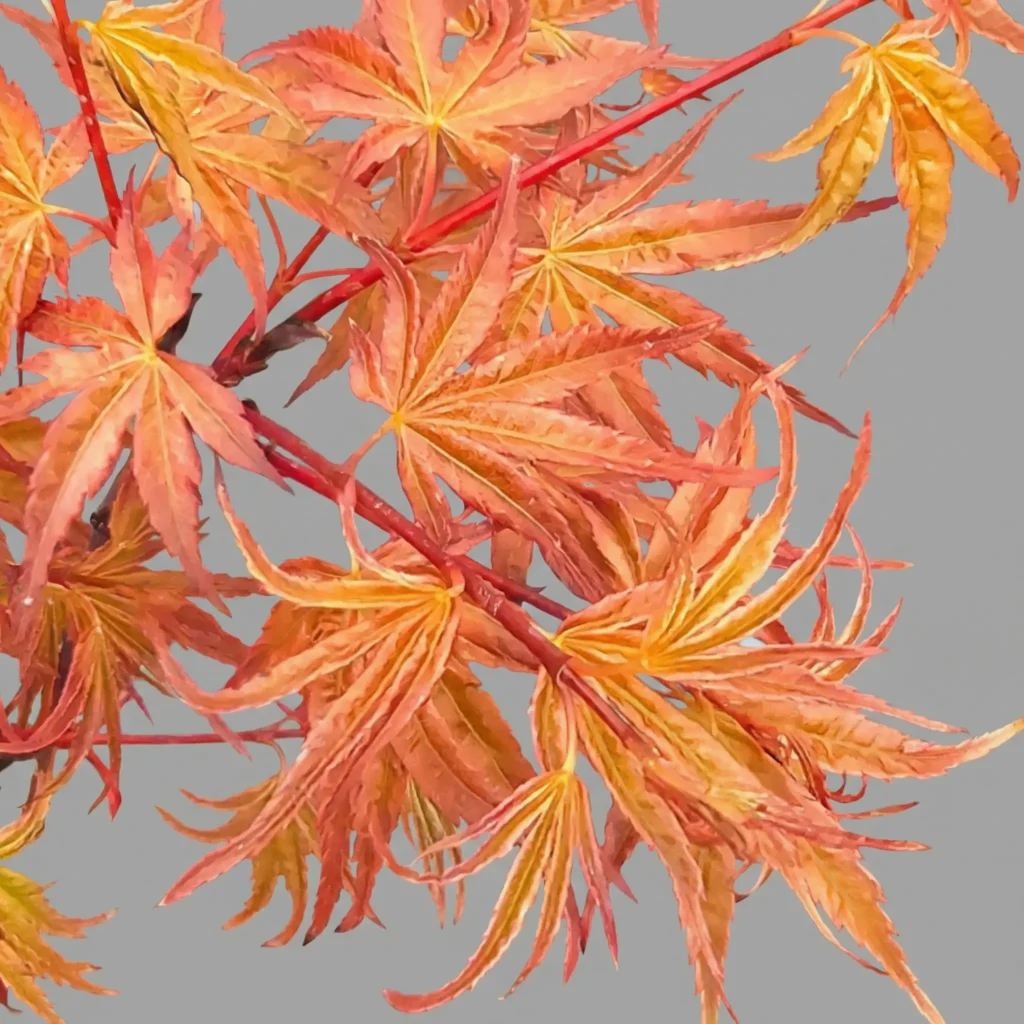
Acer palmatum ‘Beni Chidori’ – Japanese Maple for Bonsai (Young Pre-Bonsai)
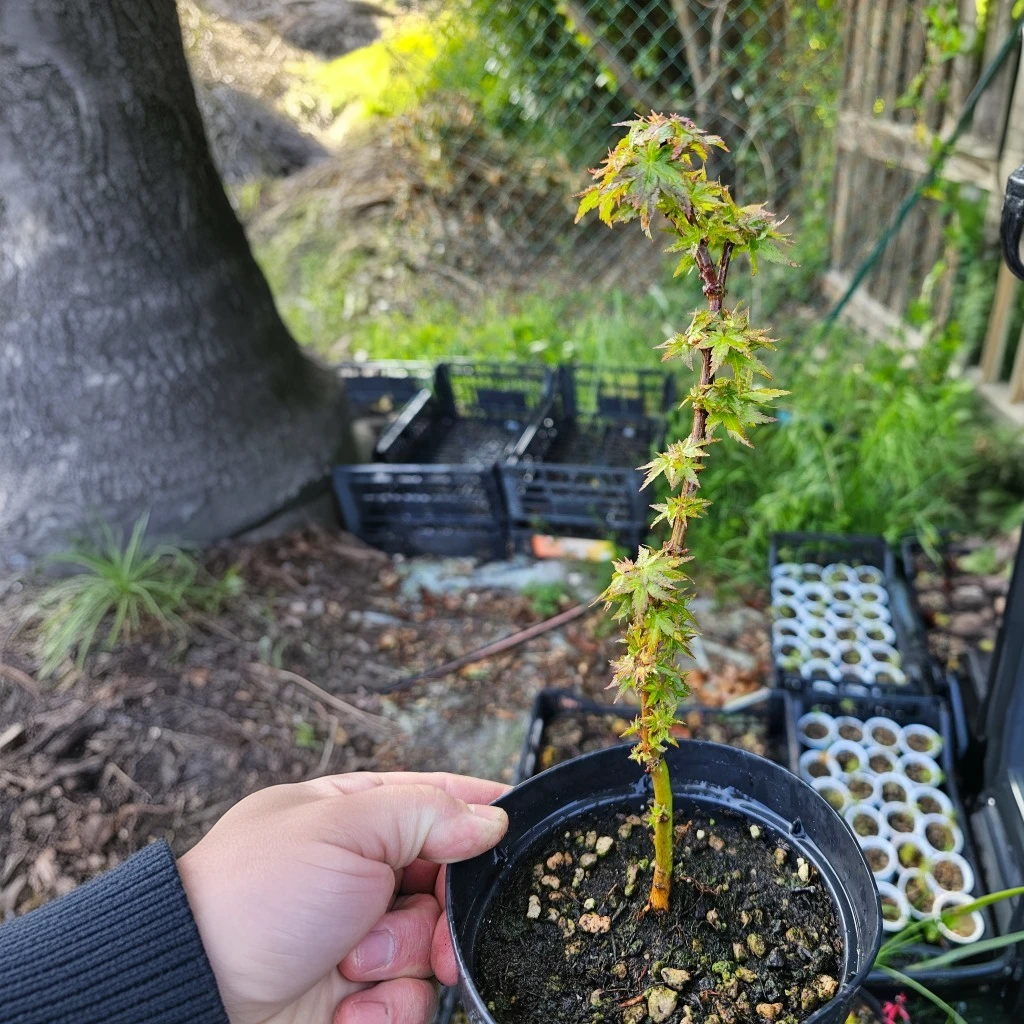
Air-Layered Acer palmatum ‘Kotohime’ – Japanese Maple with Ready Nebari
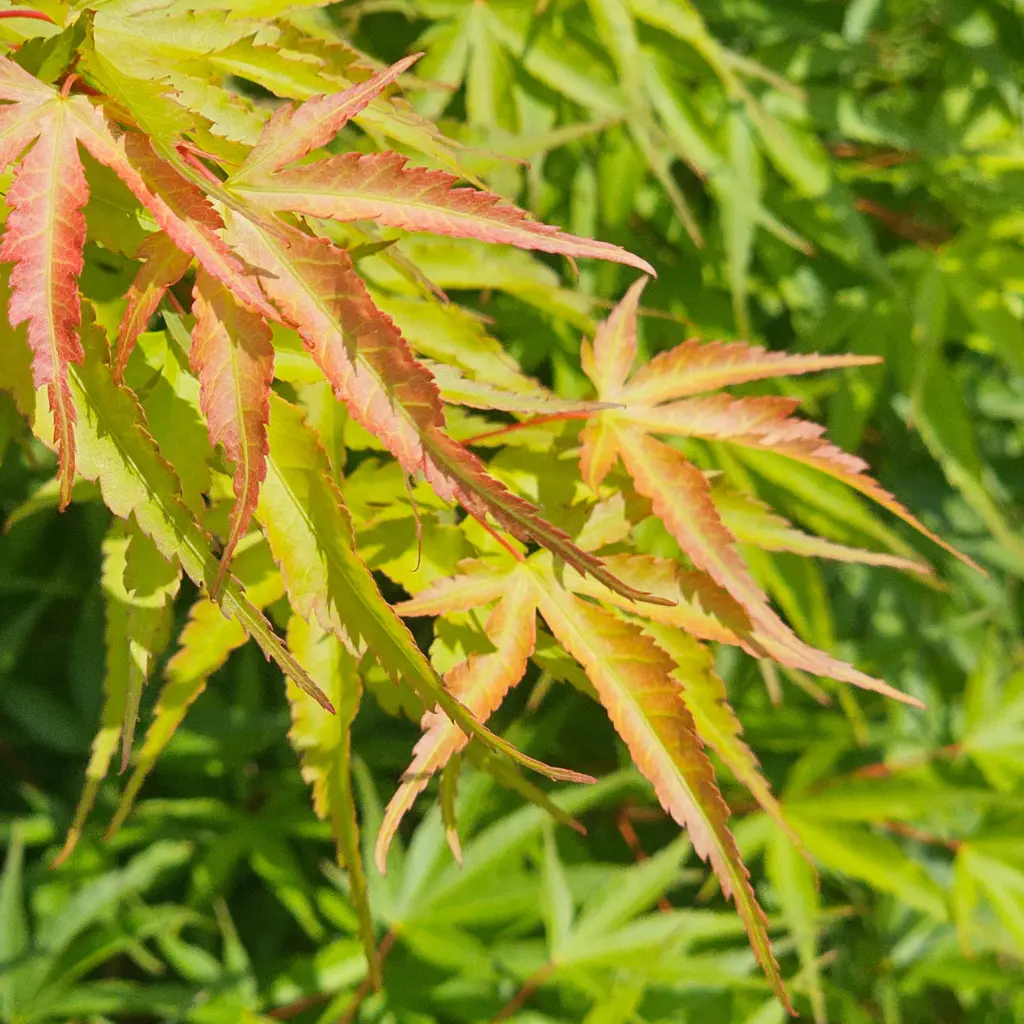
Acer palmatum ‘Arakawa’ – Japanese Maple for Bonsai
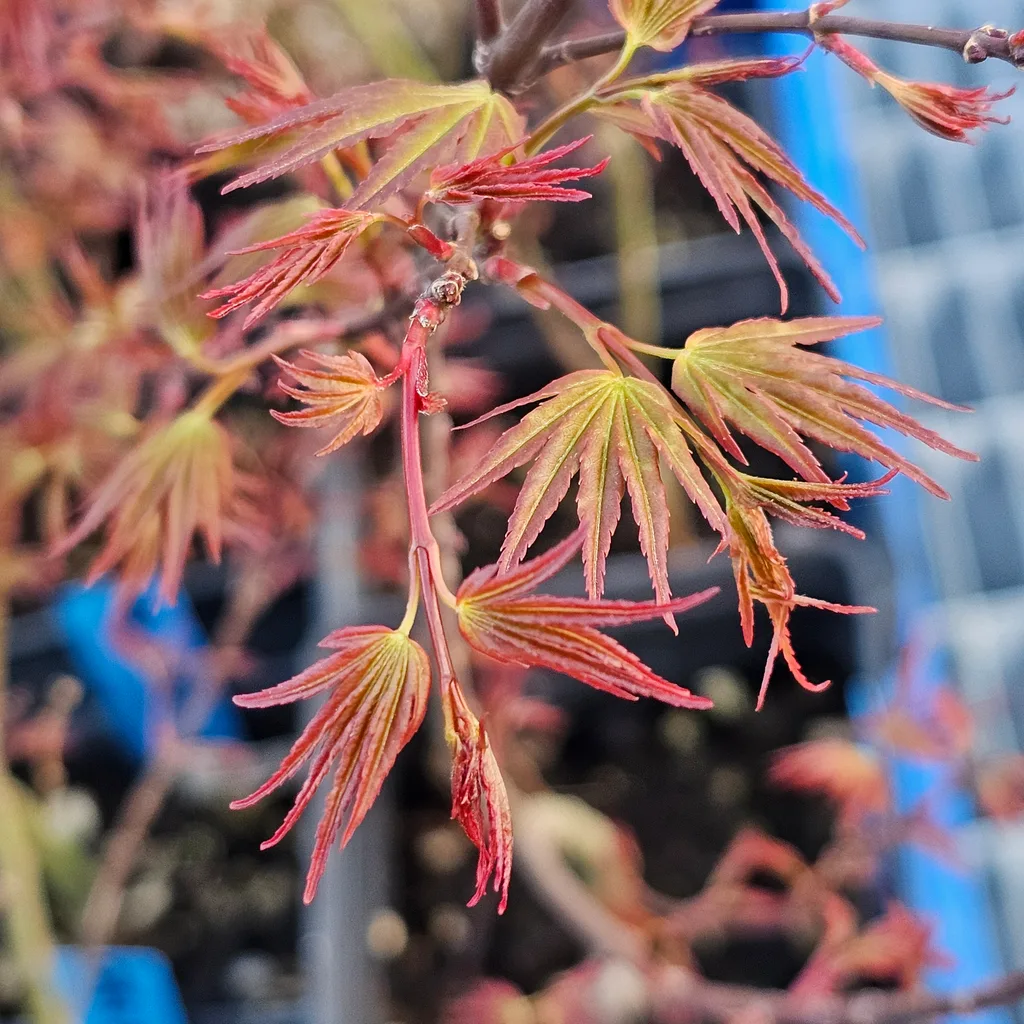
Acer palmatum ‘Orihime’ – Japanese Maple for Bonsai
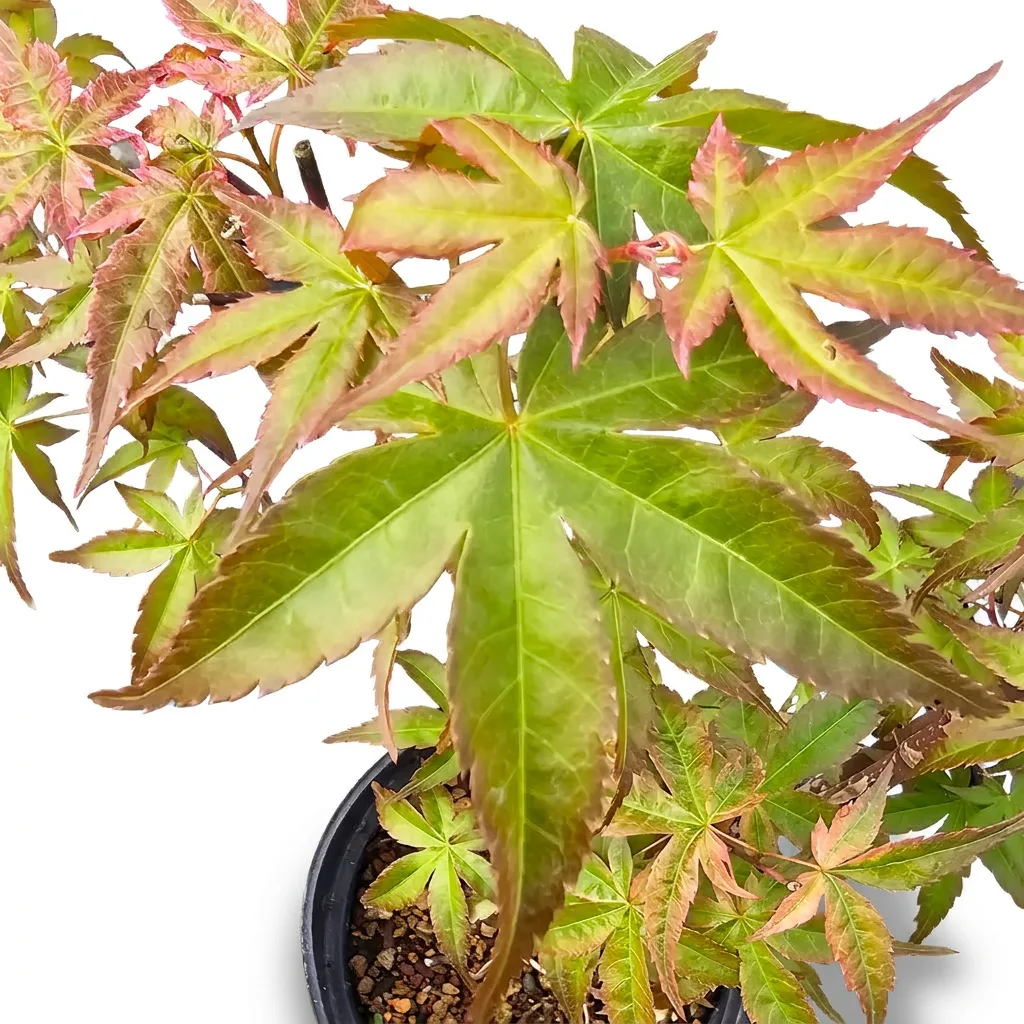
Acer palmatum ‘Beni Tsukasa’ – Japanese Maple for Bonsai
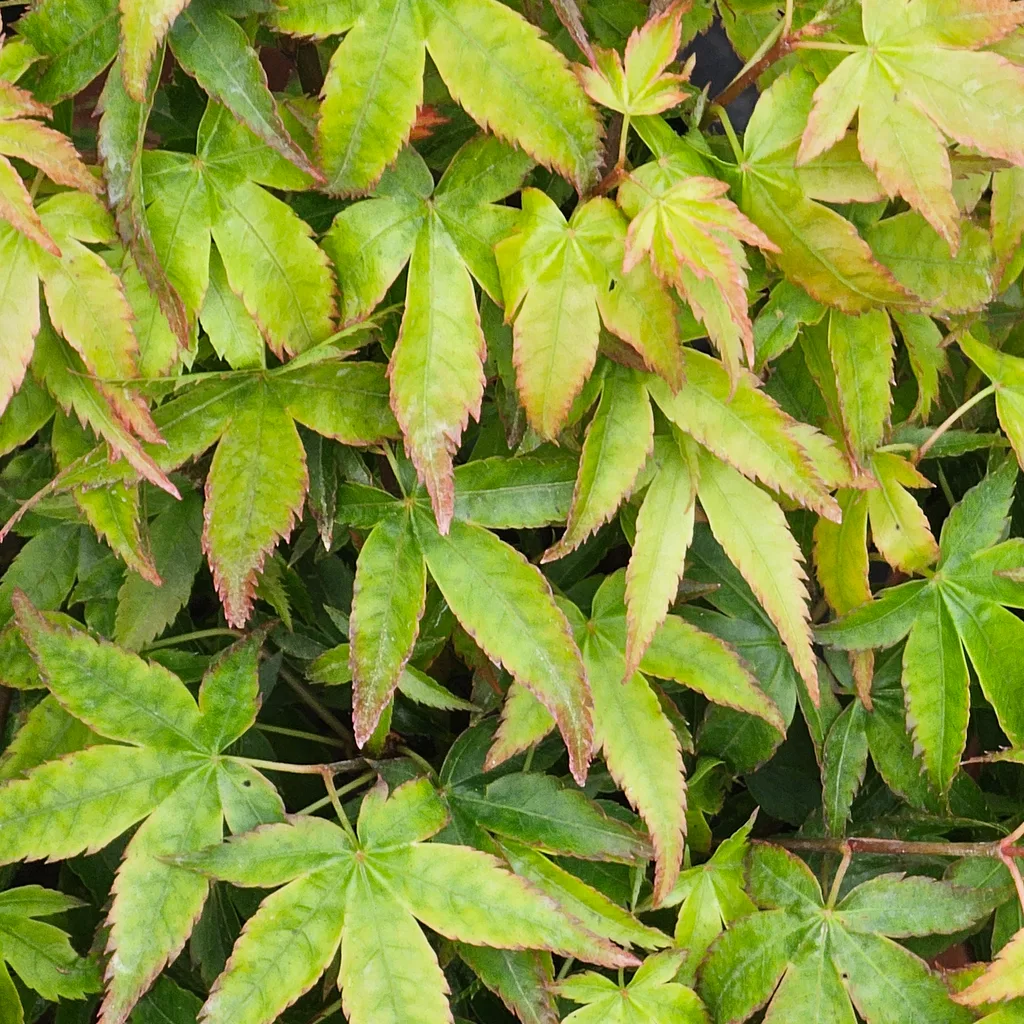
Acer palmatum ‘Sei Hime’ – Japanese Maple for Bonsai
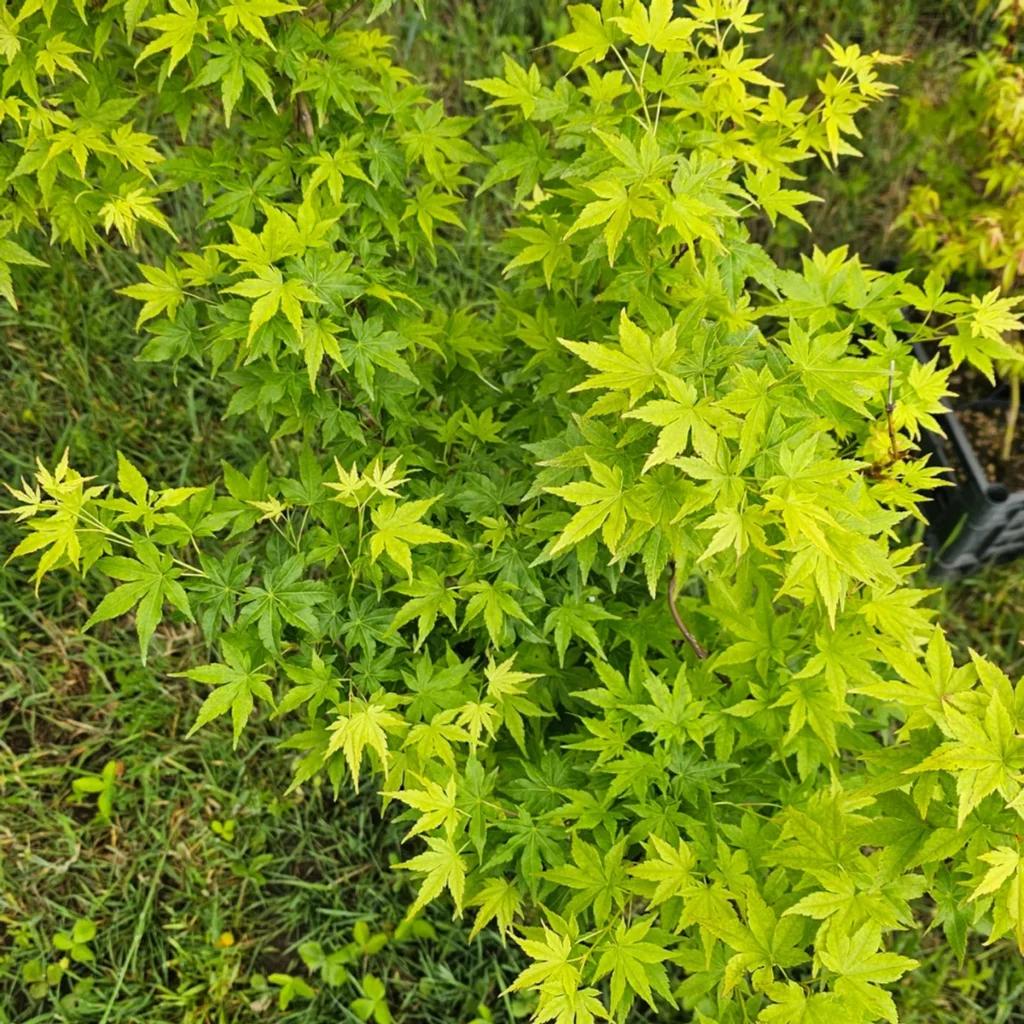
Acer palmatum ‘Ukon’ – Japanese Maple for Bonsai
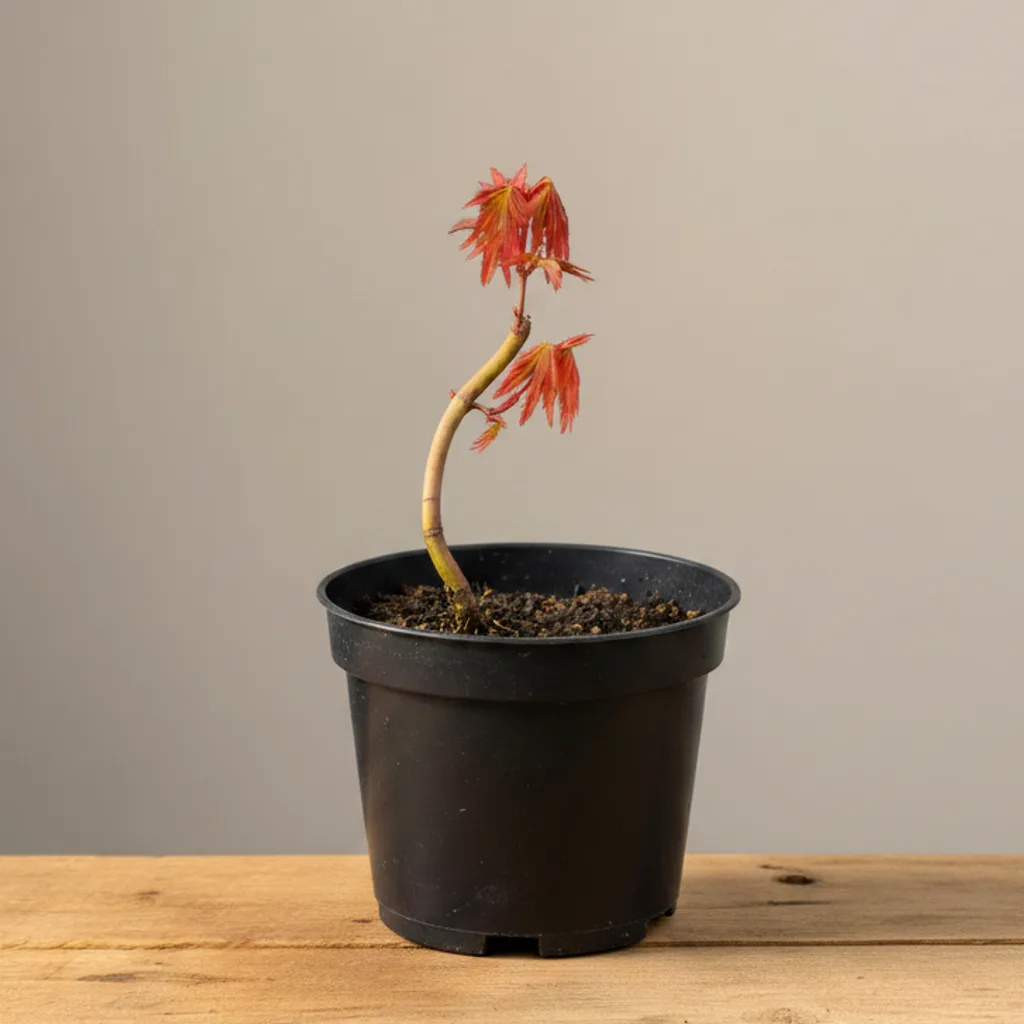
Japanese Maple Yamamomiji (Acer palmatum) – Young Pre-Bonsai
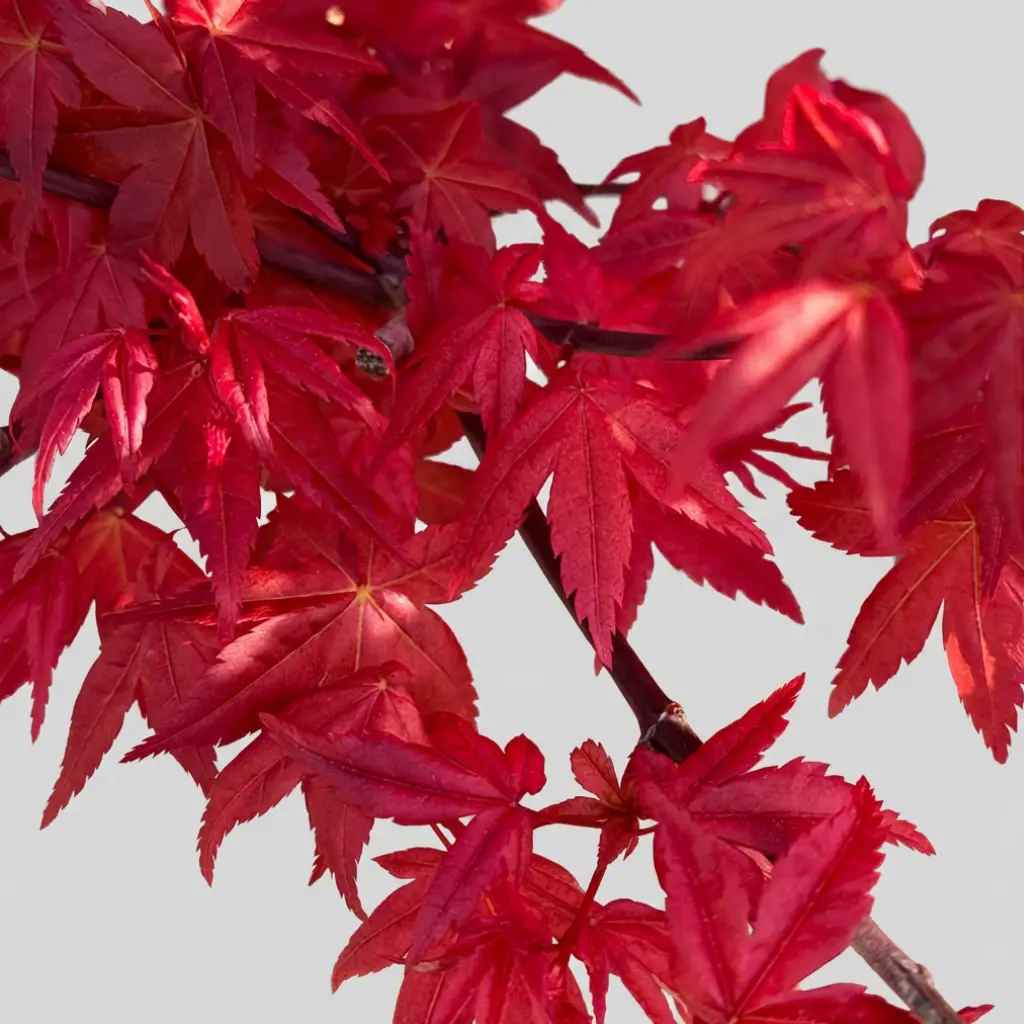
Acer palmatum ‘Deshojo’ – Japanese Maple for Bonsai
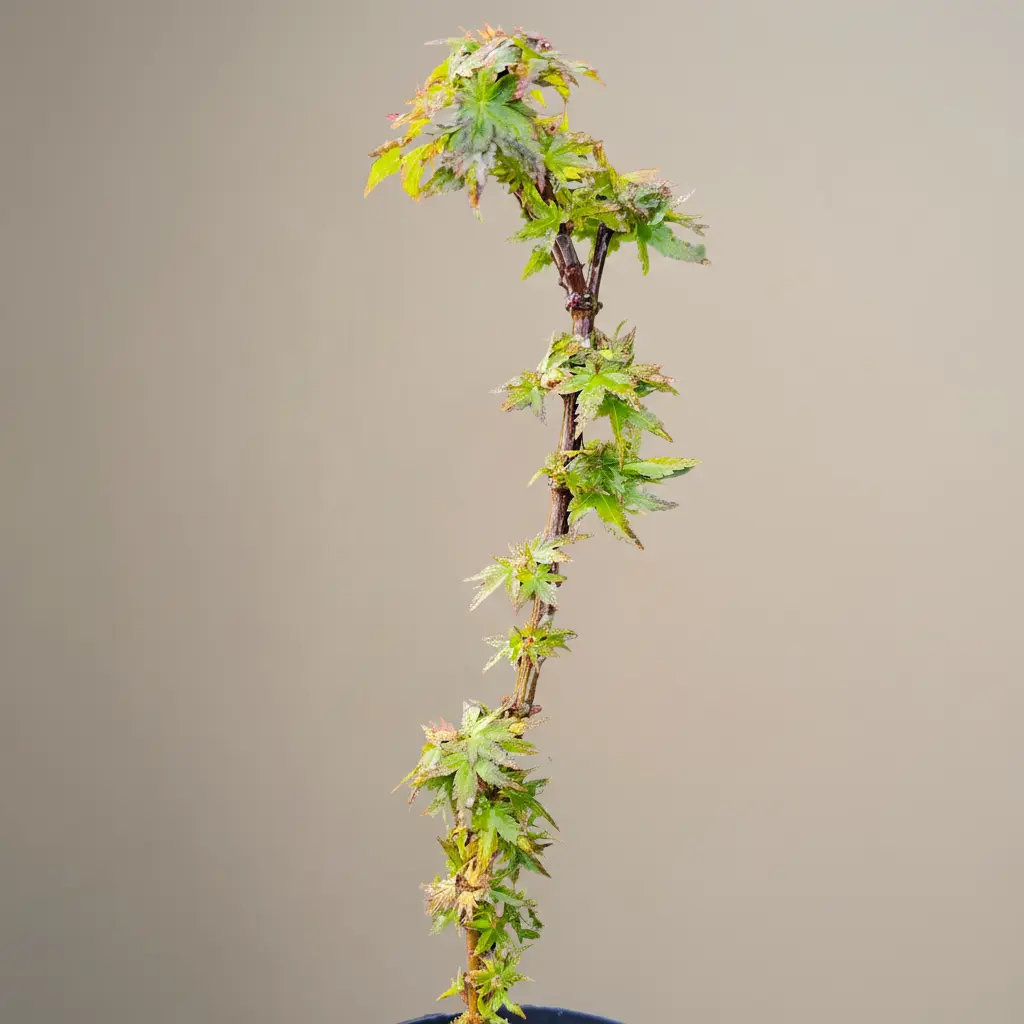
Acer palmatum ‘Kotohime’ – Japanese Maple for Bonsai
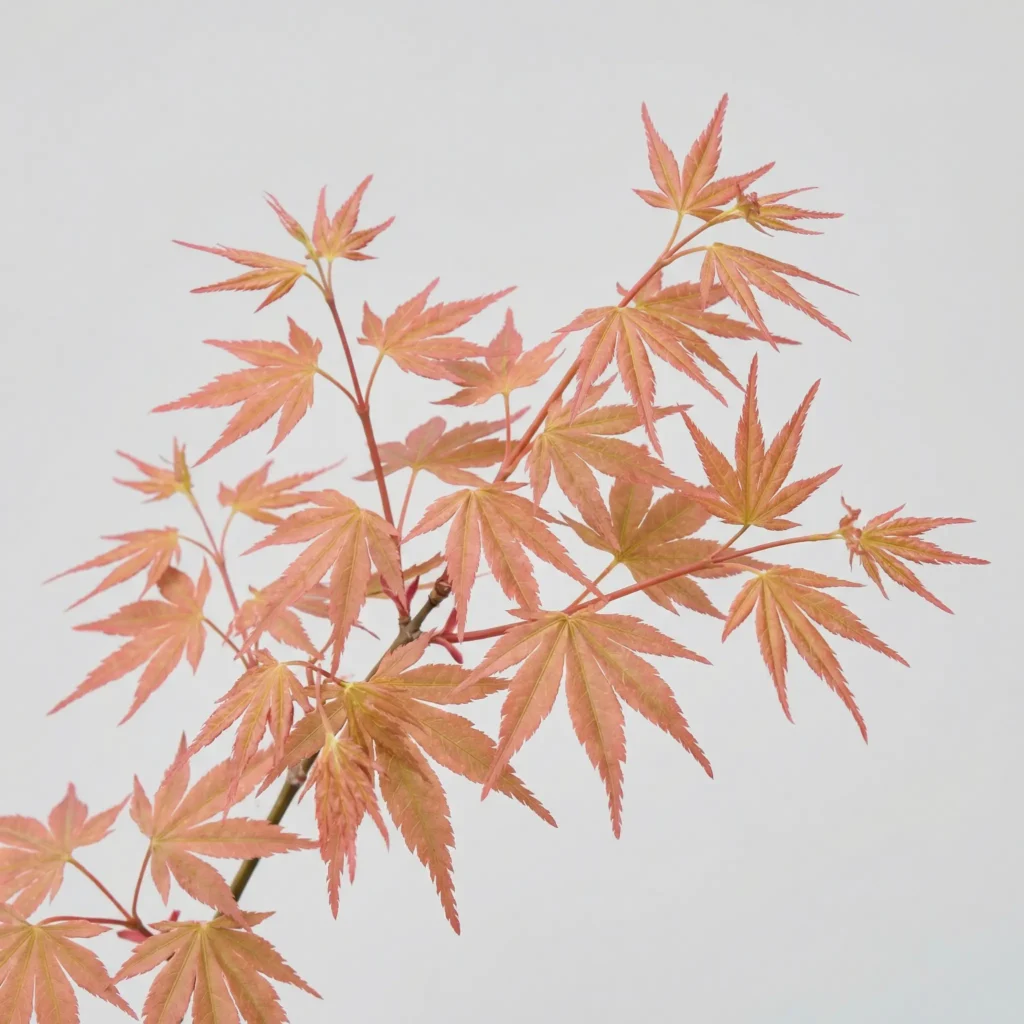
Acer palmatum ‘Seigen’ – Japanese Maple for Bonsai (Young Pre-Bonsai)
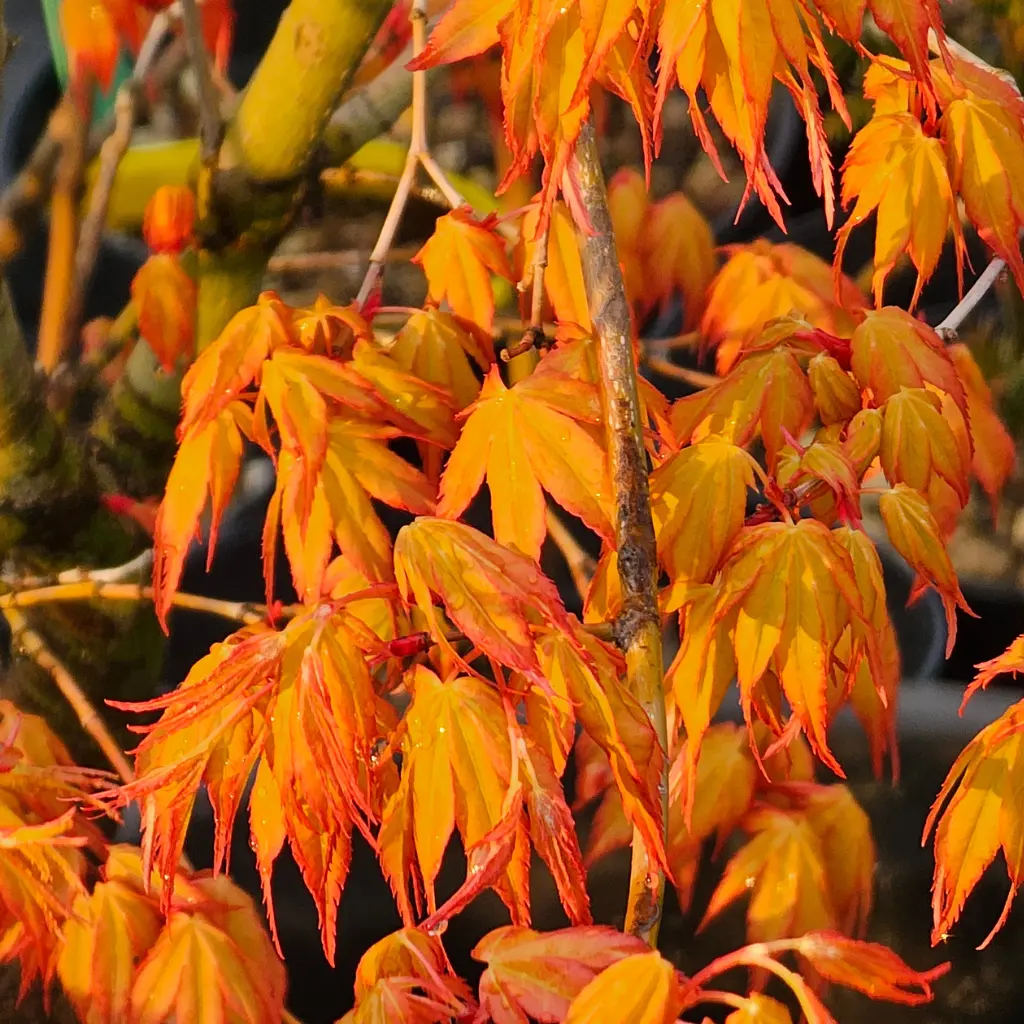
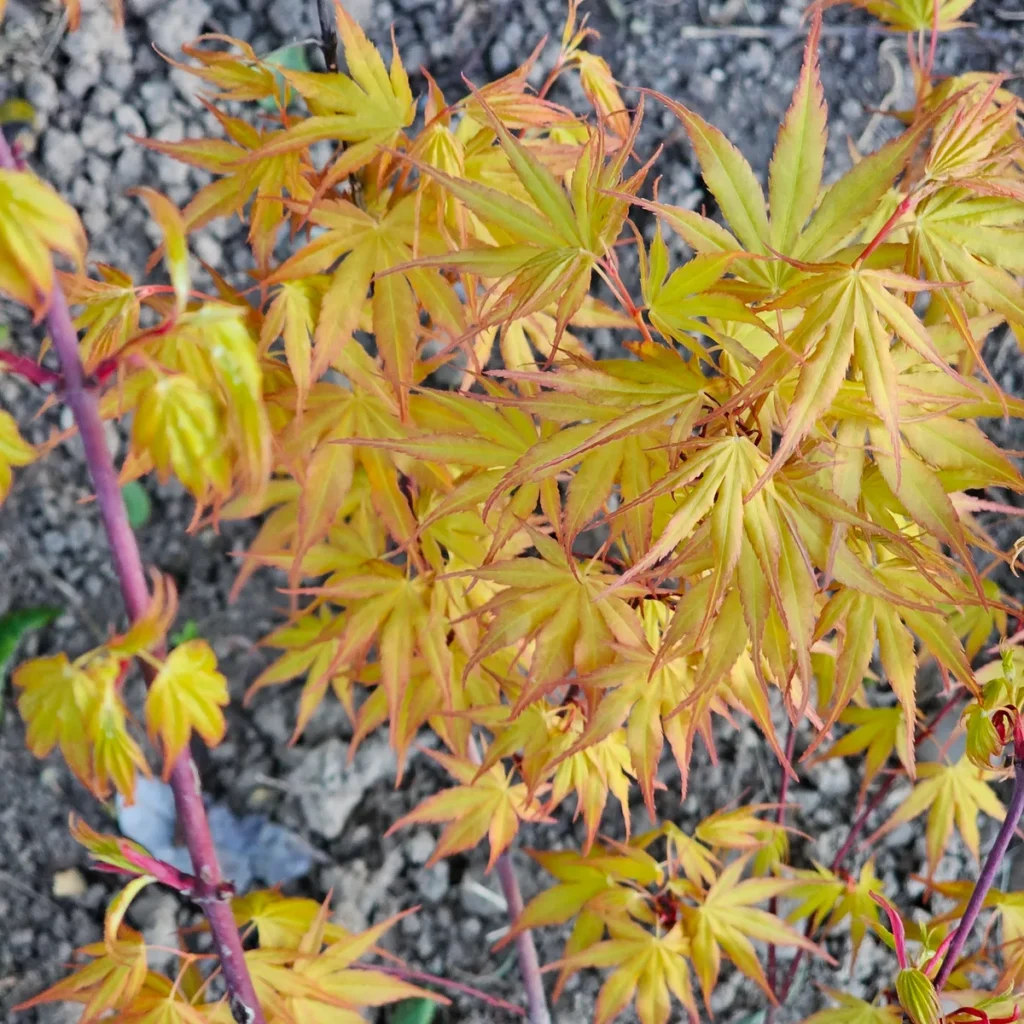
Differences between Japanese maple cultivars
Although all Acer palmatum cultivars share the same species, their behaviour in bonsai can vary significantly. Growth habit, internode length and foliage structure differ from one cultivar to another. Examples include:
Yamamomiji (the species)
The starting point: the seed-grown species every cultivar below was selected from. Vigorous upright growth with five-lobed palmate leaves; spring flush in pink, red and purple tones, fresh green summer, warm orange-to-red autumn. Smooth bark in green to reddish tones. Grown from seed taken from selected mother plants — chosen for small leaves and strong seasonal colour — it is faster, tougher and more forgiving than any named cultivar: the traditional foundation of maple bonsai and the best maple to learn on.
Orihime
Dwarf with slow, compact growth and the most delicate, tiny leaves of any cultivar in our selection. Light green spring foliage with bronze margins, turning green-orange in autumn. Smooth bark progressing from light green to grey. 1–2m adult size.
Kotohime
Dwarf with very short internodes and small leaves, yet surprisingly vigorous. Green spring foliage with pink-red margins, deepening to red in autumn. Smooth bark with visible internode separation. 1–2m adult size. Ideal for ramification work, canopy pad construction, and forest compositions.
Sei Hime
Rare dwarf from the amoenum subspecies. Slow growth with short internodes and genuinely miniaturised foliage. Very light green, almost yellow spring colour, with orange-yellow autumn tones. Smooth bark progressing from light green (almost yellow) to grey. 1–2m adult size.
Seigen
Semi-dwarf with upright habit. Very intense red-purple spring flush turning light green, then red to orange in autumn. Smooth bark with pink-red tones. Adult size: 1–2m. One of the rarest cultivars, prized for its spectacular spring colour display.
Beni Chidori
Semi-dwarf, upright. Spectacular spring colour: pink at first, then pink with orange veins, settling into light green by summer. Crimson red autumn. Smooth bark in green, pink, or red depending on sun exposure. 2–4m adult size — one of the most sought-after cultivars for its spring colour show.
Beni Tsukasa
Deshojo's refined cousin. Semi-dwarf upright growth with medium internodes and slender leaves. Light red spring flush with pink tones, transitioning to lighter green in summer, then orange to crimson red in autumn. Smooth bark in green, pink or red tones depending on sun exposure. Mature size: 2–4m. Better powdery mildew resistance than Deshojo — a practical advantage in humid European climates.
Katsura
The early bird: first maple to open its buds in spring. Red buds swell over light bark, then deep orange leaves emerge, transitioning through yellow to pale green — at one point, all colours are present in each single leaf. Yellow-orange autumn. Smooth bark in yellow, green and orange tones. 1–2m adult size.
Ukon
The greenest Japanese maple. Fast upright growth with medium internodes and medium-sized leaves. Spring foliage emerges in vivid lime-green with subtle yellow accents on new shoots, deepening to intense emerald through summer, then clean yellow in autumn. Smooth bark develops a distinctive deep green colour. Mature size: 2–4m. Valued for its pure, consistent green presence — the one that looks alive regardless of season.
Deshojo
The great classic for bonsai. Fast, vigorous upright growth with deep red spring flush with pink tones, turning dark green in summer, then orange-red in autumn. Smooth bark, red or green depending on sun exposure. 2–4m adult size. Its ability to adapt leaf and internode size to bonsai culture makes it an evergreen among deciduous.
Allen's Gold
One of only two rough-bark cultivars in our collection, alongside Arakawa. Young shoots start yellow, turning light green, then deep red until year four, when the bark turns grey and cracks into scales resembling pine bark — a maple with the bark of Arakawa and the leaves of Katsura. Golden-chartreuse spring foliage with vivid pink-red margins. Fast, vigorous growth. 3–5m adult size.
Arakawa
The original rough bark Japanese maple. Vigorous upright growth with long internodes and large leaves. Spring foliage emerges light green with red margins, turning deep green in summer and dramatic orange-purple in autumn. Corky, fissured bark develops from year four, resembling mature pine bark — rare among Acer palmatum cultivars. Mature size: 3–5m. The defining rough bark cultivar, valued for trunk character and year-round visual interest.
Each cultivar should be selected according to the intended size, style and level of refinement of the final bonsai.
Compare Acer palmatum cultivars for bonsai
Side-by-side comparison of growth characteristics, seasonal colour and bark type across our Japanese maple selection — based on hands-on cultivation data.
| Cultivar | Leaf size | Internodes | Growth habit | Spring Colour | Bark | Adult Size |
|---|---|---|---|---|---|---|
Medium | Medium | Upright, vigorous | Pink, red and purple | Smooth (green-red) | 4–8m | |
Very small | Short | Dwarf, compact | Light green, bronze margins | Smooth | 1–2m | |
Small | Very short | Dwarf, compact | Green, pink-red margins | Smooth | 1–2m | |
Small | Short | Dwarf, compact | Yellow-green | Smooth | 1–2m | |
Medium | Medium | Semi-dwarf, upright | Red-purple | Smooth | 1–2m | |
Medium | Medium | Semi-dwarf, upright | Pink to orange | Smooth | 2–4m | |
Medium | Medium | Semi-dwarf, upright | Light red, pink tones | Smooth | 2–4m | |
Medium | Medium | Upright | Orange to yellow | Smooth | 1–2m | |
Medium | Medium | Upright, fast | Emerald green, yellow accents | Smooth | 2–4m | |
Large | Long | Upright, vigorous | Deep red, pink tones | Smooth | 2–4m | |
Large | Long | Upright, vigorous | Golden-chartreuse, pink-red margins | Rough | 3–5m | |
Large | Long | Upright, vigorous | Light green, red margins | Rough (corky) | 3–5m |
European-grown, cutting-propagated material
All cultivars are propagated from cuttings — never grafted — and hand-selected in Europe for plant health and early structural potential. The Yamamomiji species is the exception: raised from seed of selected mother plants, as tradition dictates.
- Healthy Arrival Guarantee with EU-wide shipping
- Current photos available on request before purchase
Learn the cultivars before you choose
Every cultivar behaves differently on the bench. These guides show how they actually develop — written from the trees we grow.
Torn between two cultivars for your project? Talk it through with the grower — book a 1-to-1 consultation with Luca, and choose with confidence.