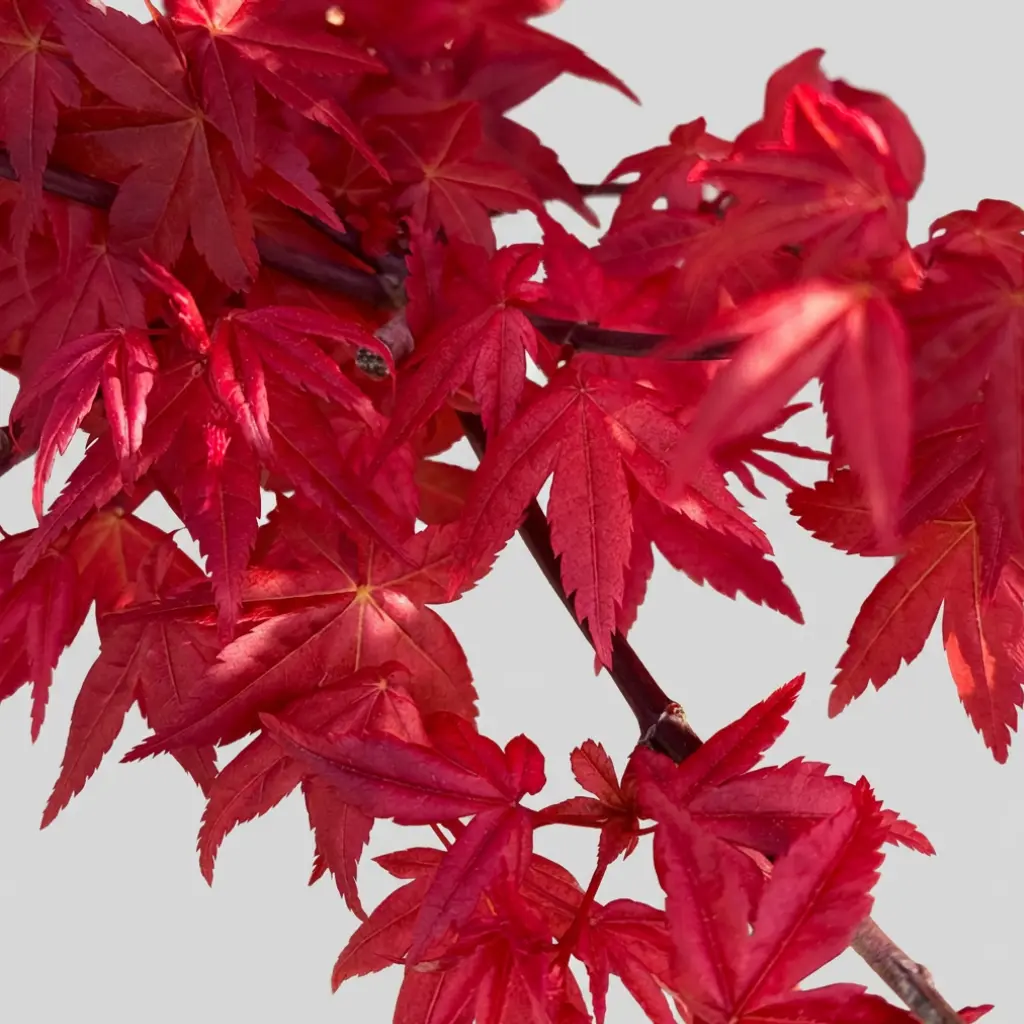
A few weeks ago a man rang the nursery looking for “a red maple”. I told him the question deserved more than a yes or a no, for two reasons. First, what people call a red maple does not exist as one precise plant. In English the name is doubly confusing, because Acer rubrum, the American red maple, is a large park tree with big leaves that has nothing to do with bonsai. What most people mean is a Japanese maple, Acer palmatum, with reddish leaves, and that is as vague as asking for “a red wine”. Second, the bonsai we grow come from our own selection of maples, and they are probably not quite what he had in mind. This guide explains what lies behind the label, which of our Acer palmatum cultivars are truly red, in which season, and how to choose.
Red maple bonsai at a glance
- What it is
- Not a cultivar: a loose name for Acer palmatum with reddish leaves
- Red all year
- No bonsai-worthy maple is: in summer chlorophyll wins
- When it is red
- In spring, as the leaves open; again in autumn
- Our red cultivars
- Deshojo · Beni Tsukasa · Beni Chidori · Seigen · Arakawa (in autumn)
- Type
- Deciduous outdoor tree, frost-hardy
- Ideal for
- Anyone who wants colour without giving up small leaves and short internodes
“Red maple” does not exist (any more than “red wine” does)
There are hundreds of Japanese maple varieties with reddish tones at some point in the year. Some are registered cultivars with a name: Bloodgood, Fireglow, Garnet, Stella Rossa and many more. Every cultivar is an exact clone of the mother plant it was registered from, and each has its own character: a more weeping or more upright habit, its own leaf shape and size, canopy density, a particular shade of red and, above all, the time of year when that red peaks. Some are at their best in spring, others in autumn. Some want full sun, others partial shade.
So asking for “a red maple” is like asking for a red wine: the right answer is another question. Red when? With what kind of leaf? For what purpose? If the purpose is bonsai, the field narrows a great deal, and that is what this guide is about.
Why no maple is red all year
You will rarely find a red maple at its best in high summer. A mature leaf fills up with chlorophyll, and chlorophyll is green: the red of the new growth fades, turns bronze and often brownish. True red comes back at two moments, when the leaf is born and when it is about to fall, and between them lies a long green season in which only the new growth keeps its spring colour.
This is true of every cultivar, including the ones sold as “always red”. If you want a garden tree that stays red from March to November, a few big-leaved park cultivars come close; for bonsai, no such plant exists. And that is no accident.
Leaf first, colour second: how we select cultivars
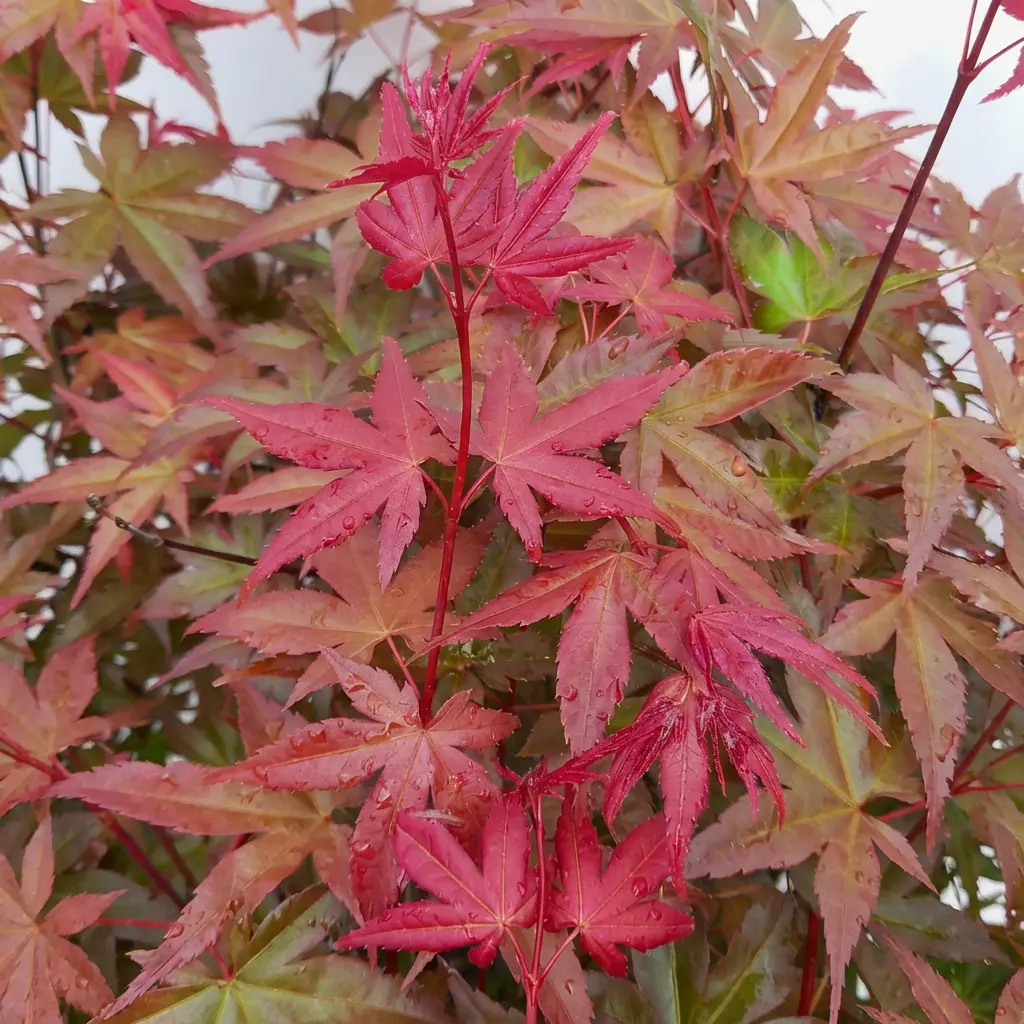
At the nursery we select maples for bonsai in this order: leaf size, internode length, petiole length, bark character. A cultivar that fails on these points does not enter the catalogue, however beautiful it is in a park. Only then, among those that pass, do we look at colour, and there we find yellows, oranges, greens and reds.
The result is that our reds are not simply “red”. Many red maples are red and nothing more, rarely spectacular. The bonsai cultivars we grow give, in their season, clean, vivid, saturated reds, sometimes pink or purple; in summer they turn green, with the new growth still coloured; and in autumn they come back with a palette worth the wait. All of this on a plant with small leaves and short internodes, which is to say on a plant that can become a bonsai.
From the nursery “There is no maple cultivar that is red all year and suited to bonsai. You can make a bonsai from any plant, but the cultivars we grow are a selection of plants that are genuinely good for it: small leaves, short internodes. And among those, some give spectacular reds for part of the year. Not just any reds: clean, saturated, vivid reds.” — Luca
The red cultivars of our nursery, season by season
Five cultivars, in order of the intensity of their spring red, plus an alternative for those who prefer autumn.
Deshojo: the king of red
Deshojo is the reference. In spring the leaves open an intense, even red with no blotching; in summer the canopy turns olive green, with the new shoots still red; in autumn it returns to spectacular colour. It is also one of the cultivars that best reduces leaf and internode size under bonsai cultivation, which is why it is the red maple most often chosen by beginners and collectors alike. We have written a complete guide to Deshojo: care, growth and development in stages.
Acer palmatum 'Deshojo' – Japanese Maple for Bonsai
35 €
Sold out — next batch in preparationBeni Tsukasa: the same rhythm, pinker tones
Beni Tsukasa follows the same cycle as Deshojo, with a slightly larger leaf and a red that leans towards pink. It is the choice for those who love Deshojo’s colour but want a slightly softer canopy.
Beni Chidori: pinker still, almost orange
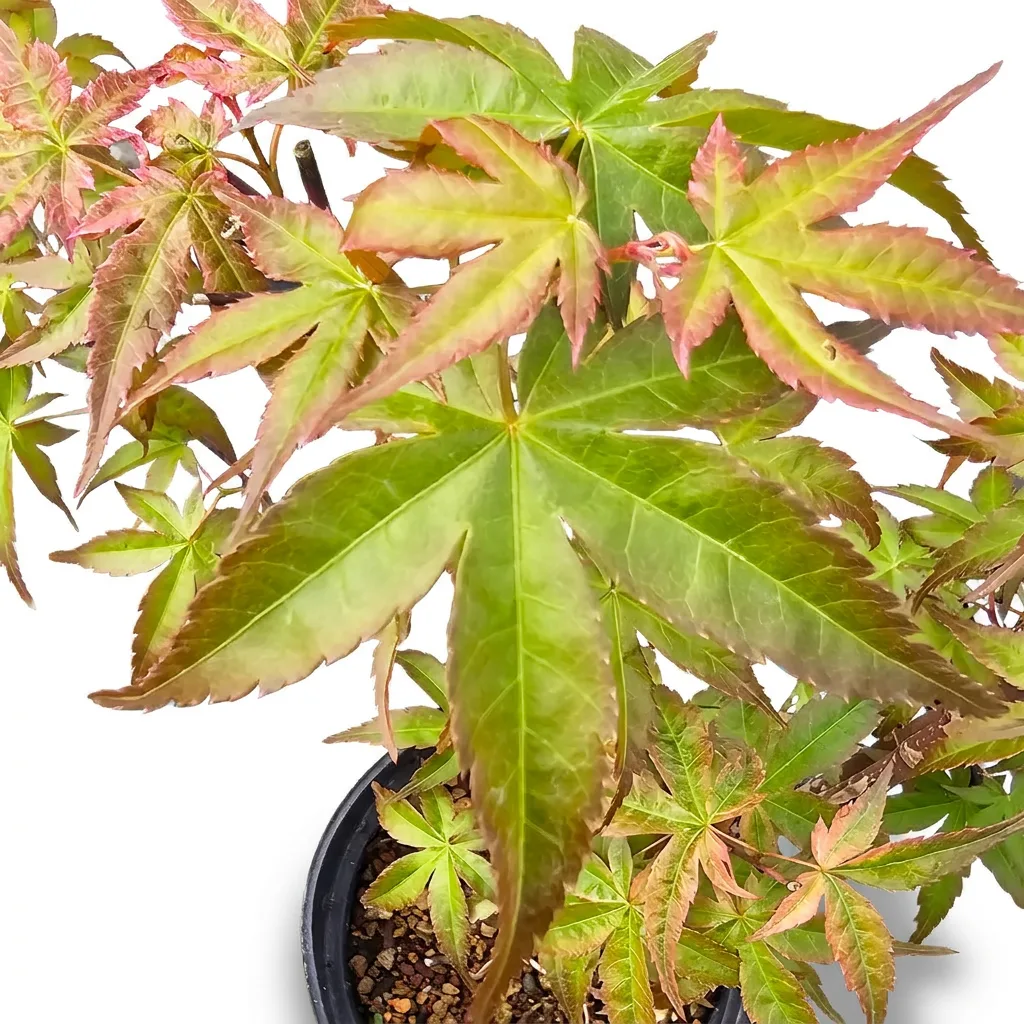
Beni Chidori is the most sought after of the three, and it is easy to see why: the spring flush is pink, in some light almost orange, on a small leaf and dense growth. We compare it in Seigen, Beni Chidori and Orihime, three small-leaved cultivars that are often chosen together.
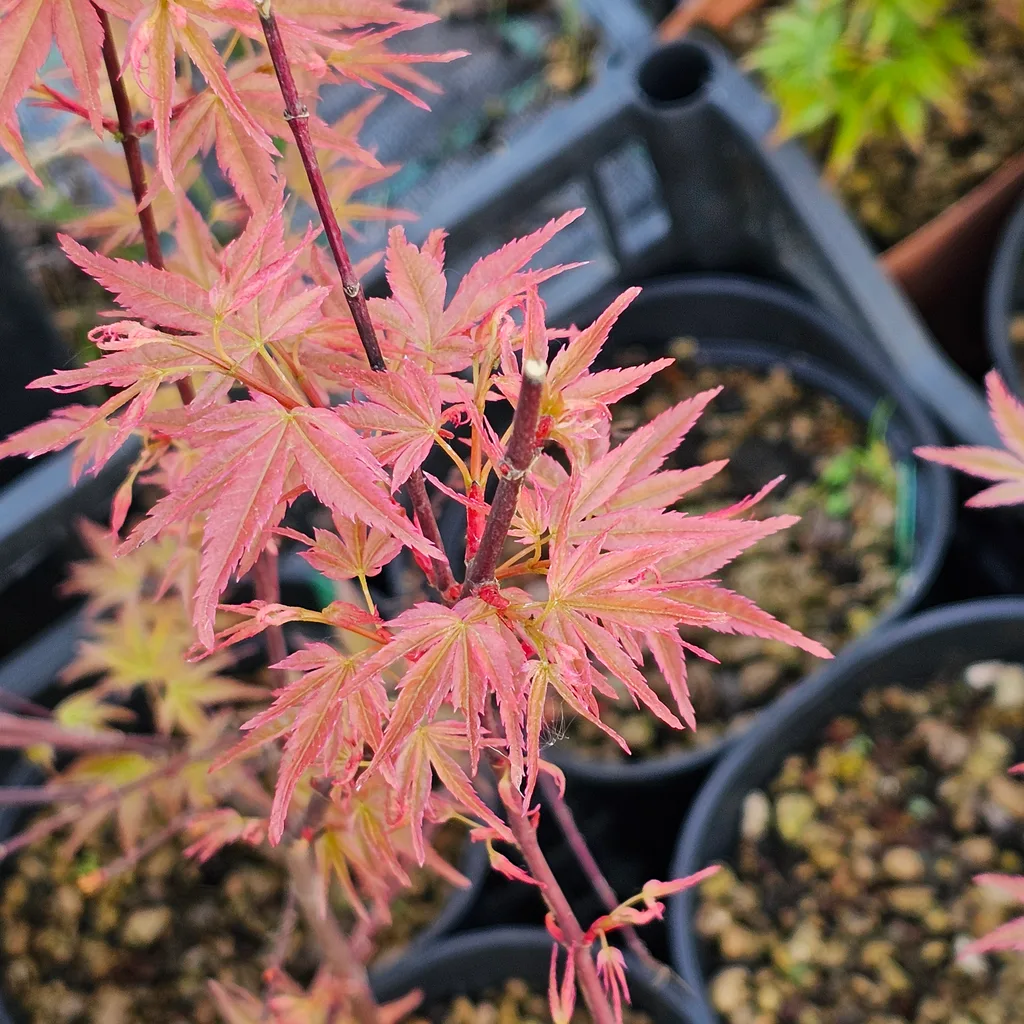
Seigen: the purple one
Seigen repeats the same seasonal pattern, but its tones are more purple than red. It is a very small-leaved cultivar with short internodes, among the best suited to small bonsai.
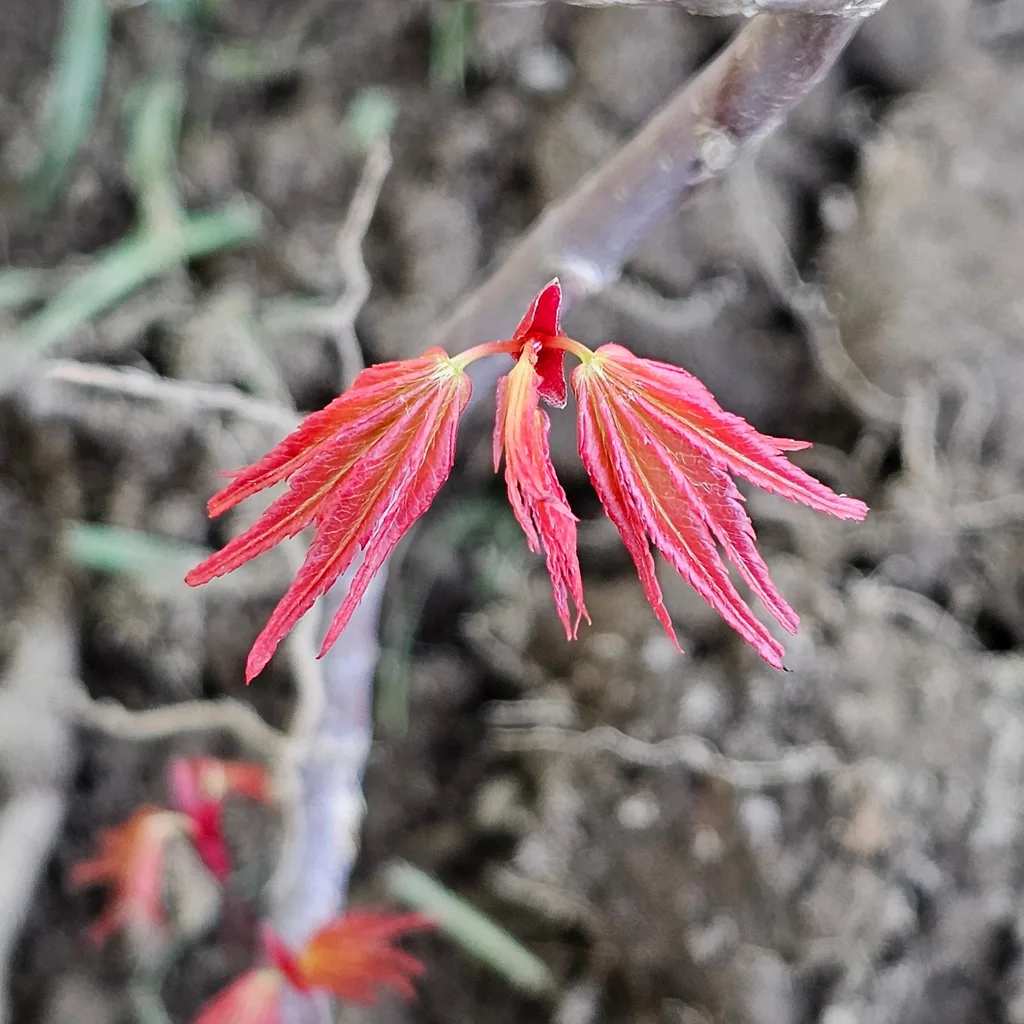
Arakawa: green all year, and then autumn
Arakawa is the interesting alternative. It is green throughout the growing season, and its distinguishing feature is something else: the rugged, corky bark that makes it one of the most prized maples for the look of the trunk. But in autumn it gives intense pinks and purples. If the colour you are after is October’s, and in the meantime you want a tree with character even without leaves, it is the right choice: we wrote about it in Arakawa and Allen’s Gold, the rough-bark maples.
In short, by season:
| Cultivar | Spring | Summer | Autumn |
|---|---|---|---|
| Deshojo | Intense, even red | Olive green, red new shoots | Red |
| Beni Tsukasa | Pink-red, slightly larger leaf | Green, coloured new shoots | Warm tones |
| Beni Chidori | Pink, almost orange | Green, coloured new shoots | Warm tones |
| Seigen | Red-purple | Green, coloured new shoots | Purple |
| Arakawa | Green | Green | Intense pink and purple |
All five are grown in our nursery in Italy as young trees for you to shape. They are sold out at the moment and return with the next batch: from each product page you can join the waiting list and be notified when they are back.
- Bonsai
Acer palmatum ‘Beni Chidori’ – Japanese Maple for Bonsai (Young Pre-Bonsai)
Price range: 35 € through 45 € Select options This product has multiple variants. The options may be chosen on the product page - Bonsai
Acer palmatum ‘Arakawa’ – Japanese Maple for Bonsai
Price range: 25 € through 60 € Select options This product has multiple variants. The options may be chosen on the product page
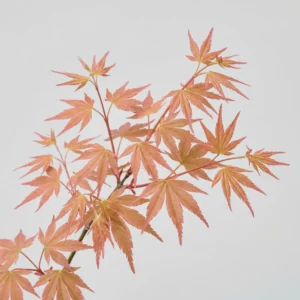
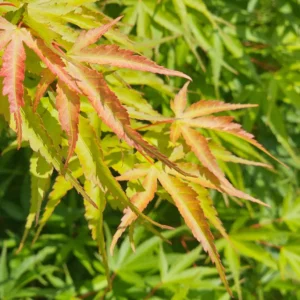
Red maple bonsai from seed: it exists, but it is a lottery
Half of what you find when you search for a red maple bonsai is packets of seed. It is worth understanding what you are buying. There is a family of red maples that are not cultivars: they are grown from seed, exactly like ordinary green Japanese maples, but they are red because they all descend from a red-leaved cultivar, and that trait is strongly inherited. Sow these seeds and you will get, in most cases, reddish plants.
What you will not get is certainty. From seed every plant is different: you do not know what shade it will have, or when, and above all you do not know what leaf and what internodes it will have, which are the two things that decide whether it can become a bonsai. A cultivar, on the other hand, is a clone: you buy exactly the plant described. That is why a cultivar is always propagated vegetatively, for instance by air layering, never from seed.
If you like the idea of starting from a seed-grown maple, the most sensible option is the Yamamomiji: the Japanese maple of the species, grown from seed. It is not a cultivar, so every plant is different; but the seed is not anonymous. We collect the smallest seeds from our most bonsai-prone mother plants, with small leaves, short petioles, short internodes and interesting bark, and the seedlings inherit those traits. How and why we select our seed is explained on the Yamamomiji page; it remains the cheapest way to start with an Acer palmatum.
Where our maple bonsai come from
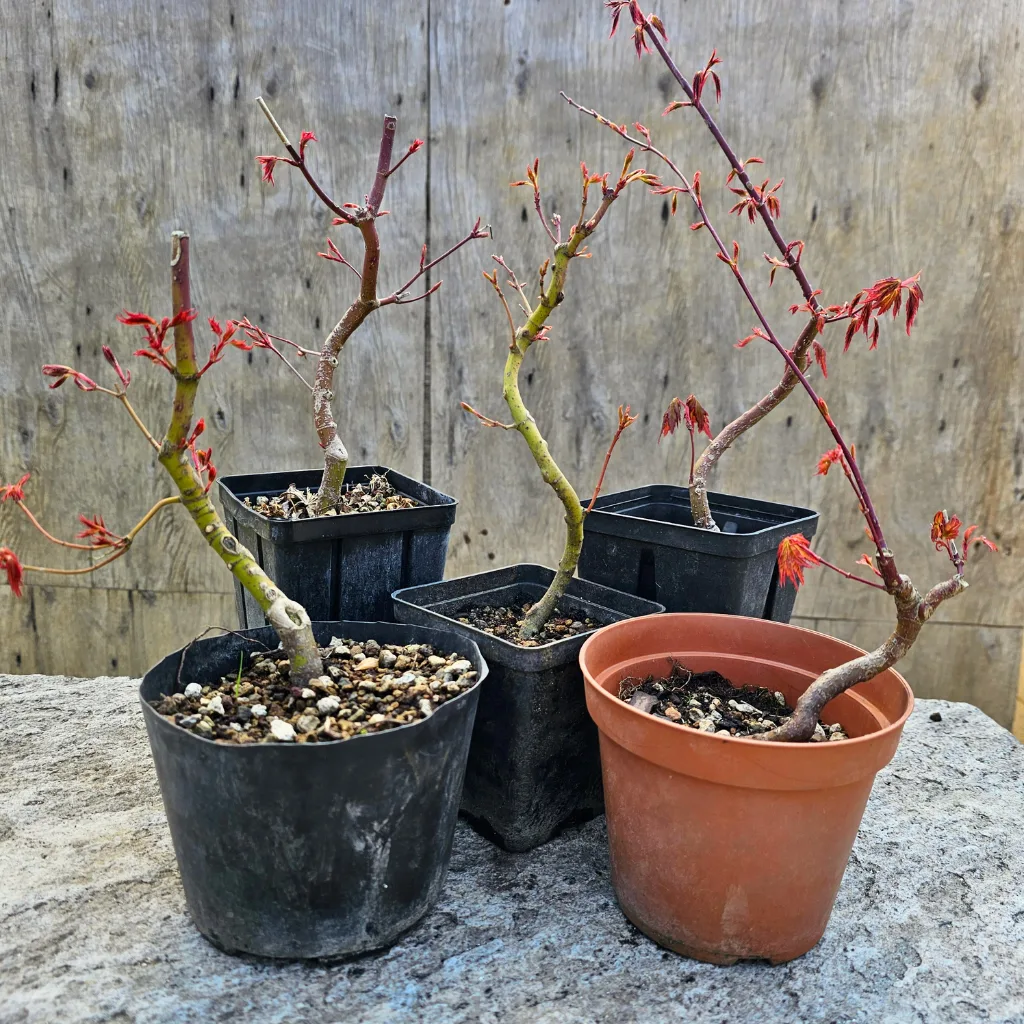
Back to the phone call. Someone looking for a red maple usually pictures a finished bonsai: the pot, the canopy, the colour. Everything we grow comes from our own selection of maples: cultivars chosen for leaf, internodes, petiole and bark and propagated vegetatively, and Yamamomiji from seed collected on our most bonsai-prone mother plants. That is where all our trees start, and most of the catalogue is young maple pre-bonsai: cultivar plants a few years old with healthy roots and a trunk to shape, at a fraction of the price of a finished tree. You get the colour from the first spring; the shape you decide, year by year. If you do not know what to look for in a young plant, our guide on what a pre-bonsai is and how to choose your first explains what matters, and the care, the same for every cultivar, is in the Japanese maple bonsai care guide.
Which red maple to choose
- The most intense spring red: Deshojo. No contest.
- Pink and orange: Beni Chidori; Beni Tsukasa if you prefer a slightly larger leaf.
- Purple, and a small tree: Seigen.
- Autumn colour and a trunk with character all year: Arakawa.
All the nursery’s cultivars, red and otherwise, are gathered on the Acer palmatum cultivars page.
Frequently asked questions
Is there a red maple bonsai that stays red all year?
No. In summer the mature leaf fills with chlorophyll and turns green, bronze or brown in every cultivar. Bonsai-worthy maples are red, pink or purple in spring, as the leaves open, and again in autumn; in summer only the new growth keeps its colour.
Which is the most intense red maple for bonsai?
Deshojo: in spring it gives an intense, even red that no other bonsai cultivar matches, and it reduces leaf and internode size well under cultivation. Beni Chidori and Beni Tsukasa lean towards pink, Seigen towards purple.
Why has my red maple turned green in summer?
Because it is healthy. The mature leaf produces chlorophyll and covers the red of the new growth; it is the normal cycle of any Japanese maple. The colour returns in autumn and, the following year, with the new spring growth.
Can I grow a red maple bonsai from seed?
Yes, but with no guarantees. “Red maple” seed gives plants that are nearly always reddish, because the trait is inherited, but every plant differs in shade, leaf and internodes. A named cultivar is a clone of the mother plant: you know exactly what you are buying. Our seed-grown Yamamomiji comes from seed selected on our most bonsai-prone mother plants.
Is a red Japanese maple the same as Acer rubrum?
No. Acer rubrum is the American red maple, a large park tree with big leaves and long internodes. When people talk about a red maple bonsai they almost always mean a cultivar of Acer palmatum, the Japanese maple.