Somewhere between a seed packet and a finished tree in a glazed pot, there is a stage most beginners never hear about — and it happens to be the best place to start. A pre-bonsai (also written prebonsai, and called a Rohling in German) is a young tree grown and prepared as raw material for bonsai: healthy, vigorous, with its formative work either started or still ahead of it — and with every important decision still yours to make.
This guide explains what a pre-bonsai actually is, how it differs from a finished bonsai, a starter kit or a seedling, what separates good material from a garden-centre shrub with ambitions, and how to choose your first one. It is written from the grower’s side of the fence: the trees in our Young Pre-Bonsai collection go through exactly the preparation described below, and one part of it — planting material out in open ground — is on video further down.
Pre-Bonsai, Finished Bonsai, Kit or Seed: What Are You Actually Buying?
Four very different products get sold under the word “bonsai”, and knowing which one you are holding saves years of confusion.
- A finished bonsai is a tree whose structure — trunk line, main branches, silhouette — was decided by someone else, often over decades. You are buying the result, and paying for it. Your job from day one is maintenance and refinement, which is a real skill, but not the same hobby as building a tree. We sell a few trees at that stage too: our bonsai in training are trees with the years of work already done.
- A seed is the opposite extreme: total freedom, minimal cost, and several years before the tree is even strong enough for its first meaningful decision. Growing from seed is a lovely long game; it is a frustrating first game.
- A starter kit bundles a young tree with tools and guidance — the sensible route if you want everything in one box, or you are buying a gift. Ours are built around the same trees as the rest of the nursery: see the bonsai starter kits.
- A pre-bonsai is the middle path: a real tree, several years old, alive and growing, whose character-defining choices — the front, the leader, the first branch — have not been used up. It costs a fraction of a finished tree precisely because those decisions are still open. For learning, that is not a discount; that is the product.
Everything we do is built on that last idea. A finished bonsai proves someone could play bonsai; a pre-bonsai lets you play. Anyone can — that is rather the point.
The Four Things That Make a Good Pre-Bonsai
When you have a bench of young trees in front of you — or a product page — look at them in this order. It runs from hardest-to-fix to easiest-to-fix.
1. The base and the roots
The nebari — the visible surface roots — is the slowest feature to build and the hardest to correct, which is why it outranks everything else. On young material you are not looking for a mature root spread; you are looking for the conditions for one: roots emerging around the trunk rather than from one side only, no single dominant root strangling the rest, and ideally evidence that the grower has already worked on it. Techniques like a washer or plate under the young root base, or timed root pruning, set up a radial nebari years before it shows — material prepared that way is quietly worth far more than its price difference.
2. The trunk line
Movement low on the trunk is the second thing money cannot easily add later. The first curve — the one right above the soil — decides more of the tree’s future character than anything above it, and it can only be put in while the wood is young and flexible. A dead-straight young trunk is not a defect if the tree is young enough to wire now; a dead-straight stiff trunk is a formal-upright project whether you wanted one or not. Good growers wire movement into material early, precisely because that window closes.
3. Health and vigour
A pre-bonsai’s job for the next few years is to grow, so buy vigour: extension growth from the last season, foliage dense for the species, a trunk that sits firm in its container. A weak tree is not a bargain — every technique in bonsai is paid for in the tree’s energy, and a tree with none is a tree you cannot touch for a year or two.
4. Age, honesty and the right species
Ask how old the material is and what has already been done to it — a three-year-old cutting with wiring and root work behind it is a very different purchase from a seedling of the same size, and a seller who talks about age and work is generally a seller who did some. And choose a species for your conditions, not for the photos you admire: if your trees will live on a balcony or in a garden in Europe, hardy outdoor species are the right choice, and the ones sold as “indoor bonsai” mostly are not.
Why Good Pre-Bonsai Grow in the Ground, Not on a Shelf
Enjoying the videos? Subscribe to our YouTube channel for more from the field and the bench →
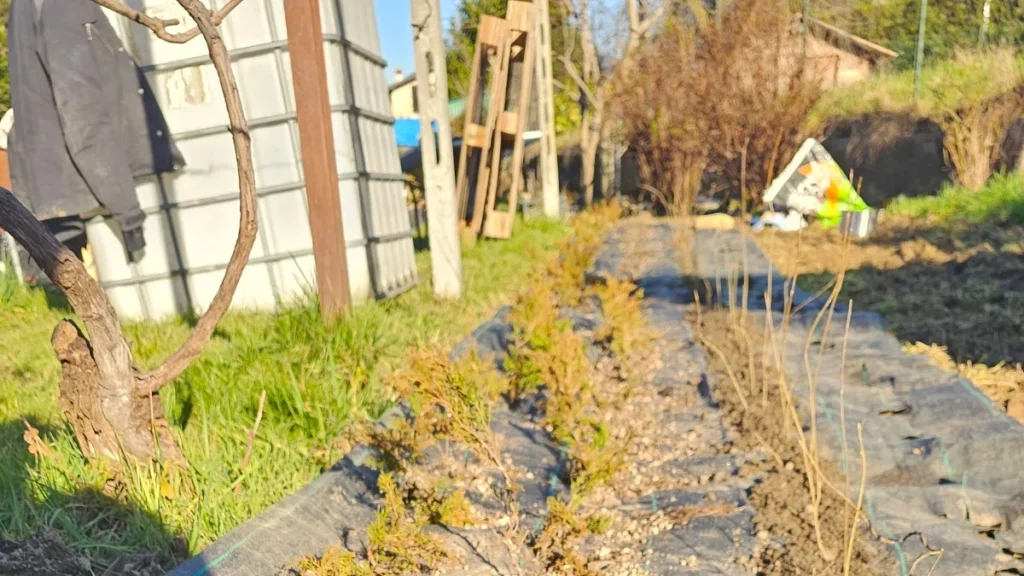
In late February, with spring at the door, around two hundred young plants went into open ground at our field: rooted Itoigawa juniper cuttings and young trident maples. Not into pots — into the earth, through fabric, in rows. When the goal is a thicker trunk and faster development, ground growing makes an enormous difference: unrestricted roots, abundant feeding, and a season of free growth do in one year what a container allows in several.
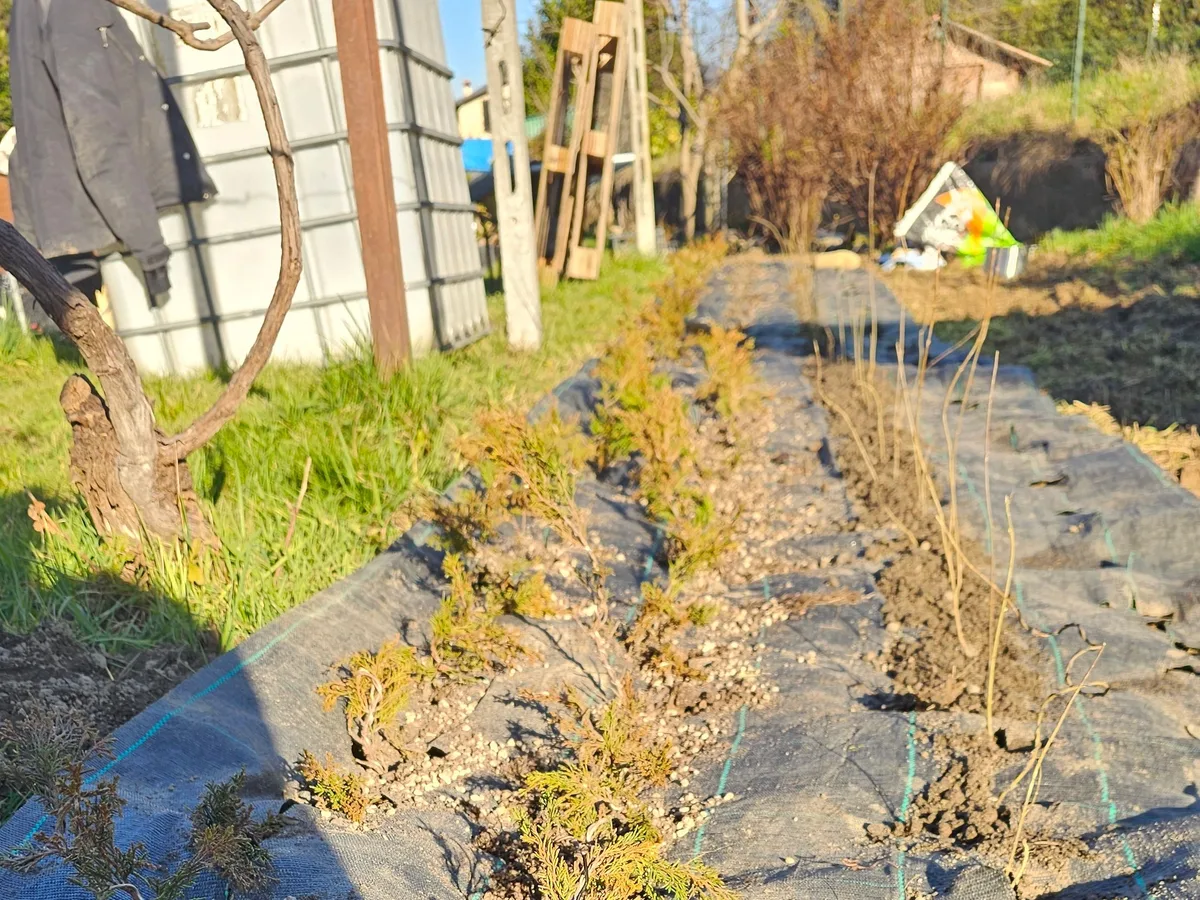
The detail that matters to you as a buyer is the order of the work. Before any of those plants touched the ground, each had already been wired to set movement into the young trunk, and the trident maples had already had their base prepared for a radial nebari. Structure first, bulk second — because the ground thickens whatever shape the trunk already has, curves and all, and a trunk thickened straight can never be bent afterwards.
That is the real difference between a prepared pre-bonsai and ordinary nursery stock of the same species. The hedge plant grew fast because nobody touched it; the pre-bonsai grew fast after someone made the decisions that fast growth would otherwise have closed. When you evaluate material, ask what happened before the growing: wired when? root-worked when? The answers are the product.
Which Species for Your First Pre-Bonsai?
Climate first: for a European garden, balcony or terrace, choose hardy outdoor species and let them live outside all year — that alone removes the most common cause of dead first bonsai. Within that rule, two species carry beginners particularly well, and they are the two in the video above:
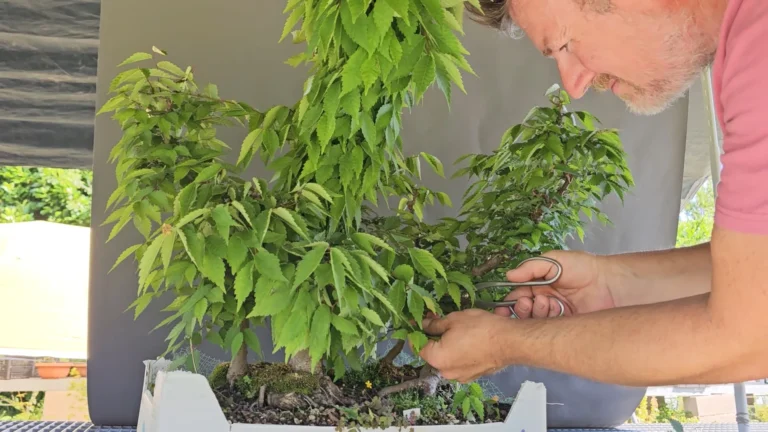
Trident maple (Acer buergerianum) is the deciduous choice: vigorous, quick to heal, quick to ramify, and famously responsive in the roots — the species where nebari preparation pays off most visibly. It forgives pruning mistakes by simply growing past them. Our young trident maple pre-bonsai come with the base work already done.
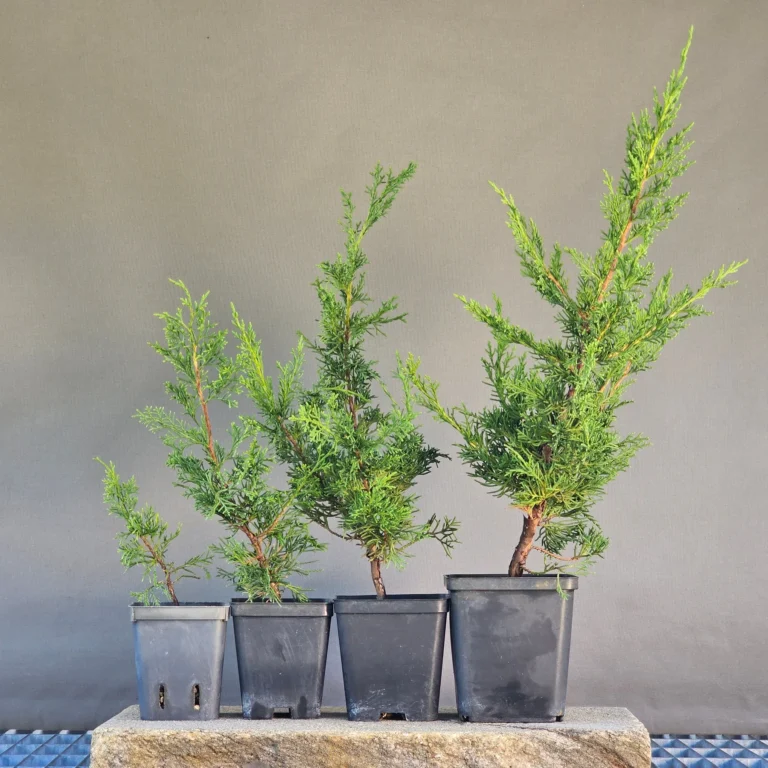
Itoigawa juniper (Juniperus chinensis ‘Itoigawa’) is the conifer counterpart and the classic refinement species of Japanese bonsai: fine, dense foliage, flexible young wood that loves wiring, and evergreen presence twelve months a year. A young Itoigawa pre-bonsai is the natural first juniper. If you plan to keep the tree small, look at its compact sibling too, the Kishu juniper.
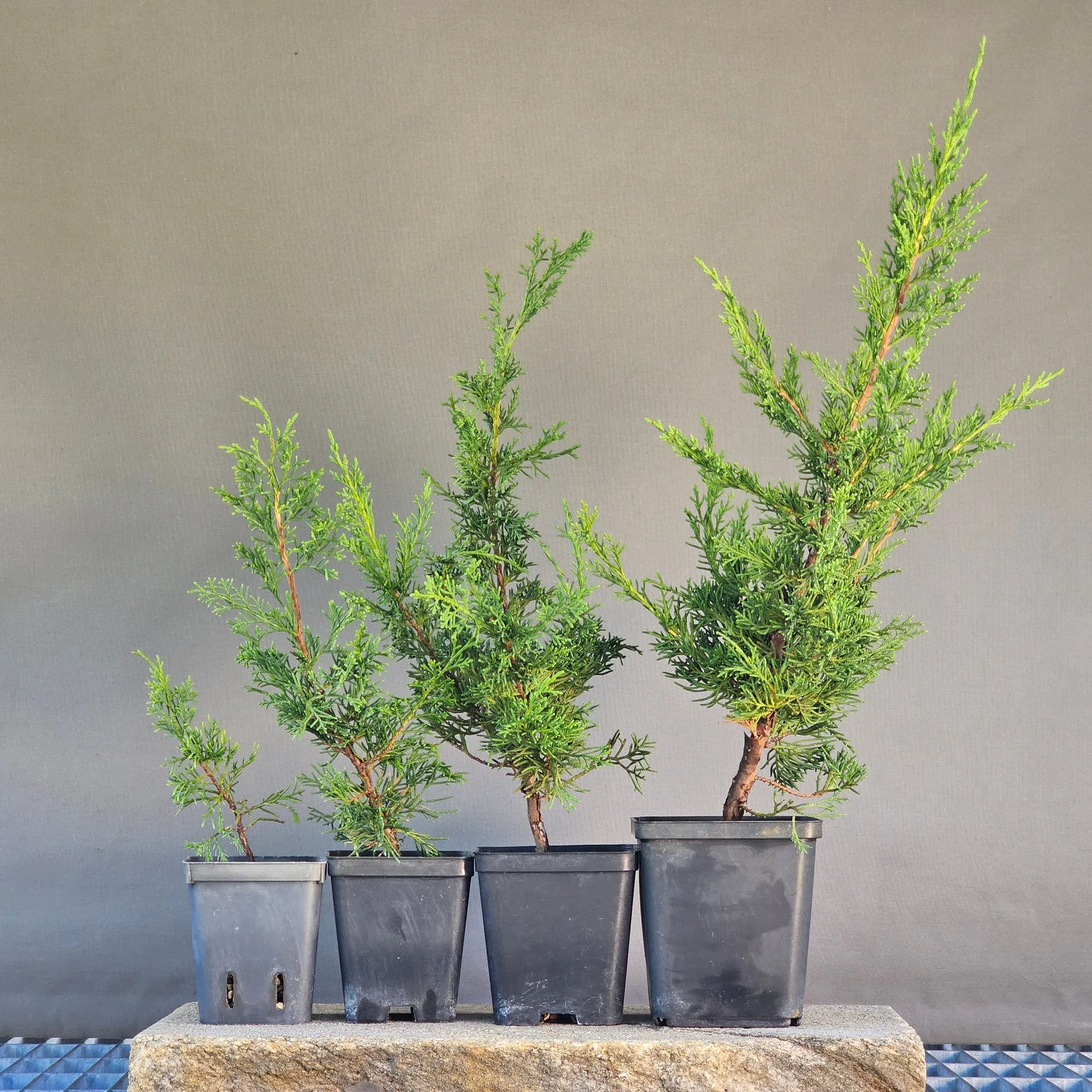
What that age ladder means in practice, with our own junipers as the example: a two-year-old Itoigawa is still straight and costs 12 €; at three years the trunk has been given its first bend (17 €); at four years, bent or left straight, it has thickened around that line (25 €); at five years it is a bent, settled trunk ready for branch work (33 €). Same species, same nursery — what you pay for is the years of work already in the trunk. The full year-by-year story is in our guide to juniper bonsai.
Beyond those two, larch for autumn colour, Scots pine and Norway spruce for classic conifer work — all hardy, all forgiving, all grown the same way. And if you are starting from absolute zero, begin with our bonsai for beginners hub before you spend anything at all.
Your First Year with a New Pre-Bonsai
The best first move is restraint. When the tree arrives, do not repot it and do not style it that week: place it outdoors in good light, water it properly, and let it settle while you learn how it grows. Your first real job is observation — walk around it, find the candidate fronts, notice where the movement is and where the faults are. Decisions made after a season of watching are consistently better than decisions made with the box still on the floor.
The first structural work then lands in its natural seasons: wiring while wood is young and flexible, and root work at the end of winter, just before the buds move — for that, start with our guide on how to repot a bonsai and, when the day comes to reduce roots seriously, how much root a tree can lose. Expect the transformation to take a few growing seasons; that is not the slow way to a bonsai, it is the only way — and it is the part of the hobby that finished trees skip on your behalf.
And if you are standing between two trees — or holding one and unsure what its first move should be — our one-to-one bonsai consultation exists for exactly that conversation: photos of your material, a concrete plan, and the order of operations.
Key Takeaways
- A pre-bonsai is young raw material for bonsai — a real tree whose defining decisions are still yours. That open future, not a missing feature, is what you are buying.
- Between finished tree, kit, seed and pre-bonsai, the pre-bonsai is the learning sweet spot: cheap enough to dare, alive enough to respond.
- Judge material in order of what is hardest to fix: base and roots first, then trunk movement, then vigour, then age and species fit.
- Good material is built structure-first: movement wired in and the root base prepared before the thickening years — growth only enlarges the shape that is already there.
- Ground growing is how growers accelerate development: free roots and heavy feeding thicken a trunk far faster than any container.
- For a first tree in a European climate: hardy outdoor species — trident maple on the deciduous side, Itoigawa juniper on the conifer side.
- Year one is for settling, watching and planning; wiring and root work each have their season, and patience is part of the technique.
Frequently Asked Questions
What is a pre-bonsai?
A pre-bonsai is a young tree grown and prepared as raw material for bonsai: selected for its species and potential, kept healthy and vigorous, often already wired for trunk movement or root-worked for a future nebari, but with its final structure still undecided. It sits between a seedling and a styled bonsai — the stage where the important creative decisions are still open.
What is the difference between a pre-bonsai and a bonsai?
Decisions. In a finished bonsai the trunk line, branch structure and silhouette have already been chosen and built, usually over many years; you buy the result and maintain it. In a pre-bonsai those choices are still ahead, which is why it costs a fraction of the price — and why it teaches a beginner far more.
Is a pre-bonsai good for beginners?
It is the best entry point for anyone who wants to actually practise bonsai rather than only keep one. The material is affordable enough that mistakes are tuition instead of tragedy, vigorous enough to bounce back from them, and undecided enough that every fundamental technique — wiring, pruning, repotting — has a real job to do on it.
How do you choose a good pre-bonsai?
Look in order of what is hardest to fix later: first the root base (roots emerging all around the trunk, ideally with nebari preparation already done), then the trunk line (movement low on the trunk, or wood still young enough to wire), then health and vigour (last season’s growth, dense foliage, firm in the pot), and finally a stated real age and a species suited to your climate — for most of Europe, hardy outdoor species.
How long does it take to turn a pre-bonsai into a bonsai?
Plan in growing seasons, not weeks: typically a few years before a young pre-bonsai reads clearly as a bonsai in training, and longer to real refinement. The pace depends on species, climate and how much development the material already carries. This is the enjoyable part of the hobby, not a waiting room — every season contains real decisions and visible response.