EU delivery included from €70

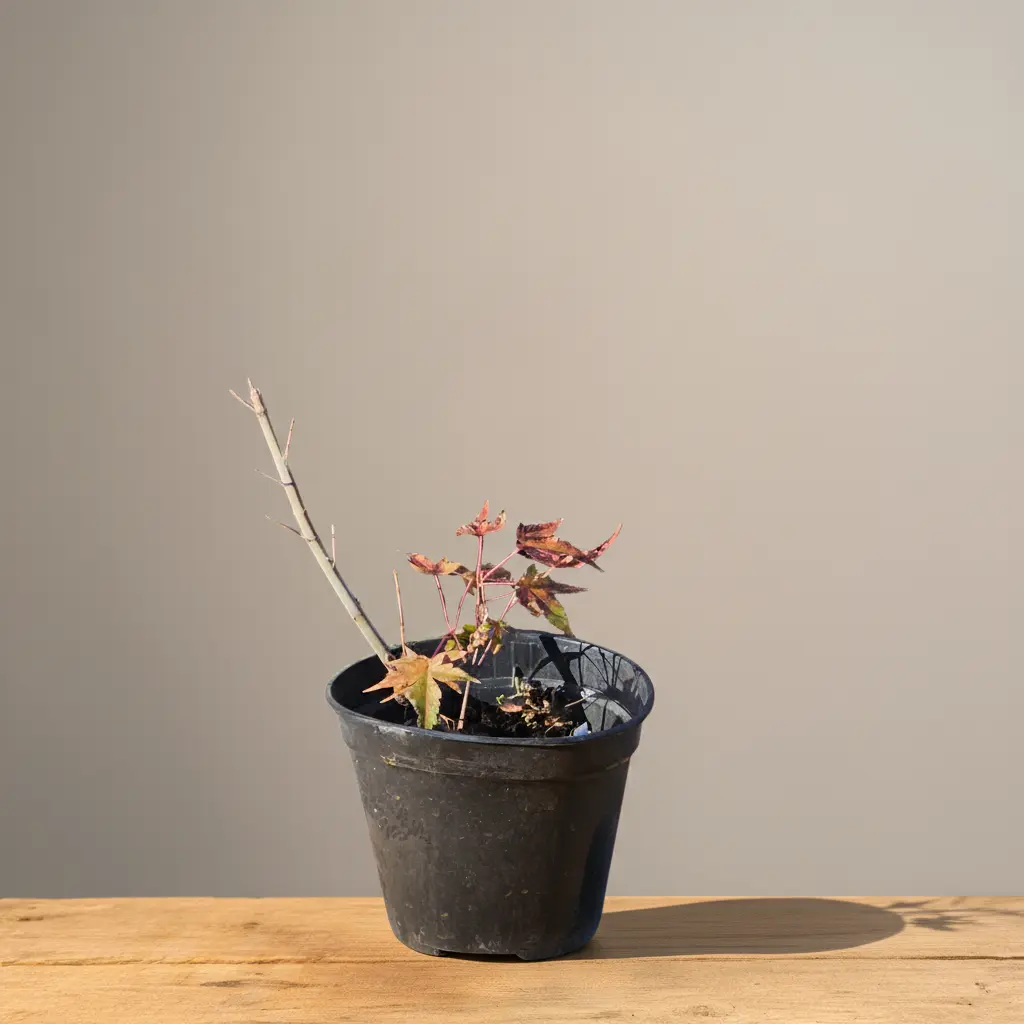
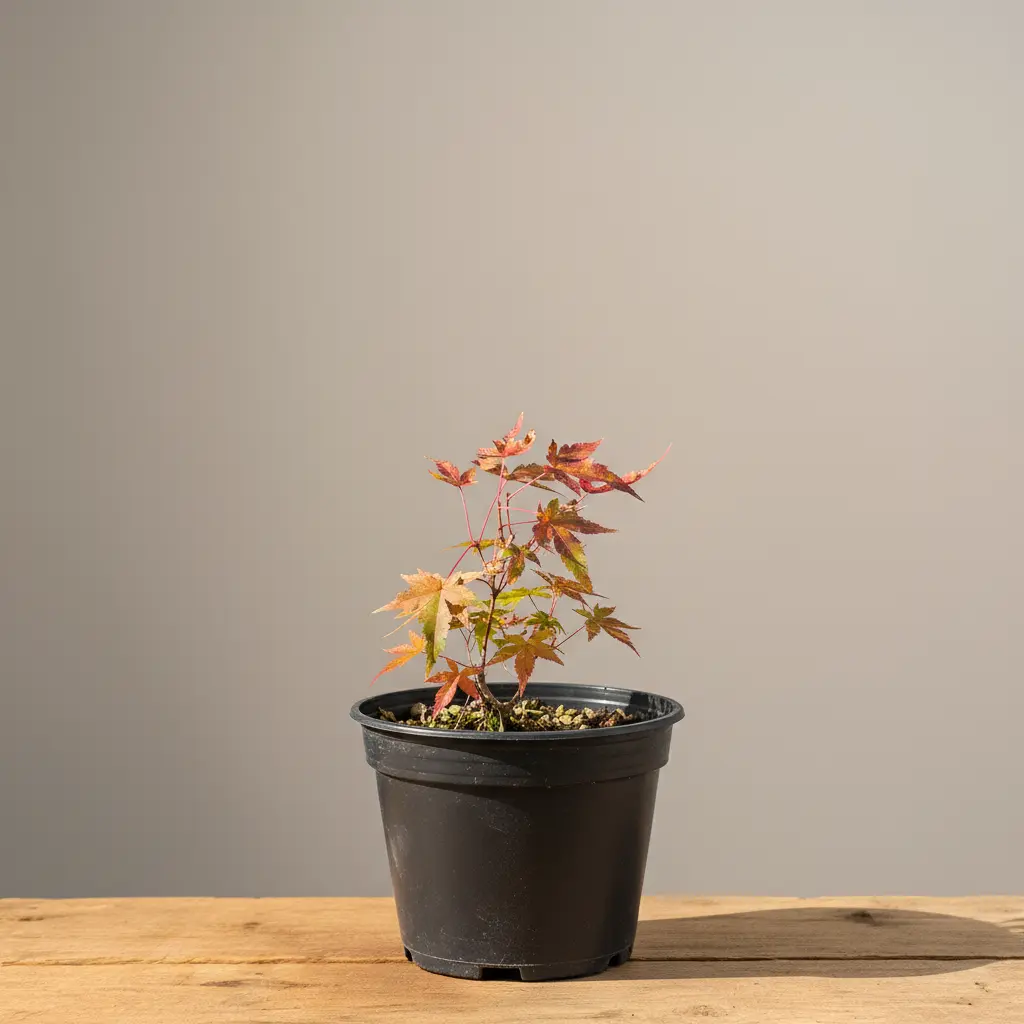
Acer palmatum ‘Beni Chidori’ – Japanese Maple for Bonsai (Young Pre-Bonsai)

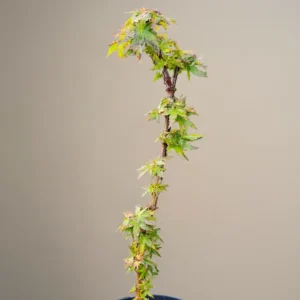
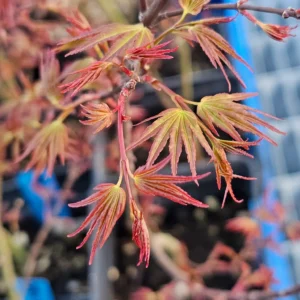
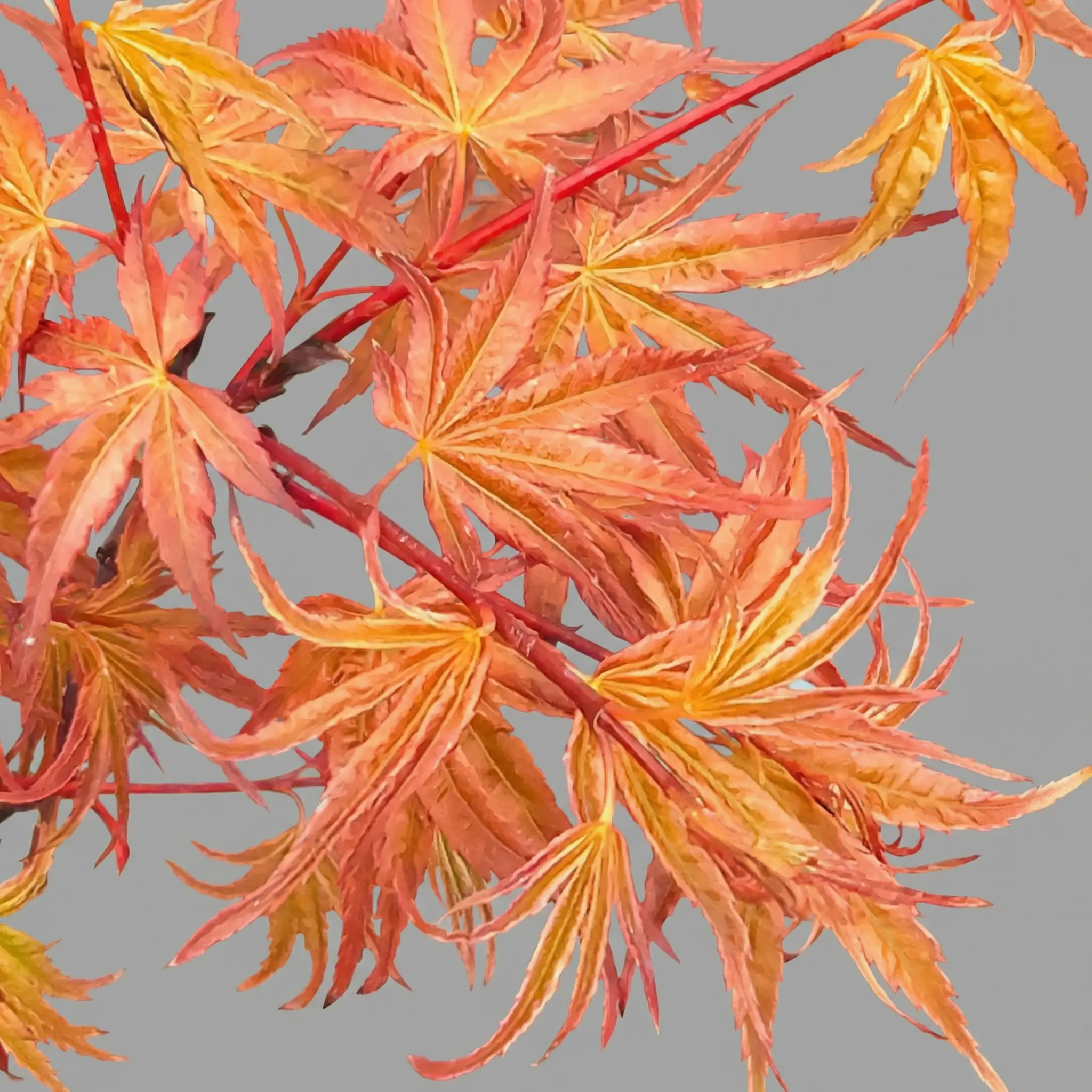
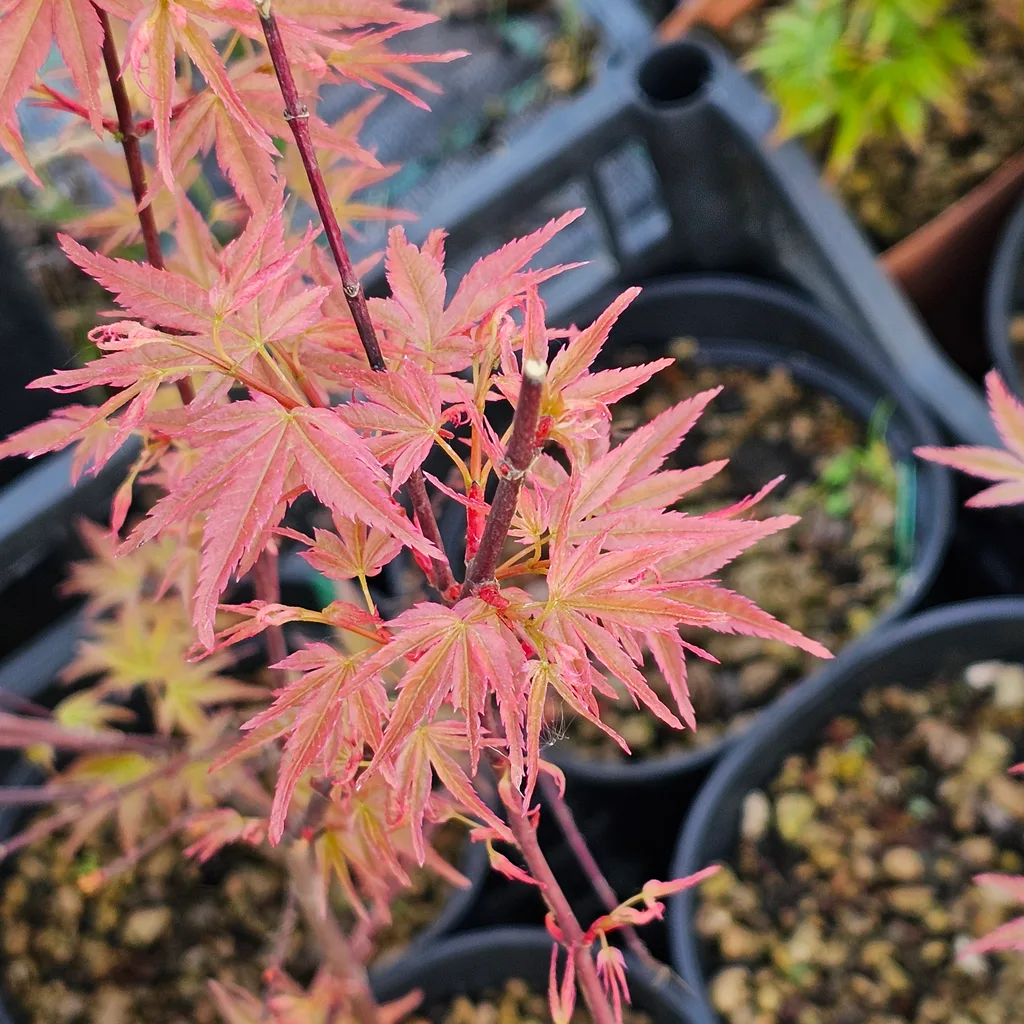
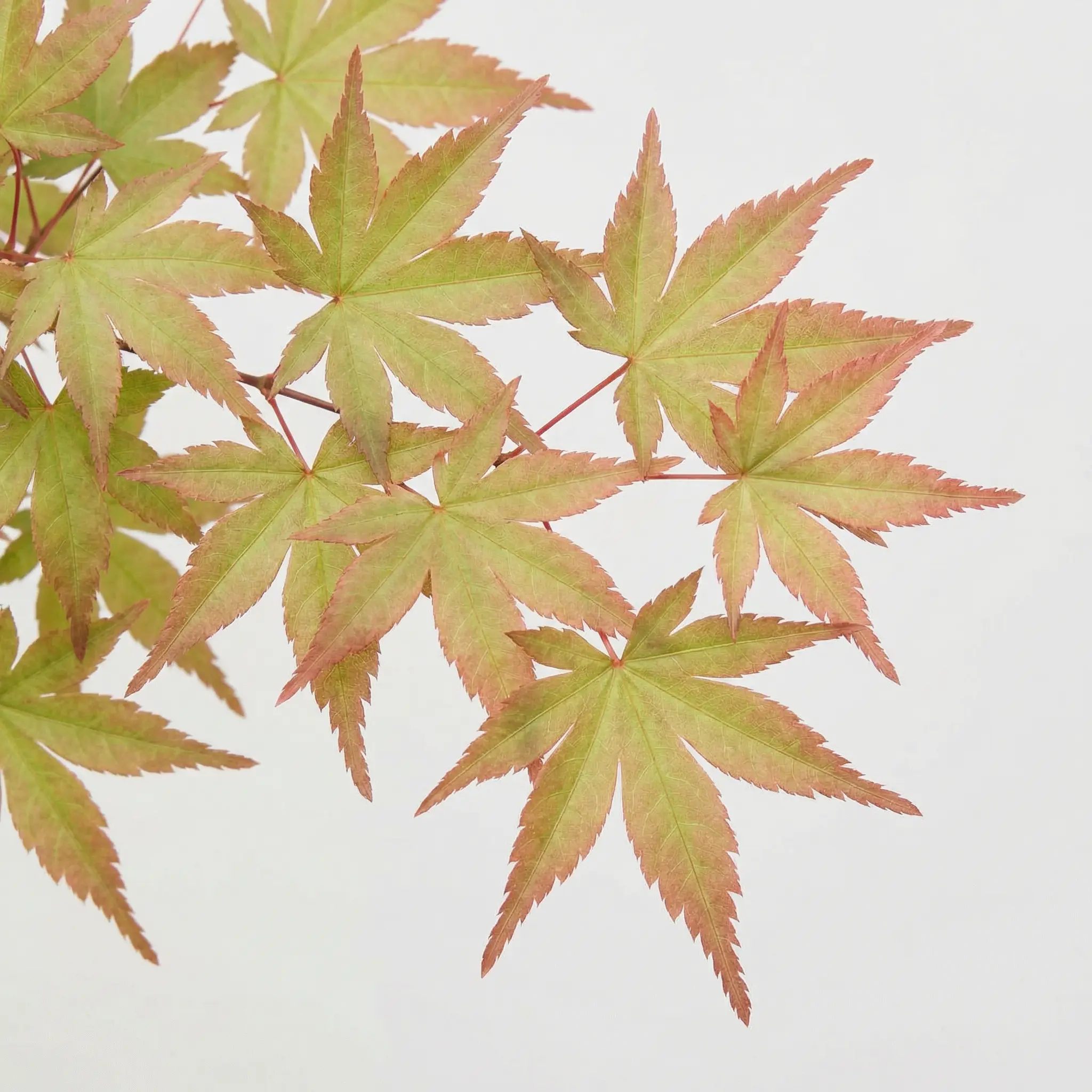
Beni Chidori is a semi-dwarf Japanese maple prized for its vivid pink spring flush, crimson red autumn colour, and balanced growth behaviour. Its smooth bark transitions through green, pink and red tones before maturing to grey, adding year-round interest. Non-grafted, cutting-propagated plants to preserve the true characteristics of the cultivar.

35 

Out of stock

Gone for now: batches are small.

Leave your email and you’ll be first to know when the next batch is ready.

Before you buy

Each tree is unique and photos are for reference. You can request current photos of available trees before buying.

Care details

Sun

Full sun to partial shade, with protection from intense midday heat in hot climates.

Water

Keep soil consistently moist with good drainage.

Feed

Regular feeding during the growing season to support steady growth and ramification.

Repot

Every 2–3 years in early spring, before bud break.

Soil

Slightly acidic to neutral, free-draining substrate.

Prune

Prune after shoot hardening to develop branch structure and refine ramification.

Plan its future

Every tree has more than one path. Book a 1-to-1 consultation with Luca to map out styling and next steps for this exact material, from €29.

Complete your collection

You may also like…

Acer palmatum ‘Beni Chidori’ — Characteristics & Bonsai Use

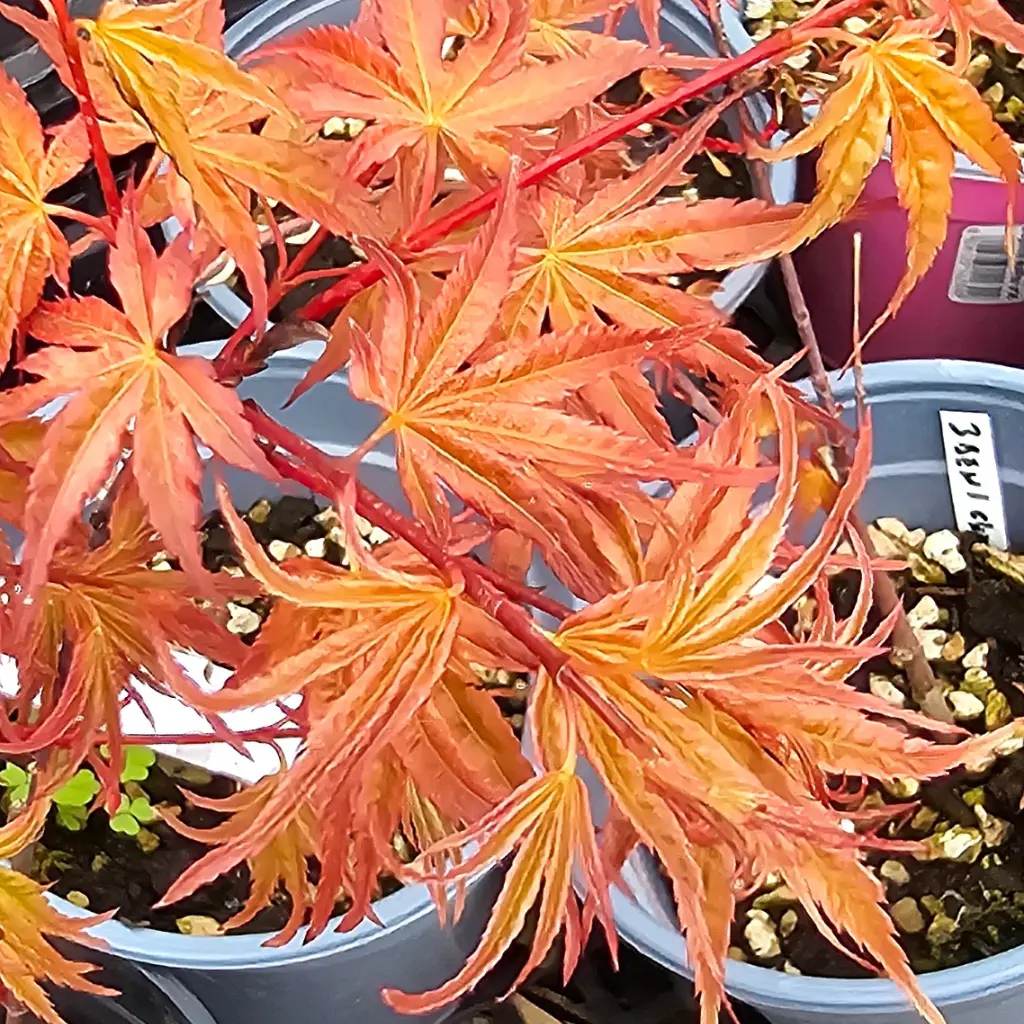
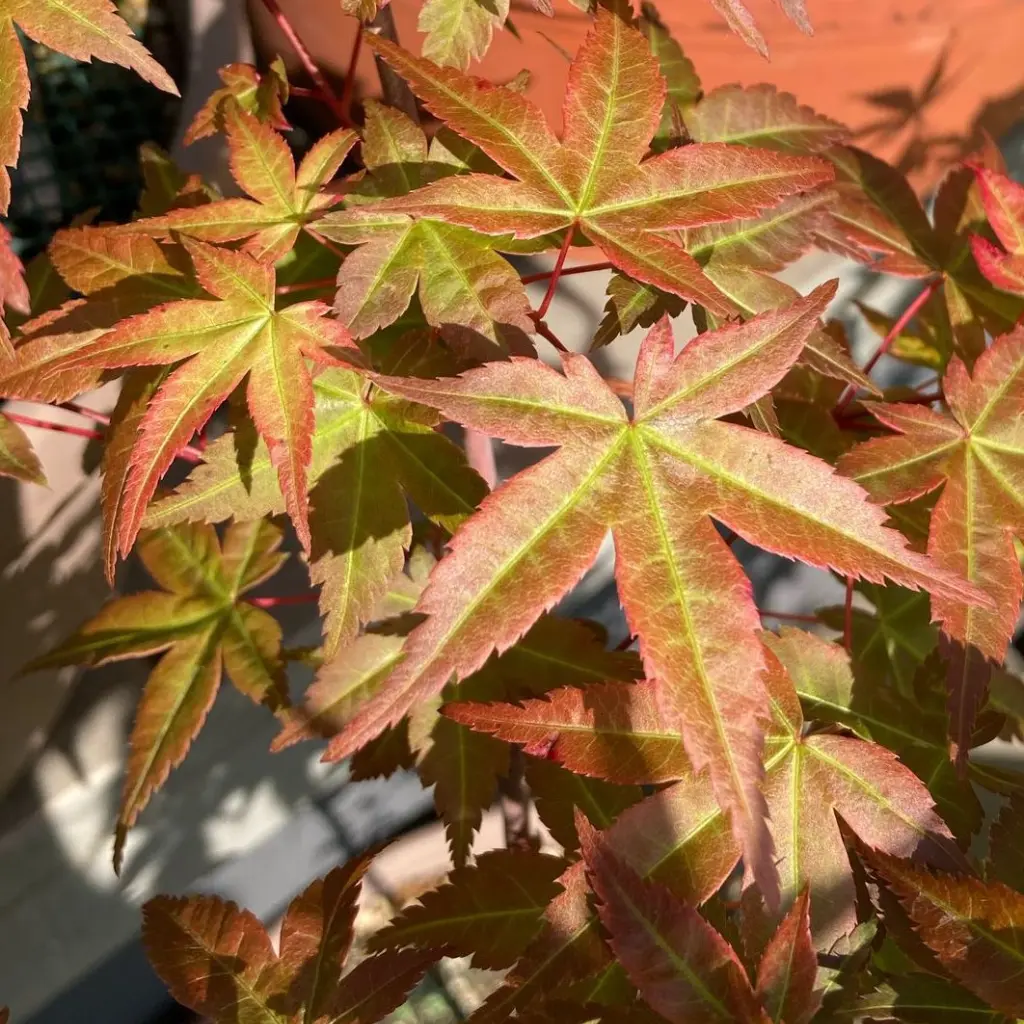
‘Beni Chidori’ is one of the most sought-after Japanese maple cultivars for bonsai, and for good reason: its spring colour progression is genuinely spectacular. New foliage emerges pink, then develops orange veins before settling into light green — at one point, all three tones are visible in a single leaf. In summer, the canopy stabilises to a clean light green before turning crimson red in autumn, closing the season with strong visual impact. See how its pink register compares with Seigen and Orihime in our three-way cultivar comparison.

The cultivar has a semi-dwarf, upright growth habit with medium vigour and medium-length internodes, making it a practical choice for growers who want to build branch structure without excessive speed. Leaf size is moderate, reducing well with proper technique. Bark is smooth throughout development, transitioning from green, pink or red tones (depending on sun exposure) to mature grey. In open ground, ‘Beni Chidori’ reaches 2 to 4 metres — compact enough to maintain proportions easily at bonsai scale.

For bonsai purposes, its balanced growth and reliable response to pruning make it especially well suited for early structural development, allowing growers to build framework while keeping refined proportions in small to medium-sized compositions.

Cultivation note: ‘Beni Chidori’ develops its best spring colour with good morning light — the pink tones intensify with direct exposure but scorch under strong afternoon sun in peak summer. Protect from midday heat in warmer climates. This cultivar is sometimes confused with Deshojo, but offers more slender leaves, lighter summer green, and noticeably better resistance to powdery mildew — a practical advantage during humid growing seasons.

Why buy from Treevaset

Grown specifically for bonsai

not garden-centre stock.

European distribution, limited batches

shipped EU-wide — no customs, no import risk.

Support from experienced growers

Luca answers personally.

Non-grafted, true-to-type plants

cutting-propagated to preserve the cultivar.

Compare Japanese maple cultivars

CultivarLeaf sizeInternodesGrowth habitSpring colourBarkAdult sizeBest for
OrihimeVery smallShortDwarf, compactLight green, bronze marginsSmooth1–2mShohin, mame
KotohimeSmallVery shortDwarf, compactGreen, pink-red marginsSmooth1–2mShohin, mame, forest
Sei HimeSmallShortDwarf, compactYellow-greenSmooth1–2mShohin, literati
SeigenMediumMediumSemi-dwarf, uprightRed-purpleSmooth1–2mShohin, display
Beni ChidoriMediumMediumSemi-dwarf, uprightPink to orangeSmooth2–4mTraining, medium bonsai
Beni TsukasaMediumMediumSemi-dwarf, uprightLight red, pink tonesSmooth2–4mTraining, medium bonsai
KatsuraMediumMediumUprightOrange to yellowSmooth1–2mShohin, medium bonsai
UkonMediumMediumUpright, fastEmerald green, yellow accentsSmooth2–4mTrunk building, informal upright
DeshojoLargeLongUpright, vigorousDeep red, pink tonesSmooth2–4mRefinement, display
Allen’s GoldLargeLongUpright, vigorousGolden-chartreuse, pink-red marginsRough3–5mTrunk building, informal upright
ArakawaLargeLongUpright, vigorousLight green, red marginsRough (corky)3–5mTrunk building, informal upright

Feedback from growers

Americo Italian ★★★★★Translated from Italian

This bonsai had quite a story. It arrived in poor condition, not due to the seller but because the courier took longer than expected. Treevaset was extremely helpful and immediately available to resolve the situation. Highly recommended. I’ve purchased from them multiple times and I will definitely do so again.

Young Pre-Bonsai
Patfow German ★★★★★Translated from German

Friendly communication and fast delivery. At first, it wasn’t clear to me that the seller ships from Italy, which made me hesitant when ordering plants. However, the plants arrived in excellent condition thanks to very careful packaging.

Young Pre-Bonsai
Otreblaidur Italian ★★★★★Translated from Italian

The courier was delayed, but the plant arrived healthy thanks to excellent packaging. A very promising larch with good movement and already well-developed foliage. It has a subtle literati-style character that can be further enhanced. It deserves a proper, well-chosen pot. Very satisfied.

Young Pre-Bonsai
Jesus Spanish ★★★★★Original review

Trustworthy and honest seller. Well wrapped. Well received item. Recommended 100%. Ringraziare tanti.

Bonsai
Terabosa German (Austria) ★★★★★Translated from German

Very good quality, securely packaged and fast delivery.

Young Pre-Bonsai
Jkiod French ★★★★★Translated from French

Arrived in excellent condition, exactly as shown in the photos. Fast delivery. Impeccable.

Bonsai
FAQs

Is Acer palmatum Beni Chidori suitable for bonsai beginners?
Beni Chidori is a good choice for beginners with some basic knowledge. Its semi-dwarf habit and medium internodes make it manageable, and it responds reliably to pruning. The spectacular pink spring flush is a real motivation during the growing season. It is more forgiving than vigorous growers like Deshojo while still offering enough energy for structural development.
Both are red-spring cultivars, but they differ in scale and behaviour. Deshojo is larger and more vigorous (2–4m mature) with longer internodes — excellent for trunk building but demanding to control. Beni Chidori is semi-dwarf with medium internodes, offering a more balanced growth profile. Beni Chidori’s spring colour starts pink (not deep red), and it shows better resistance to powdery mildew in humid climates. For a detailed analysis, see our cultivar comparison article.
Cutting propagation ensures the tree grows on its own roots with consistent semi-dwarf behaviour from base to apex. Grafted plants have vigorous rootstock below the graft union, which creates a visible mismatch at the trunk base and different growth energy — both problematic for bonsai development where trunk continuity and proportional growth matter.
In my experience, Beni Chidori starts showing meaningful ramification after 3–4 years of consistent pruning and controlled feeding. It back-buds reliably when healthy and well-lit, which helps build branch density over time. The medium internodes respond well to clip-and-grow technique. Full refinement for display quality typically takes 6–10 years from young pre-bonsai stage.
No. Like all Acer palmatum cultivars, Beni Chidori requires outdoor conditions with a cold winter dormancy period. Indoor growing prevents proper dormancy and leads to progressive weakening. The spectacular pink spring colour only develops after a proper cold period. Keep outdoors year-round, protect from severe frost below -10°C.