
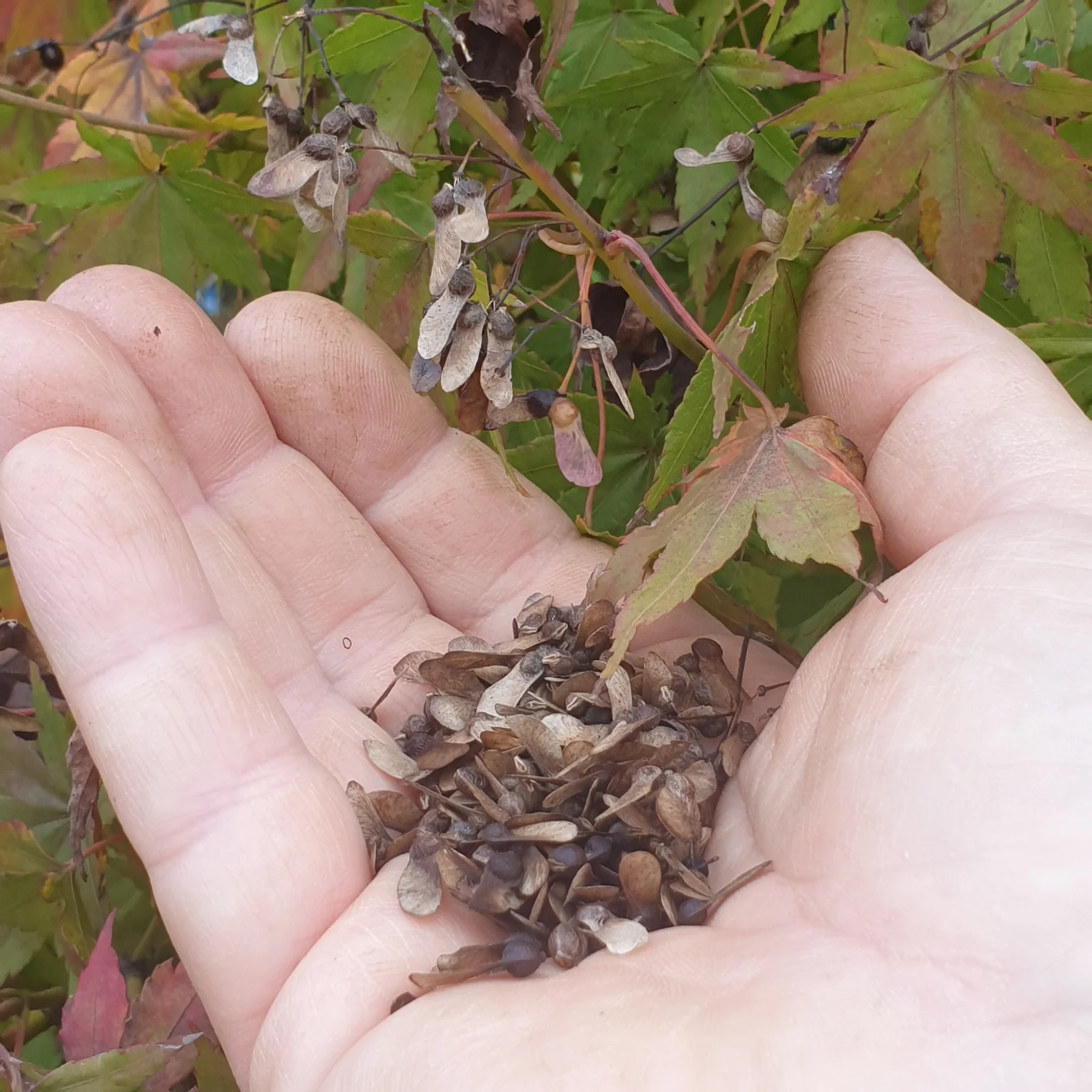
Japanese Maple Yamamomiji (Acer palmatum) – Young Pre-Bonsai
8 € – 40 €Price range: 8 € through 40 €
- Healthy arrival guarantee
- Free EU shipping from €70
- Photos of trees in stock available on request
Before you buy
Each tree is unique and photos are for reference. You can request current photos of available trees before buying.
Care details
Full sun; light shade during peak summer afternoons.
Keep soil evenly moist — never let it dry out completely.
Balanced feeding in season; extra nitrogen only to push early growth.
Early spring as buds swell; young every 1–2 years, older every 3–5.
Well-draining, slightly acidic to neutral substrate.
Structural pruning in dormancy; wire young shoots, watch for wire bite.
Every tree has more than one path. Book a 1-to-1 consultation with Luca to map out styling and next steps for this exact material, from €29.
Complete your collection
You may also like…
-
Bonsai
Acer palmatum ‘Arakawa’ – Japanese Maple for Bonsai
25 € – 60 €Price range: 25 € through 60 € Select options This product has multiple variants. The options may be chosen on the product page -
Bonsai
Acer palmatum ‘Orihime’ – Japanese Maple for Bonsai
35 € – 45 €Price range: 35 € through 45 € Select options This product has multiple variants. The options may be chosen on the product page
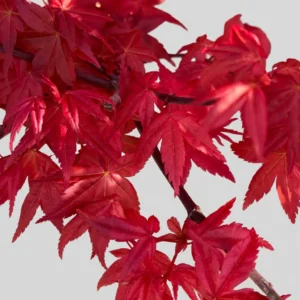
Yamamomiji (Acer palmatum) — characteristics & bonsai use
Yamamomiji — literally “mountain maple” — is the seed-grown Japanese maple (Acer palmatum) that forms the backbone of maple bonsai culture. It combines the grace of the species — five-lobed palmate leaves, fine red-tinged spring growth, fresh green summer foliage and warm orange-to-red autumn colour — with more vigour and easier care than most named cultivars, which is exactly why generations of Japanese growers have built their maple bonsai on it. Nor does our seed come from anonymous batches. Acer palmatum carries an enormous natural variation within the species: the same gene pool holds dissectum, dwarf, red-leaved and cascading forms alongside fast-growing, apically dominant, pine-barked trees like Arakawa. That is why growers have been able to select hundreds of cultivars from it — and why a maple grown from seed is not automatically a good maple for bonsai. Every seedling is an individual, but, much as with people, it will very likely resemble its parents. So we collect the smallest seeds from our most bonsai-prone mother plants — small leaves, short petioles, strong autumn colour, fine bark, short internodes and naturally fine ramification — and our seedlings inherit that look. Your yamamomiji will not grow like a bush, or like a sequoia, when you start taming its vigour and leaf size. However good you are at bonsai, fighting genetics is a lost war: great results only come when the plant works with you, not against you.
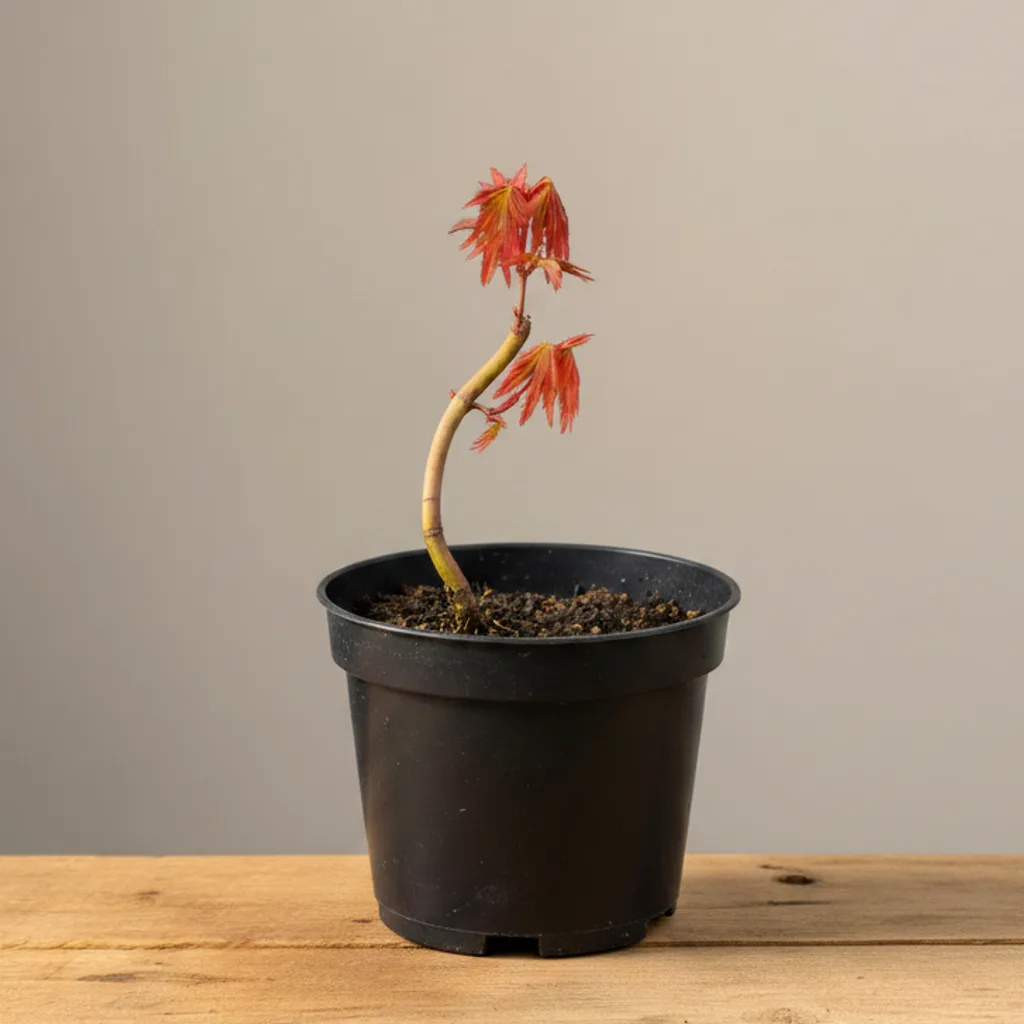
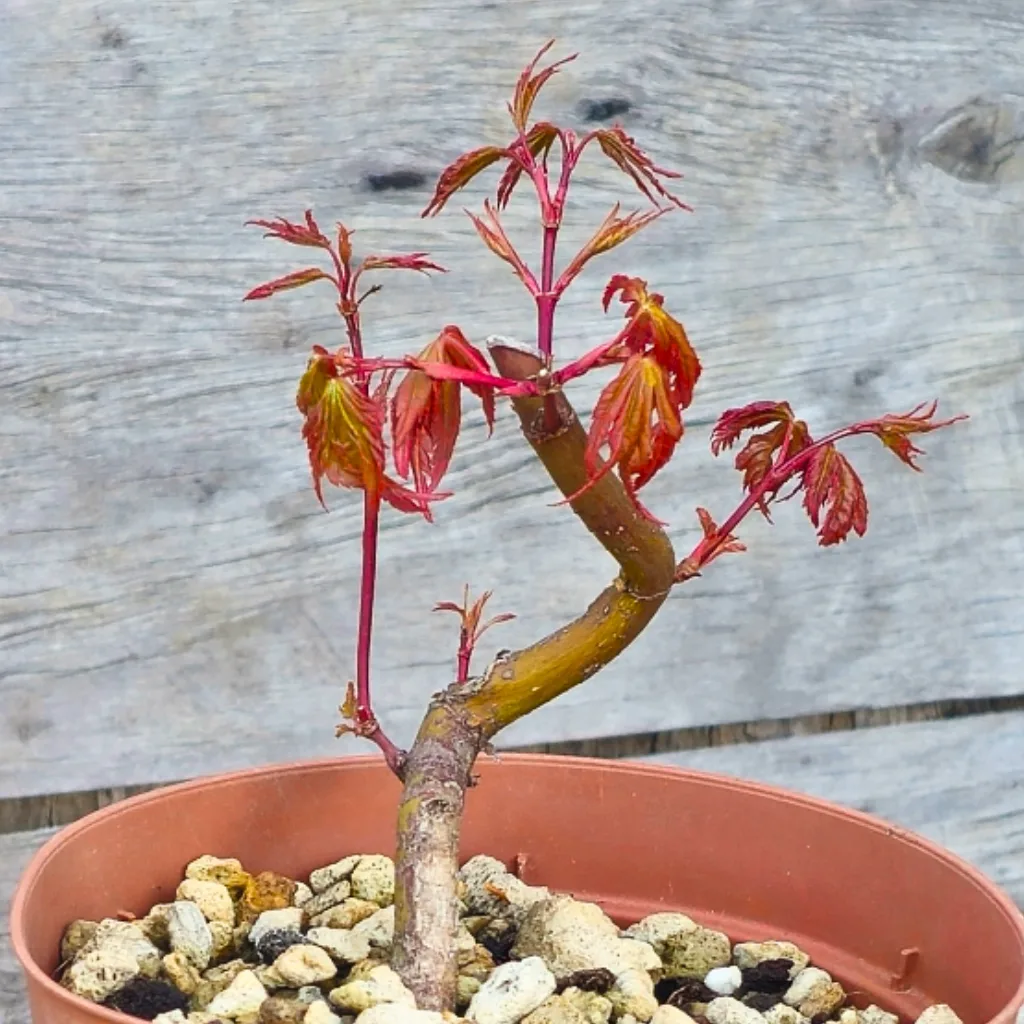
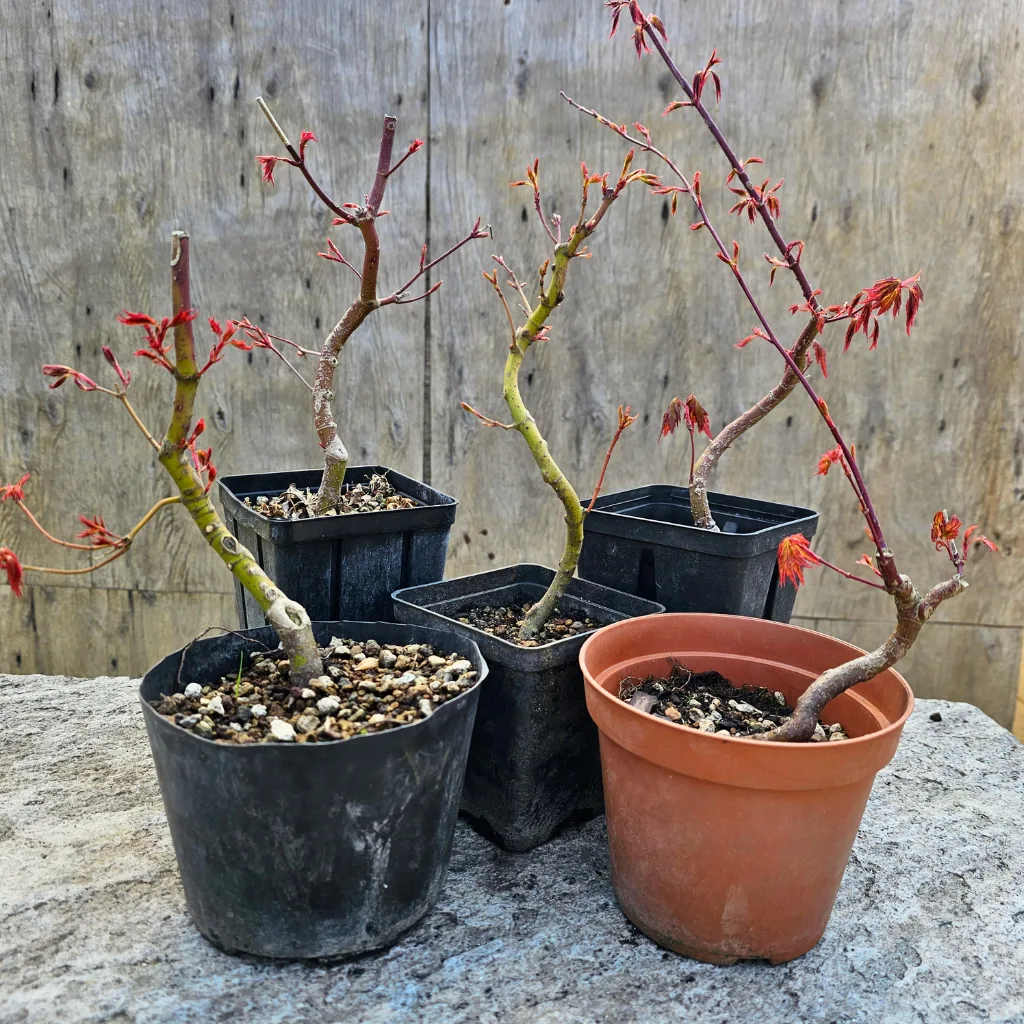
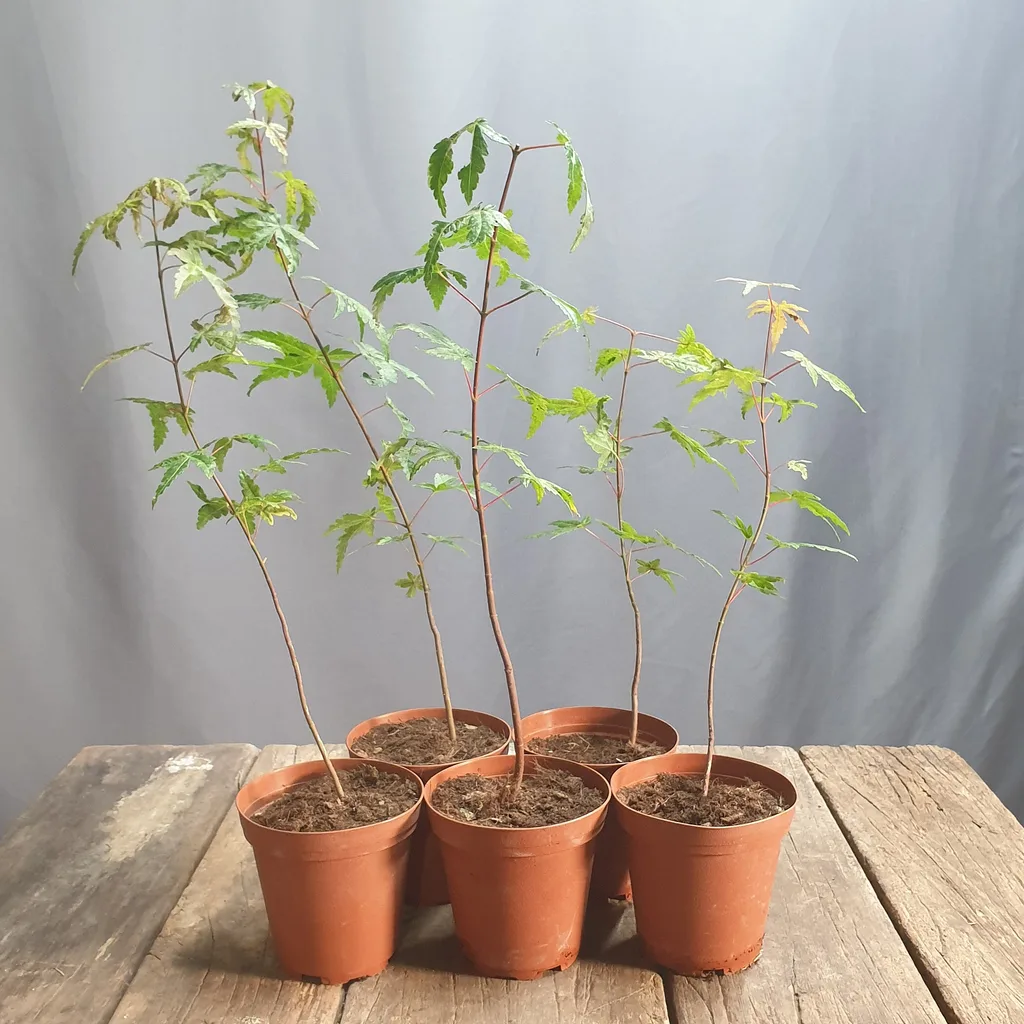
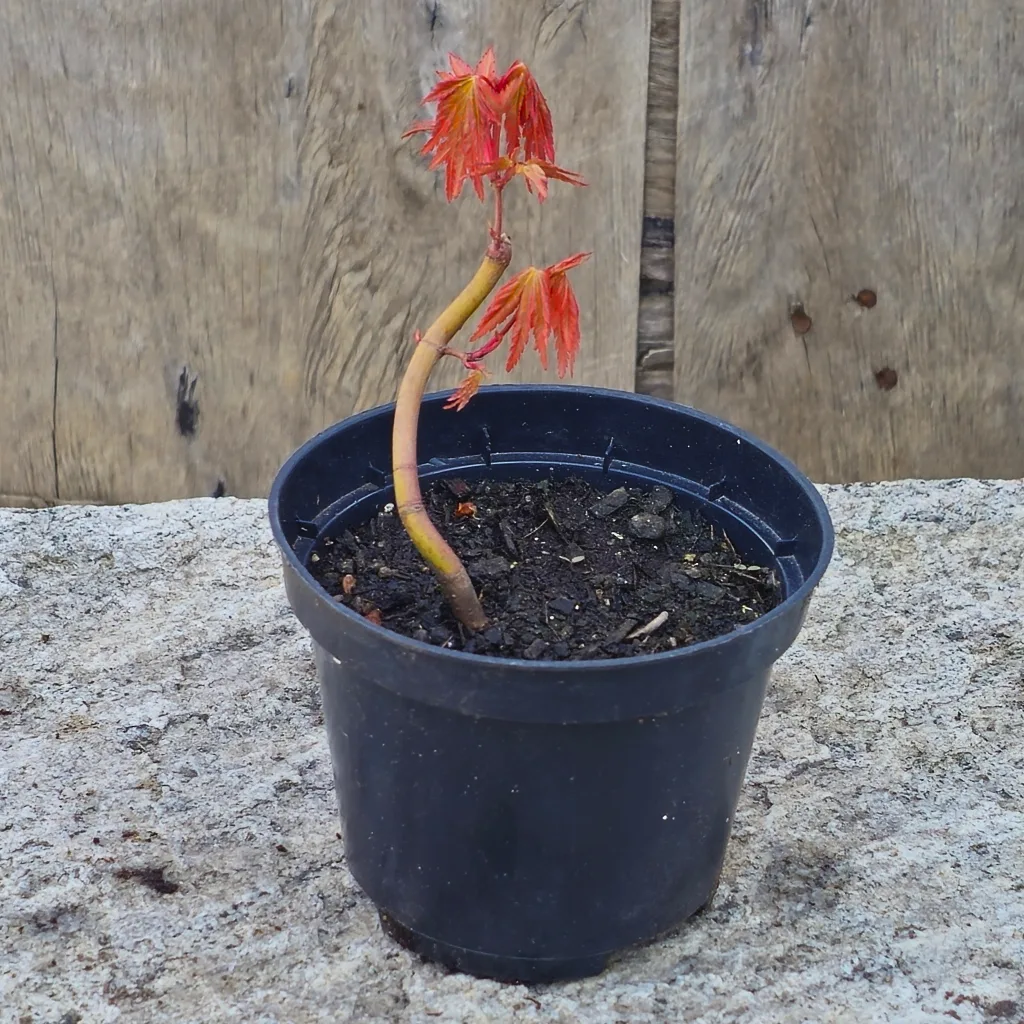
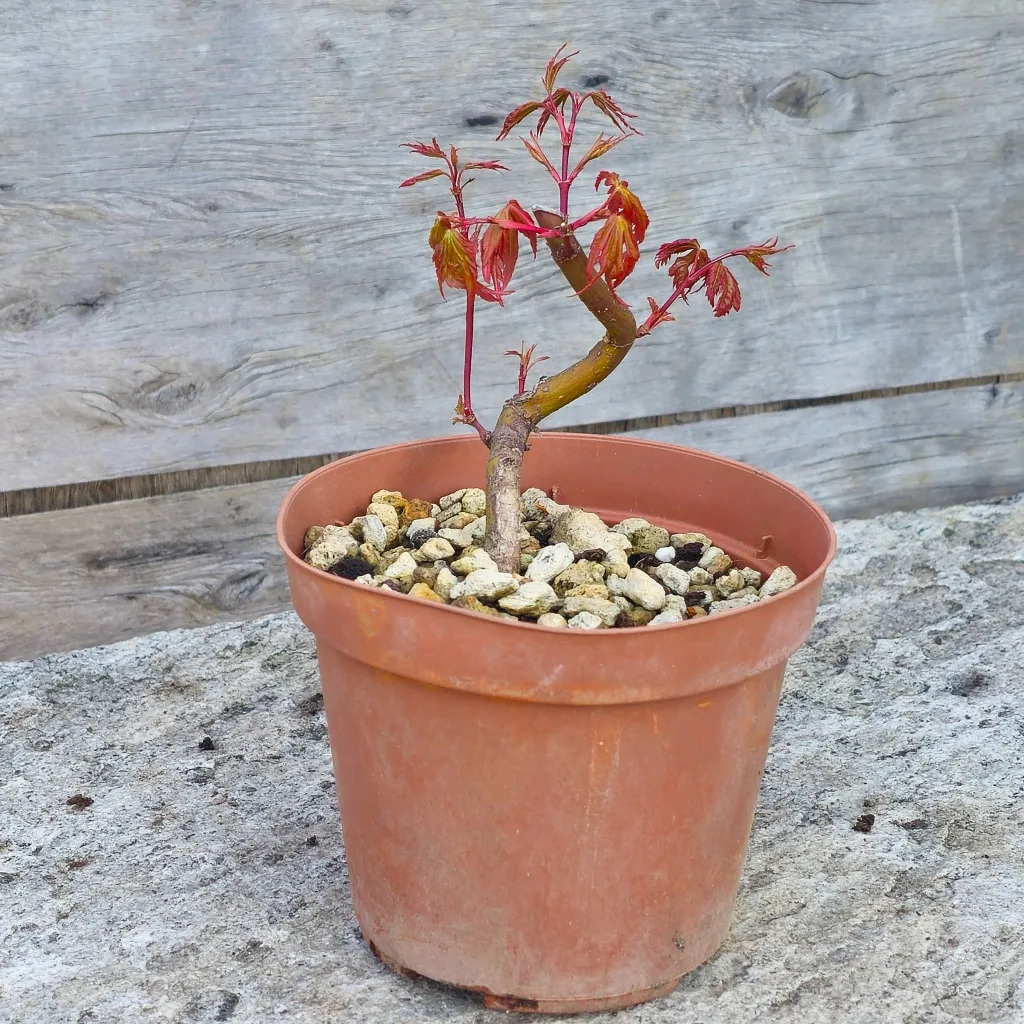
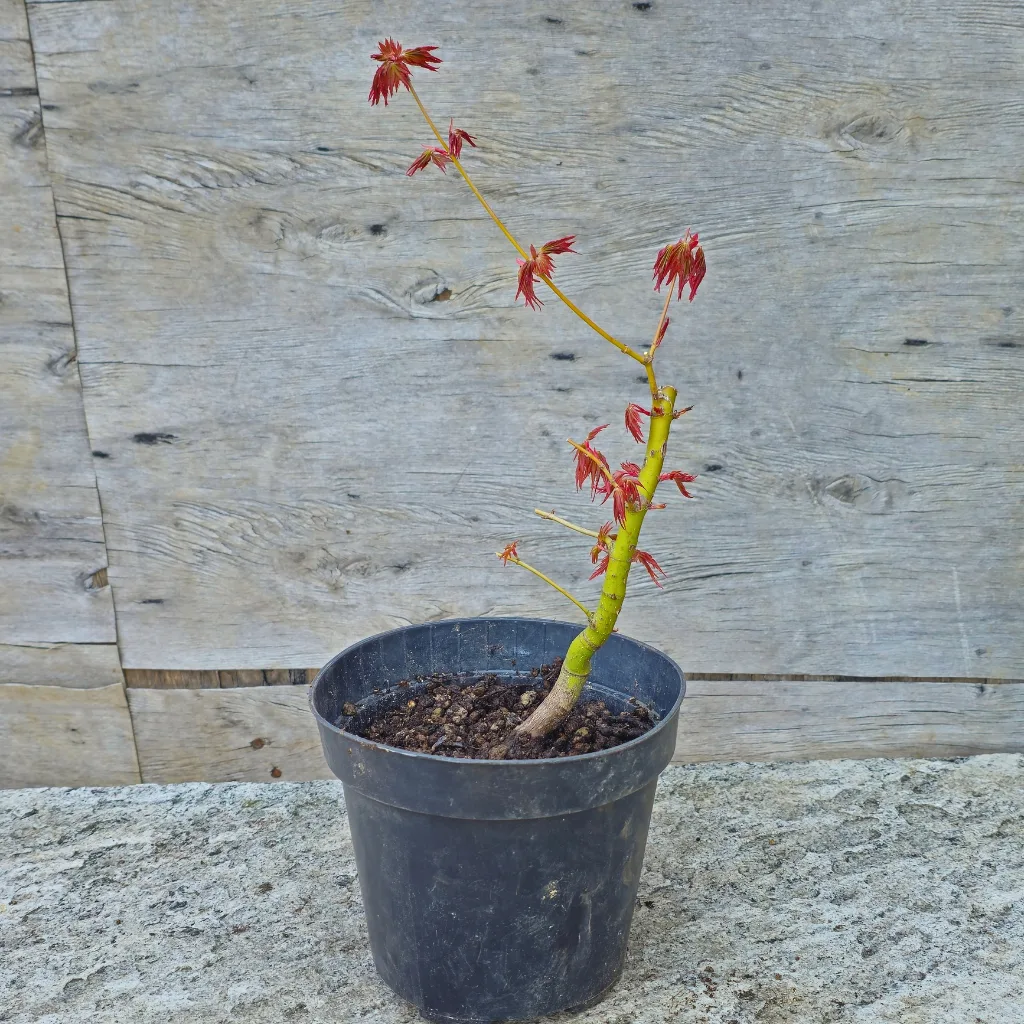
Every tree we offer is sown, wired and cultivated in our own nursery. We do not import finished stock for resale: following the traditional route, we grow all development stages ourselves, from seed tray to styled tree — and we sell from every one of those stages. The four stages in this listing each represent roughly one more season of professional work. In the first year the seedling is wired and the trunk receives its base movement — the bend that gives a bonsai its character and that can never be added to an older, stiffer trunk. In the following seasons the trees gain thicker trunks and shorter internodes, buds are selected in the right positions, and by stage 4 the first branches are being built: what you receive is a defined prototype of a tree, ready for you to refine ramification and apex.
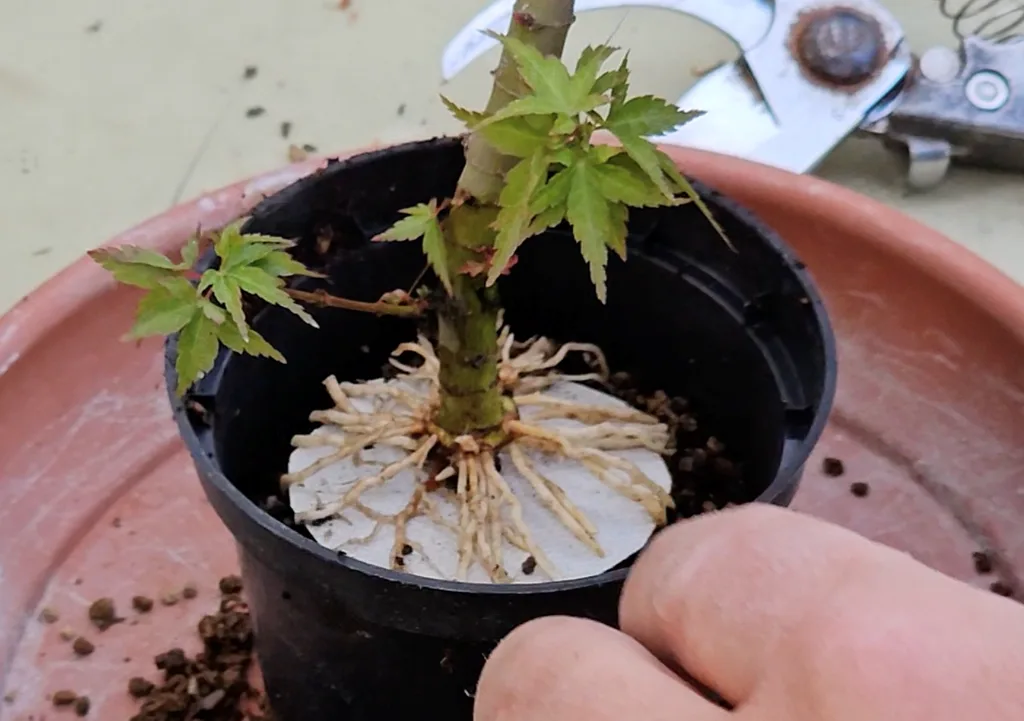
Underground, the work follows its own calendar. After two years of free growth, each plant is repotted and goes through its first root pruning: the taproot is removed and the lateral roots are selected and spread evenly over a washer — the “washer trick” you can watch on Luca’s YouTube channel. Some stage 3 and 4 plants may still arrive with the washer attached. The result is a flat, radial, symmetrical nebari — something you will not see in the pot photos, but that you will find at the next repotting, and that would take many years (and leave visible scars) to correct on a neglected root base.
In bonsai use, Yamamomiji responds well to the full maple toolkit — pinching, defoliation, hard pruning in dormancy — and suits everything from shohin to medium-sized informal upright designs; stage 1 seedlings are also the classic material for group plantings and forests. Compared with cultivars like Deshojo or Seigen it is faster, tougher and more forgiving, which makes it the ideal maple to learn structural work on before (or while) collecting its more delicate siblings.
Cultivation note: protect the delicate new spring leaves from late frosts and from scorching afternoon sun, and check wired trees monthly during the growing season — young maple branches thicken fast and wire marks are persistent. Watch for aphids on soft spring growth; early removal prevents most damage.
- Seed-grown Yamamomiji (Japanese mountain maple), raised entirely in our own nursery — every development stage from seed to styled tree, never imported stock.
- Trunk movement wired in the first year and a flat, radial nebari built through early root work — the two foundations that cannot be added to an older tree.
- Four development stages available — every step up simply includes one more season of professional work.
Why buy from Treevaset
not garden-centre stock.
shipped EU-wide — no customs, no import risk.
quality controlled from day one, seed to tree.
Compare Japanese maple cultivars
| Cultivar | Leaf size | Internodes | Growth habit | Spring colour | Bark | Adult size |
|---|---|---|---|---|---|---|
| Orihime | Very small | Short | Dwarf, compact | Light green, bronze margins | Smooth | 1–2m |
| Kotohime | Small | Very short | Dwarf, compact | Green, pink-red margins | Smooth | 1–2m |
| Sei Hime | Small | Short | Dwarf, compact | Yellow-green | Smooth | 1–2m |
| Seigen | Medium | Medium | Semi-dwarf, upright | Red-purple | Smooth | 1–2m |
| Beni Chidori | Medium | Medium | Semi-dwarf, upright | Pink to orange | Smooth | 2–4m |
| Beni Tsukasa | Medium | Medium | Semi-dwarf, upright | Light red, pink tones | Smooth | 2–4m |
| Katsura | Medium | Medium | Upright | Orange to yellow | Smooth | 1–2m |
| Ukon | Medium | Medium | Upright, fast | Emerald green, yellow accents | Smooth | 2–4m |
| Deshojo | Large | Long | Upright, vigorous | Deep red, pink tones | Smooth | 2–4m |
| Allen’s Gold | Large | Long | Upright, vigorous | Golden-chartreuse, pink-red margins | Rough | 3–5m |
| Arakawa | Large | Long | Upright, vigorous | Light green, red margins | Rough (corky) | 3–5m |
Feedback from growers
★★★★★ 4.9/5 · 100+ verified reviews on eBay
Super personal service and wonderful rare Acer varieties. When the courier had delivery problems, Luca was easy to reach and immediately arranged a replacement. Absolute recommendation!
Acer Palmatum CultivarsExtremely happy with my Acer palmatum — it's exactly what I wanted. Serious, kind and competent, with an excellent quality-price ratio. I'll definitely buy again.
Young Pre-BonsaiVery well packaged, a beautiful larch, exactly as described. Clear recommendation.
Outdoor BonsaiEverything perfect — the little plant arrived well packed and healthy, and I used it right away for a root graft.
Young Pre-BonsaiArrived in excellent condition, exactly as in the photo, fast delivery. Impeccable.
Bonsai in trainingFAQs
Which development stage should I choose?
Will my tree arrive with the training wire on?
What does "root-worked" mean?
What is the difference between Yamamomiji and cultivars like Deshojo or Seigen?
How big and how old are these trees?
Related products
Related products
-
Bonsai
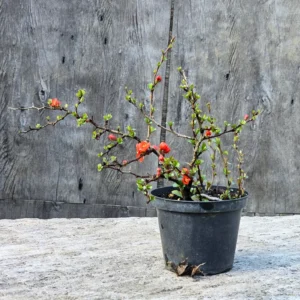
Flowering Quince Bonsai ‘Chojubai’ (Chaenomeles japonica)
35 € – 125 €Price range: 35 € through 125 € Select options This product has multiple variants. The options may be chosen on the product page
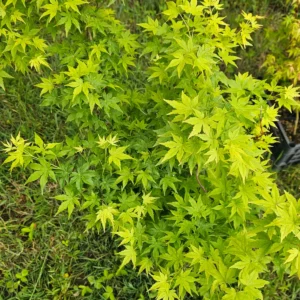
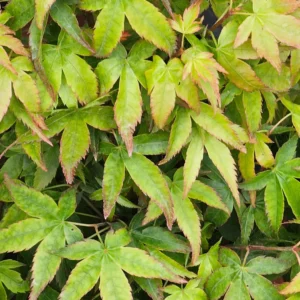
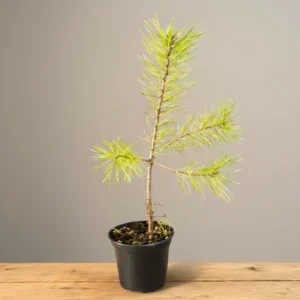

Japanese Maple Yamamomiji (Acer palmatum) – Young Pre-Bonsai
8 € – 40 €Price range: 8 € through 40 €