
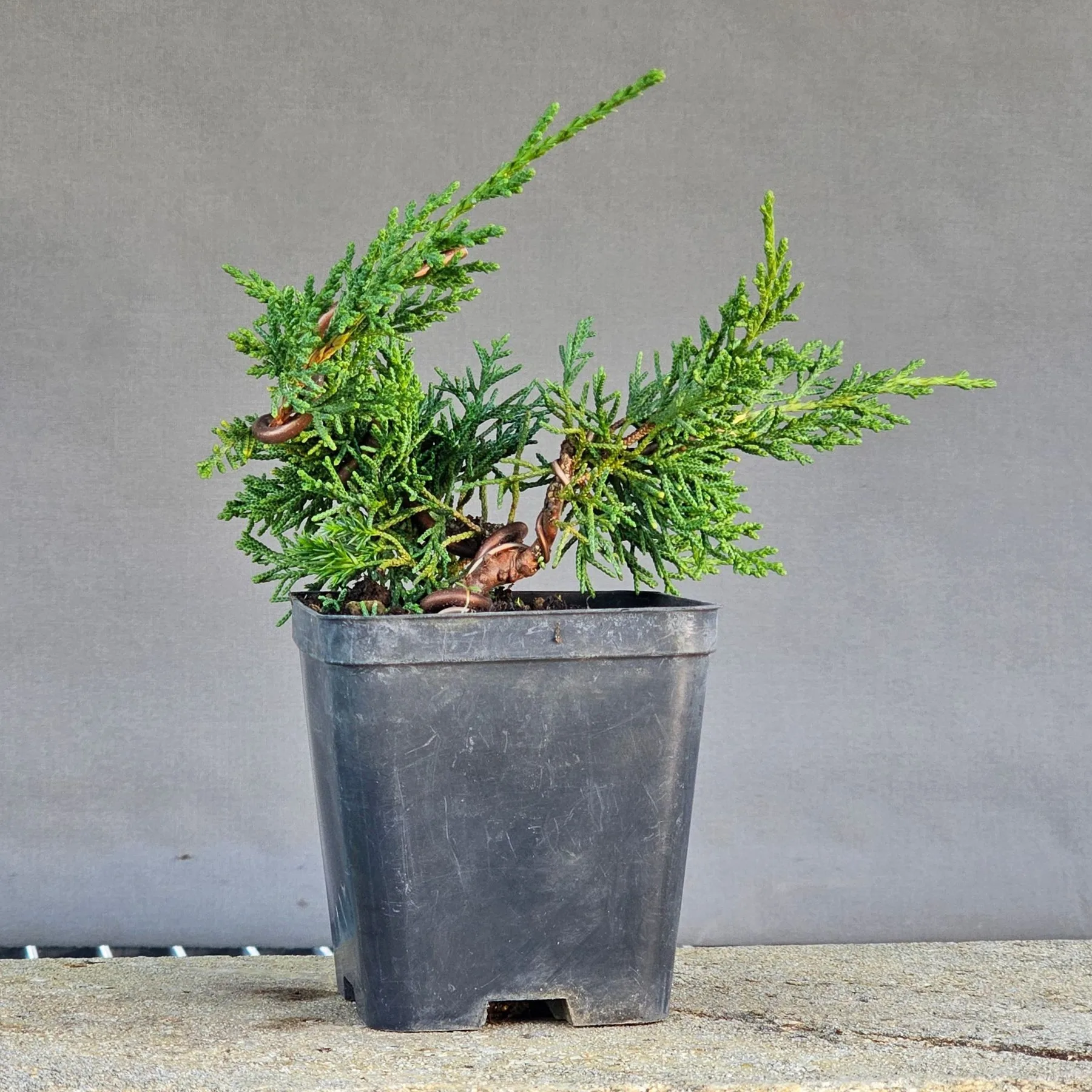
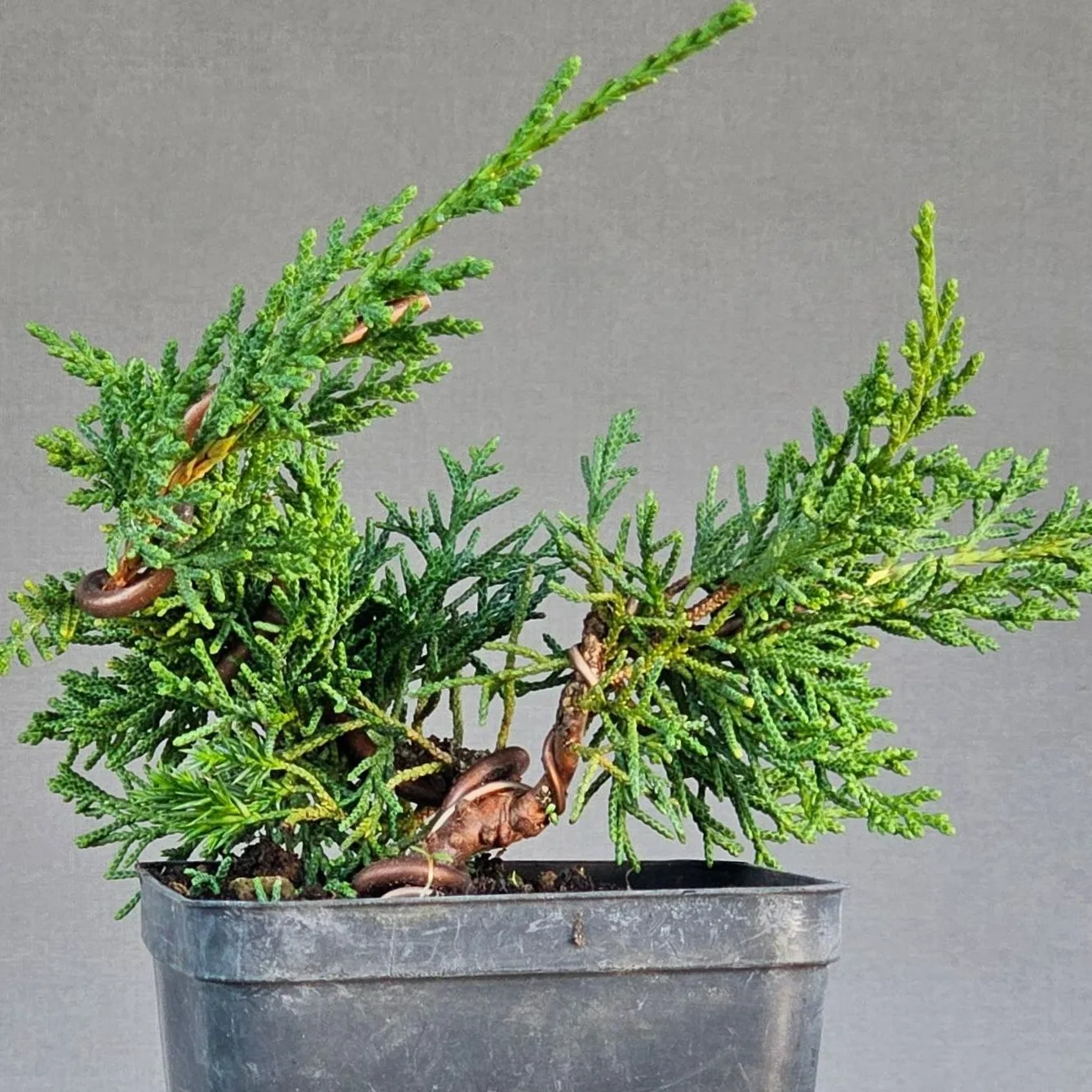
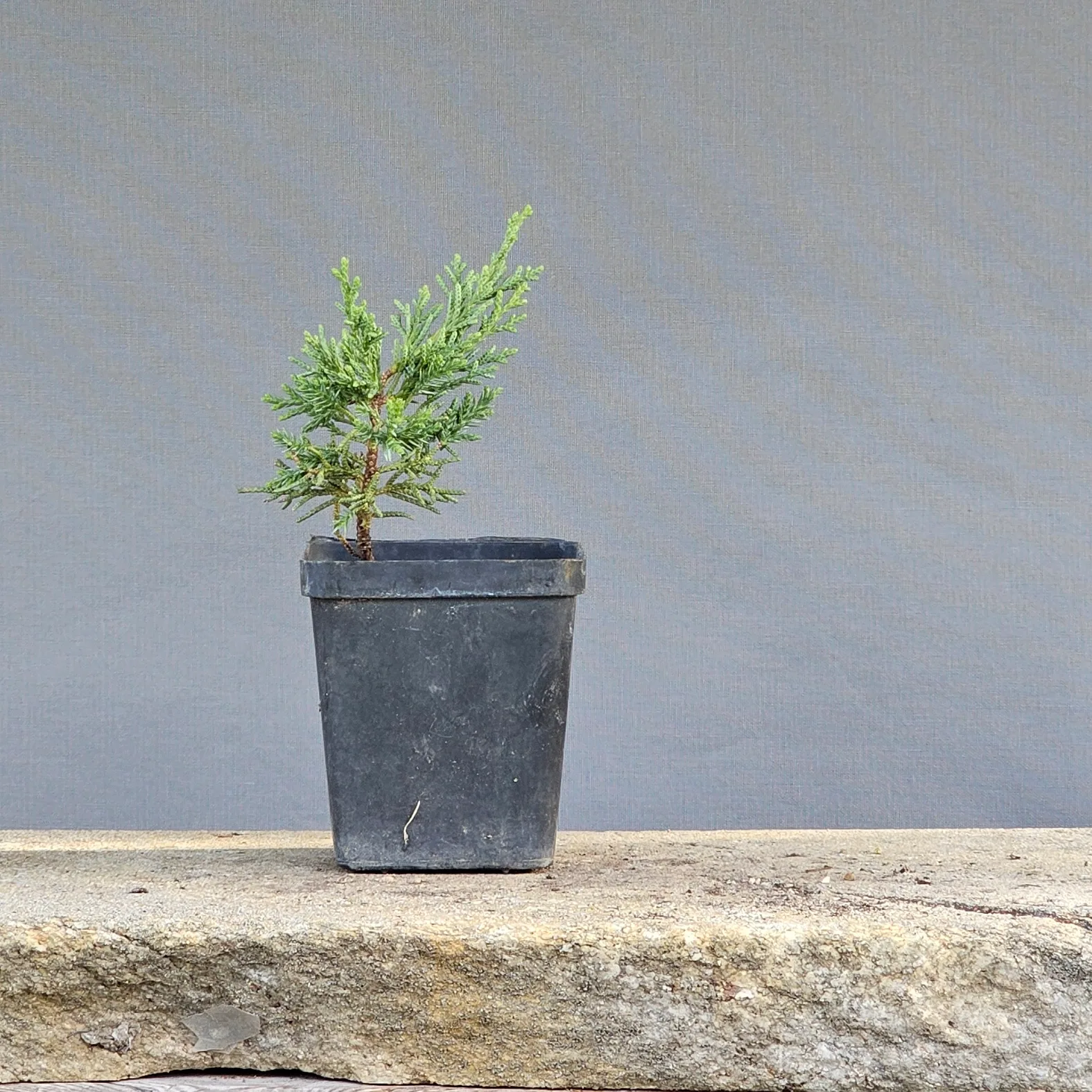
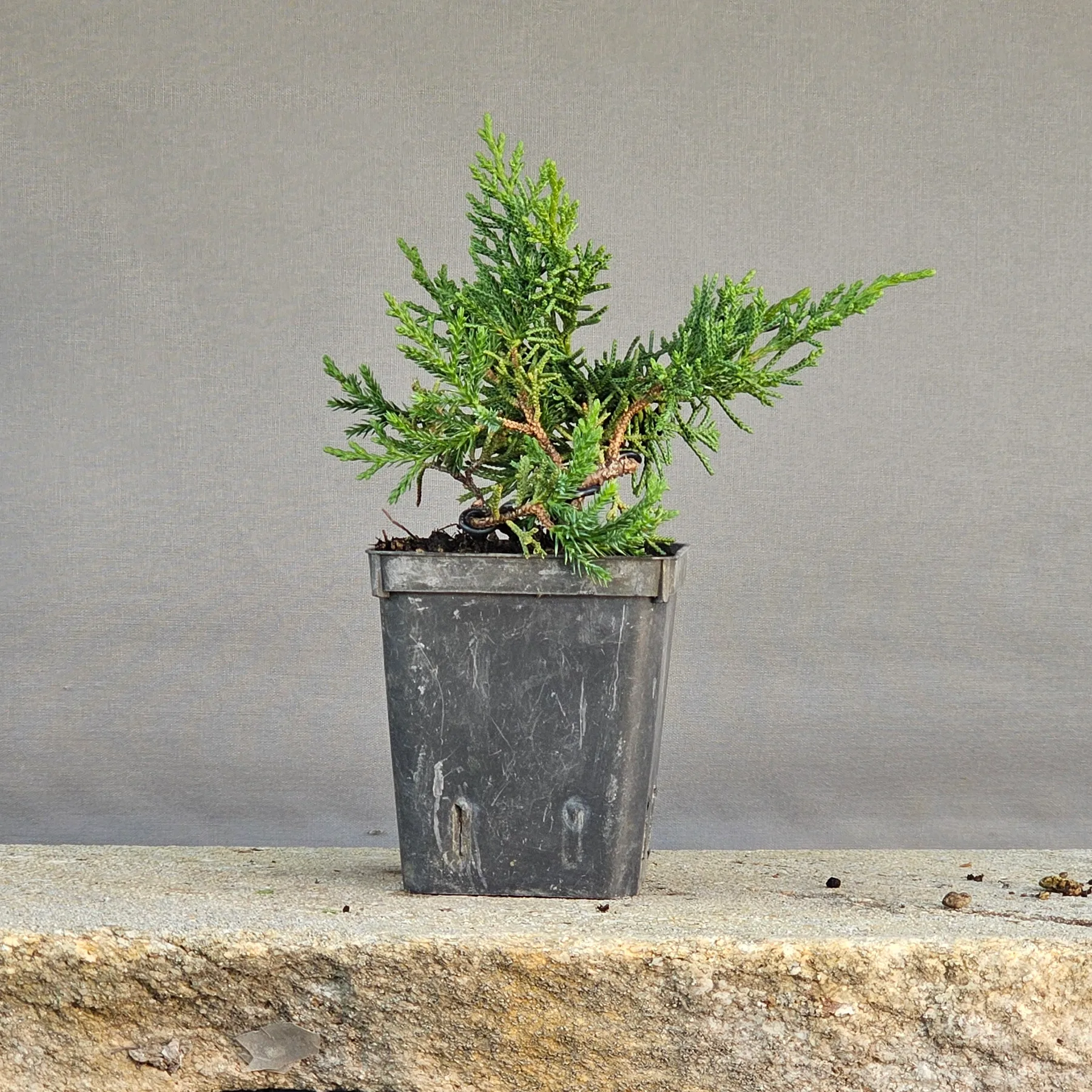
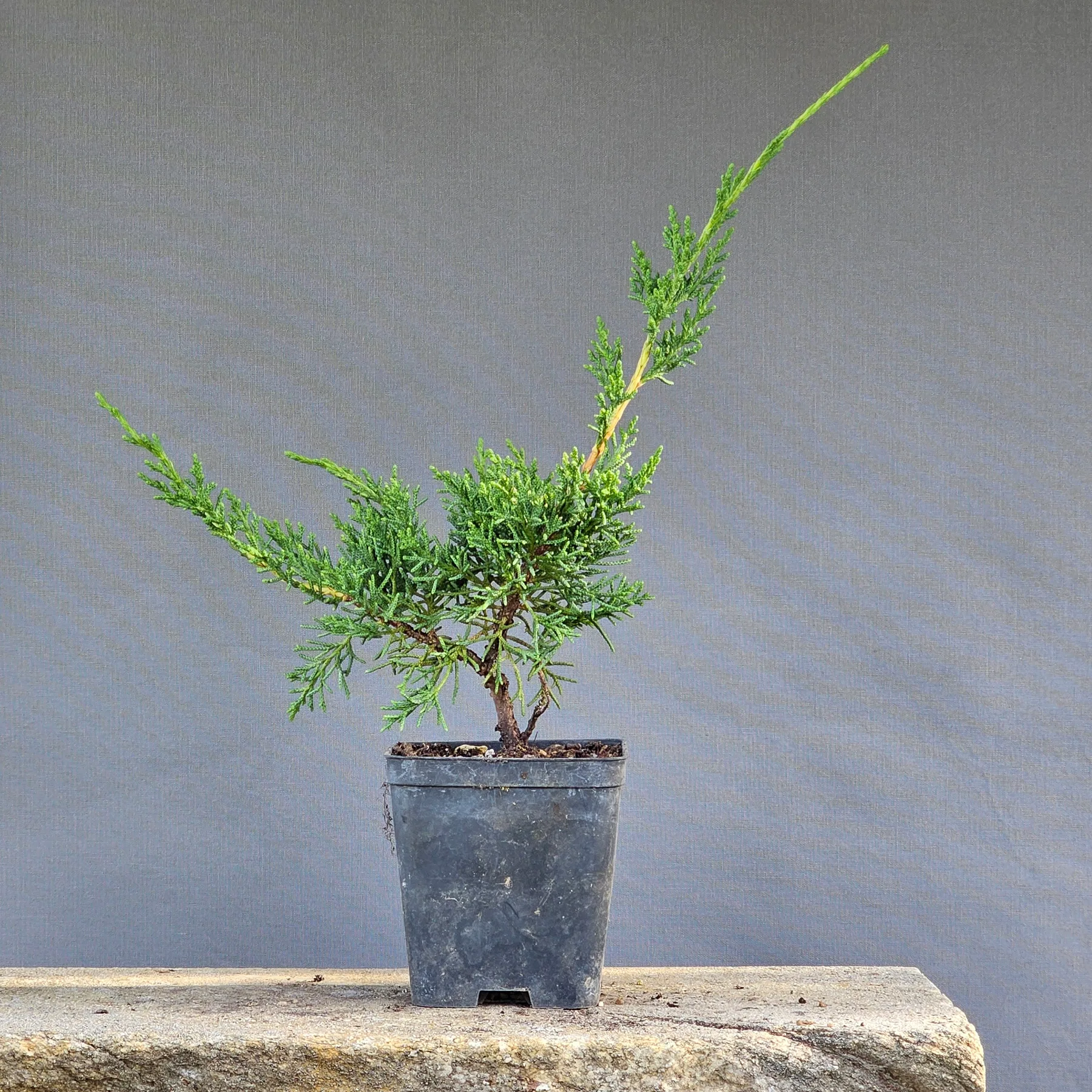
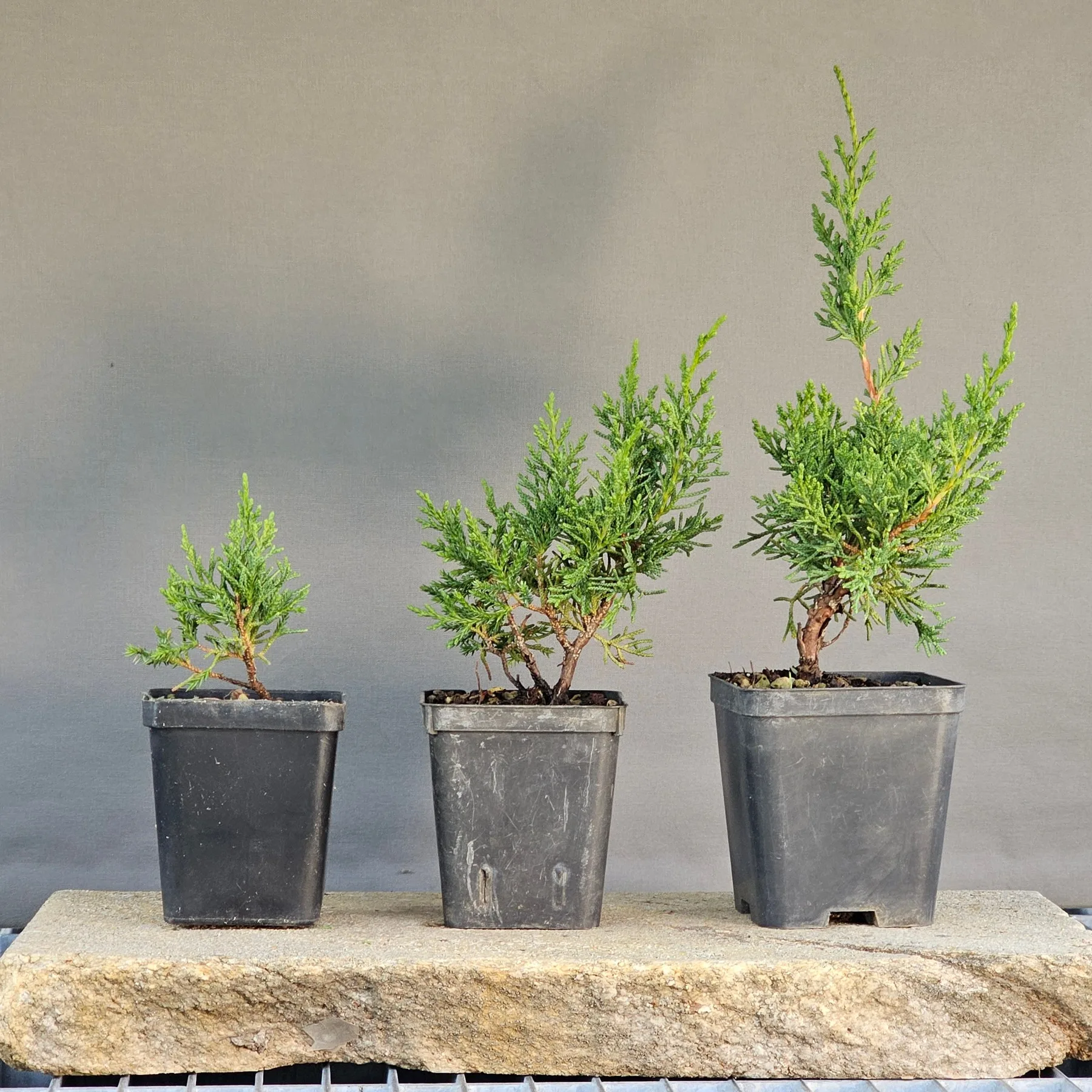
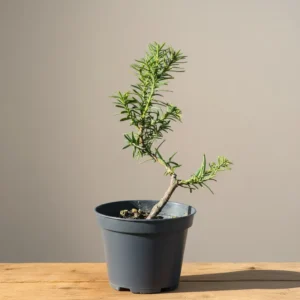
Kishu Juniper (Juniperus chinensis ‘Kishu’) – Young Pre-Bonsai
12 € – 25 €Price range: 12 € through 25 €
- Healthy arrival guarantee
- Free EU shipping from €70
- Photos of trees in stock available on request
Before you buy
Each tree is unique and photos are for reference. You can request current photos of available trees before buying.
Care details
Full sun throughout the year.
Keep soil evenly moist but never waterlogged.
Feed every two weeks during the growing season.
Every 2–4 years in early spring before growth starts.
Slightly acidic to neutral.
Prune new shoots selectively with scissors; never shear across the pads.
Every tree has more than one path. Book a 1-to-1 consultation with Luca to map out styling and next steps for this exact material, from €29.
Complete your collection
You may also like…
-
Bonsai
Itoigawa Juniper (Juniperus chinensis ‘Itoigawa’) – Young Pre-Bonsai
12 € – 33 €Price range: 12 € through 33 € Select options This product has multiple variants. The options may be chosen on the product page -
Bonsai
Acer palmatum ‘Orihime’ – Japanese Maple for Bonsai
35 € – 45 €Price range: 35 € through 45 € Select options This product has multiple variants. The options may be chosen on the product page
Juniperus chinensis ‘Kishu’ — characteristics & bonsai use
Kishu is the compact shimpaku. Like Itoigawa, it is a selected form of Juniperus chinensis with fine scale foliage, but it grows denser and tighter: the scales sit closer together, the internodes are shorter and the growth habit is naturally compact. The result is a slightly coarser texture than Itoigawa, with a sturdier, more masculine character — and pads that hold their shape with very little effort.
That compactness is exactly why bonsai growers reach for Kishu when the tree is small. On shohin and mame, where a single pad may be a few centimetres across, Kishu allows maximum precision: the dense, short-jointed foliage can be defined cloud by cloud, without the open gaps a looser juniper would leave. It is also a forgiving tree to learn on — vigorous, quick to back-bud on green growth, and happy to be pinched and pruned through the season.
Junipers used for bonsai fall into two families. Needle junipers keep long, spiky leaves all their life. Scale junipers start with juvenile needles and then switch to soft, overlapping scales — and these are the ones bonsai artists prize, because well-cultivated scale foliage becomes dense and refined enough to shape pads in detail. The shimpaku group — the name means “true cypress” in Japanese, junipers being part of the cypress family — sits at the refined end of the scale junipers, and ‘Kishu’ and ‘Itoigawa’ are its two famous selections. Choose Kishu for compact, dense pads on a smaller tree; choose Itoigawa for a finer, softer texture and a brighter green on medium to large designs.
Like every shimpaku, Kishu is almost always grown as a strongly bent tree, and that movement has to be set while the wood is young: a two- or three-year-old trunk bends easily, an older one resists and can break. That is why we bend our junipers early, in our own nursery, and then grow them on. The plants in this listing are that same material at different ages — the trees we keep working on become our own specimens. Choose Straight · 2 years if you want to set the first bends yourself; choose a bent plant for movement that is already there, with a thicker trunk and more foliage each year. Straight · 4 years is the same age as Bent · 4 years, left unbent — the plant to pick as grafting material, or if you prefer to shape a thicker trunk your own way.
Grow it outdoors in full sun with good air movement all year round. Given free growth, a young Kishu thickens steadily; kept pinched, it refines into tight pads. Like Itoigawa, it takes on a bronze, reddish cast in cold weather — the tree’s normal winter response — and returns to green in spring.
Cultivation note: build density with selective pruning — cut green shoots one at a time with scissors, or pinch the odd tip carefully with your fingers. Never shear across the pads: wounded scales brown and die back. Wire young branches while they are still green and flexible, and check the wire often, because compact growth thickens quickly behind it. A free-draining substrate and full sun keep the foliage tight and the colour deep.
- Genuine Juniperus chinensis ‘Kishu’ — the compact shimpaku with dense, short-jointed scale foliage.
- Fully hardy outdoor conifer, tolerating cold winters and hot summers across Europe.
- Cutting-propagated, not grafted — natural trunk character and vigorous roots from the very start.
Why buy from Treevaset
not garden-centre stock.
shipped EU-wide — no customs, no import risk.
cutting-propagated to preserve the cultivar.
Feedback from growers
★★★★★ 4.9/5 · 100+ verified reviews on eBay
Super personal service and wonderful rare Acer varieties. When the courier had delivery problems, Luca was easy to reach and immediately arranged a replacement. Absolute recommendation!
Acer Palmatum CultivarsExtremely happy with my Acer palmatum — it's exactly what I wanted. Serious, kind and competent, with an excellent quality-price ratio. I'll definitely buy again.
Young Pre-BonsaiVery well packaged, a beautiful larch, exactly as described. Clear recommendation.
Outdoor BonsaiEverything perfect — the little plant arrived well packed and healthy, and I used it right away for a root graft.
Young Pre-BonsaiA lovely larch with a beautiful trunk base. Perfect packaging and fast shipping.
Young Pre-BonsaiFAQs
Kishu or Itoigawa — which should I choose?
Is the Kishu juniper good for bonsai beginners?
Straight or bent, and which age should I choose?
Can I grow a Kishu juniper indoors?
When can I start wiring and styling my young Kishu?
Related products
Related products
-
Bonsai
Japanese Maple Yamamomiji (Acer palmatum) – Young Pre-Bonsai
8 € – 40 €Price range: 8 € through 40 € Select options This product has multiple variants. The options may be chosen on the product page

Kishu Juniper (Juniperus chinensis ‘Kishu’) – Young Pre-Bonsai
12 € – 25 €Price range: 12 € through 25 €