Acer palmatum ‘Seigen’ – Japanese Maple for Bonsai (Young Pre-Bonsai)
35 €
Out of stock
Leave your email and you’ll be first to know when the next batch is ready.
- Healthy arrival guarantee
- Free EU shipping from €70
- Photos of trees in stock available on request
Before you buy
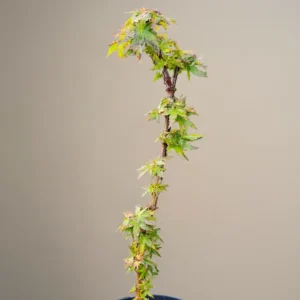
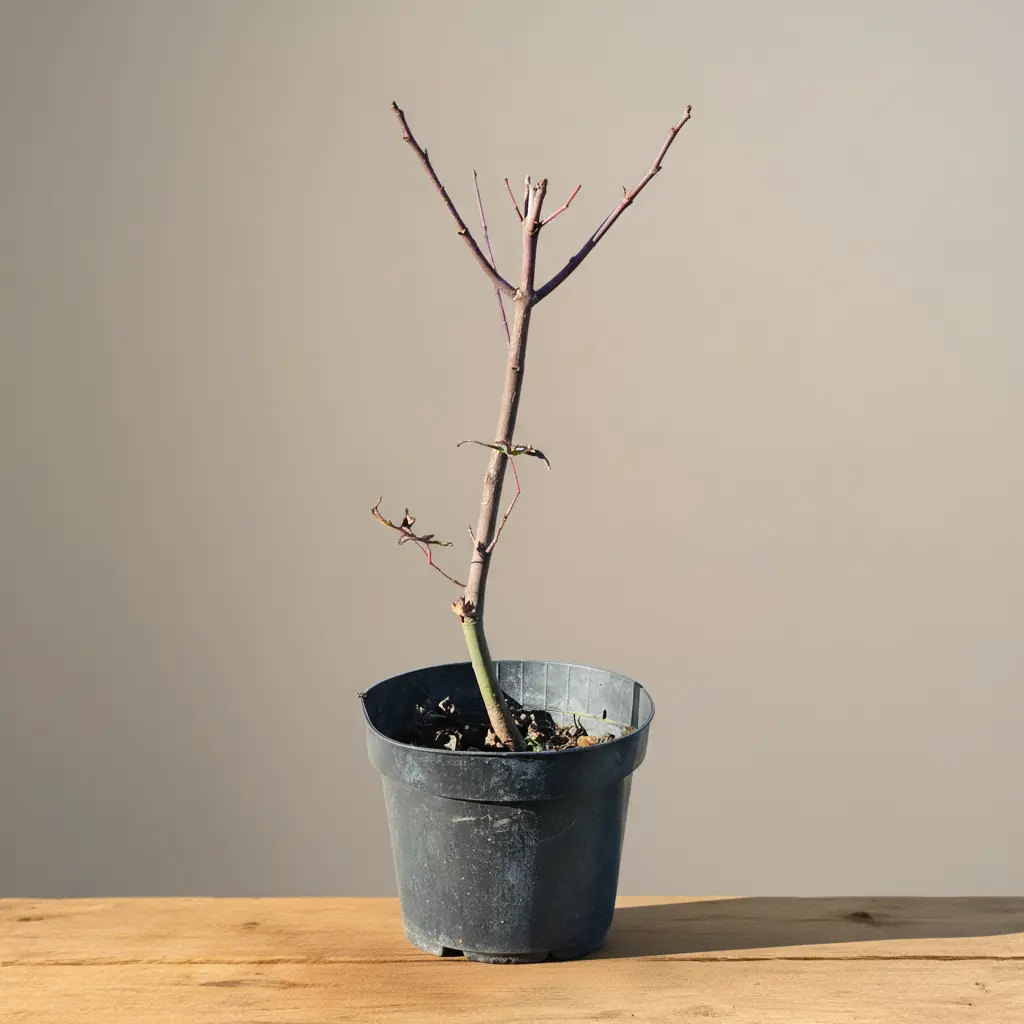
Each tree is unique and photos are for reference. You can request current photos of available trees before buying.
Care details
Full morning sun with light afternoon shade to protect foliage during peak heat.
Keep soil evenly moist but well-drained.
Regular feeding during spring and early summer to support balanced growth and colour.
Every 2–3 years in early spring, before bud break.
Slightly acidic to neutral.
Prune after shoot hardening to control internodes and maintain structure.
Every tree has more than one path. Book a 1-to-1 consultation with Luca to map out styling and next steps for this exact material, from €29.
Complete your collection
You may also like…
- Bonsai
Trident Maple (Acer buergerianum) – Young Pre-Bonsai
8 € – 40 €Price range: 8 € through 40 € Select options This product has multiple variants. The options may be chosen on the product page - Bonsai
Acer palmatum ‘Orihime’ – Japanese Maple for Bonsai
35 € – 45 €Price range: 35 € through 45 € Select options This product has multiple variants. The options may be chosen on the product page
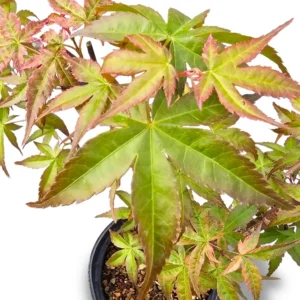
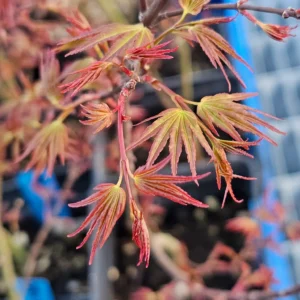
Acer palmatum ‘Seigen’ — Characteristics & Bonsai Use
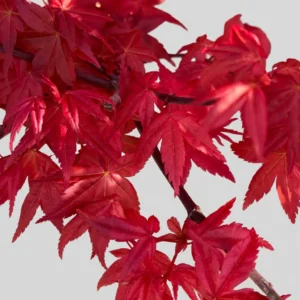
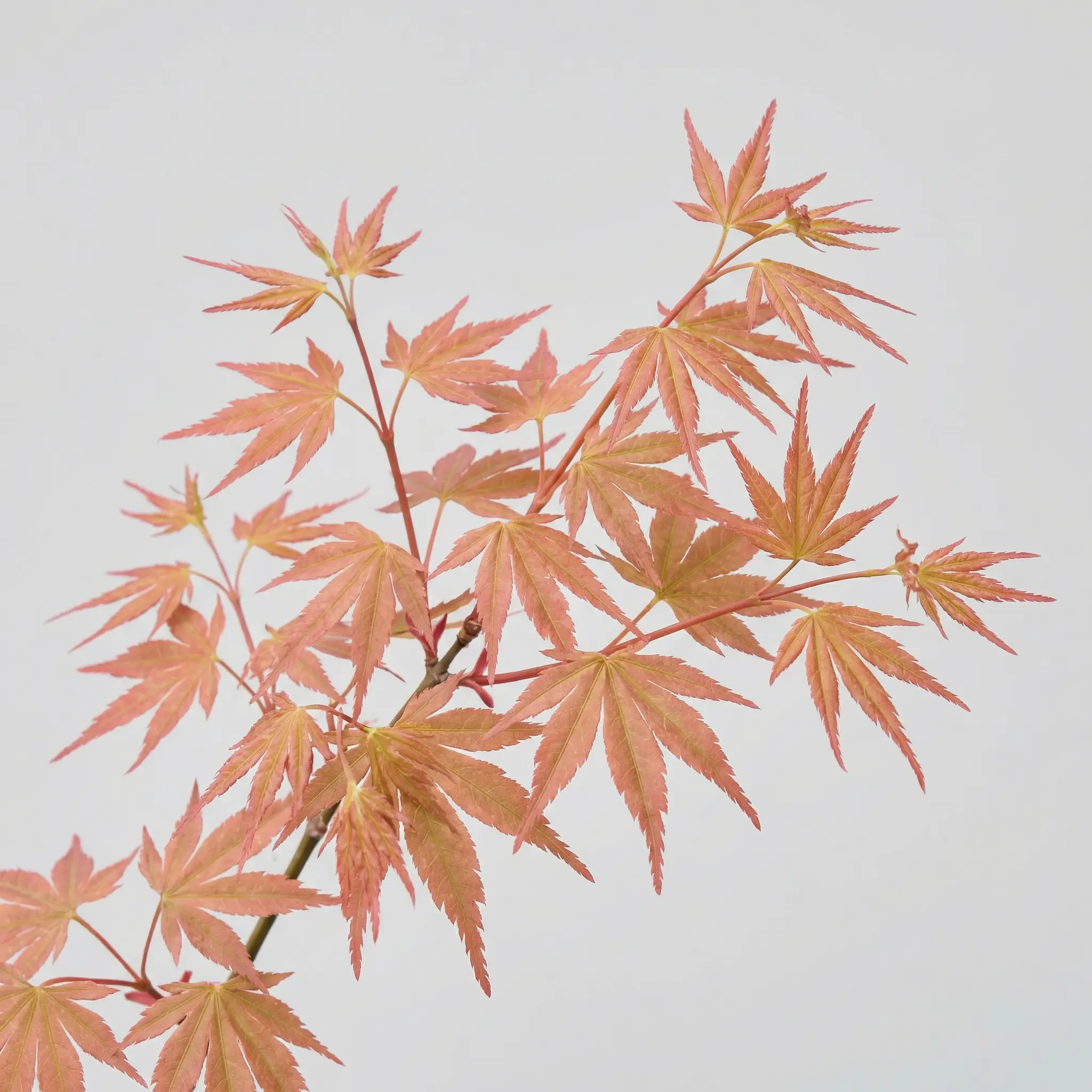
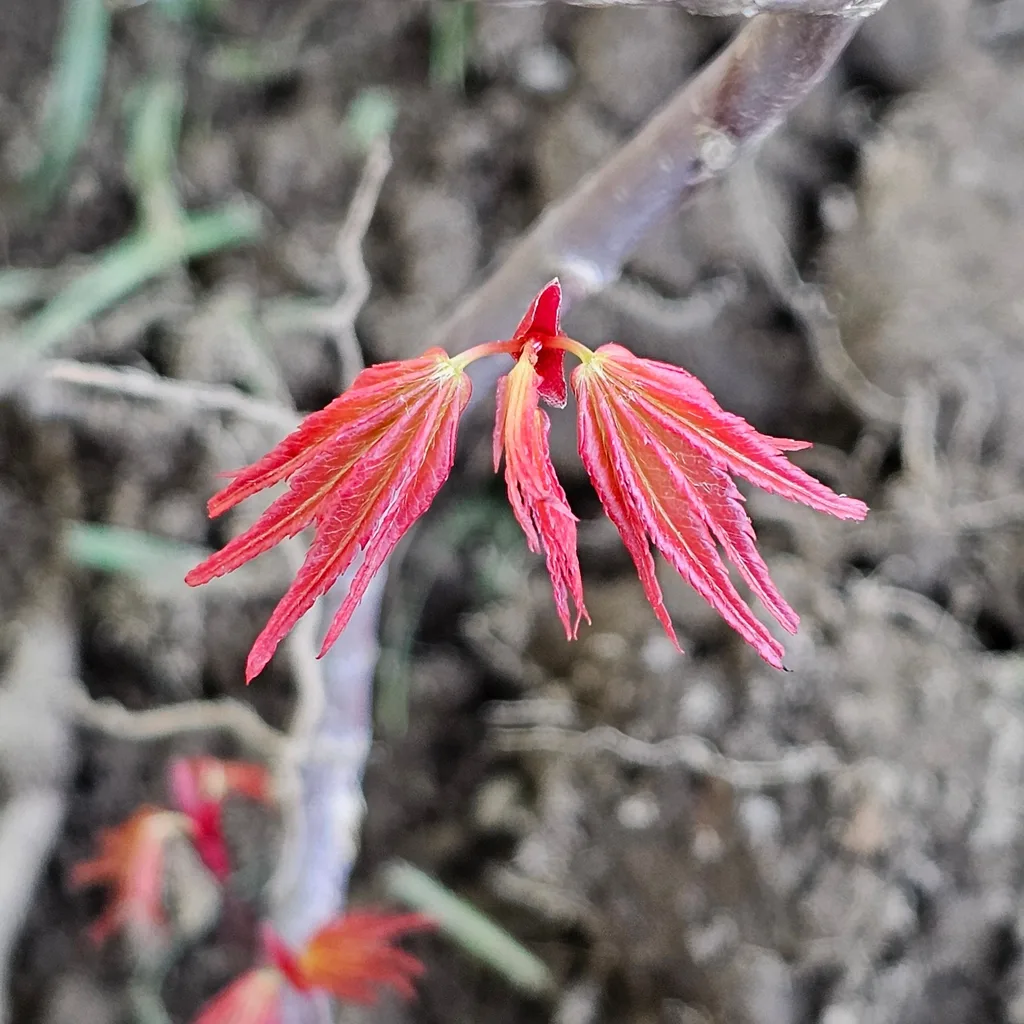
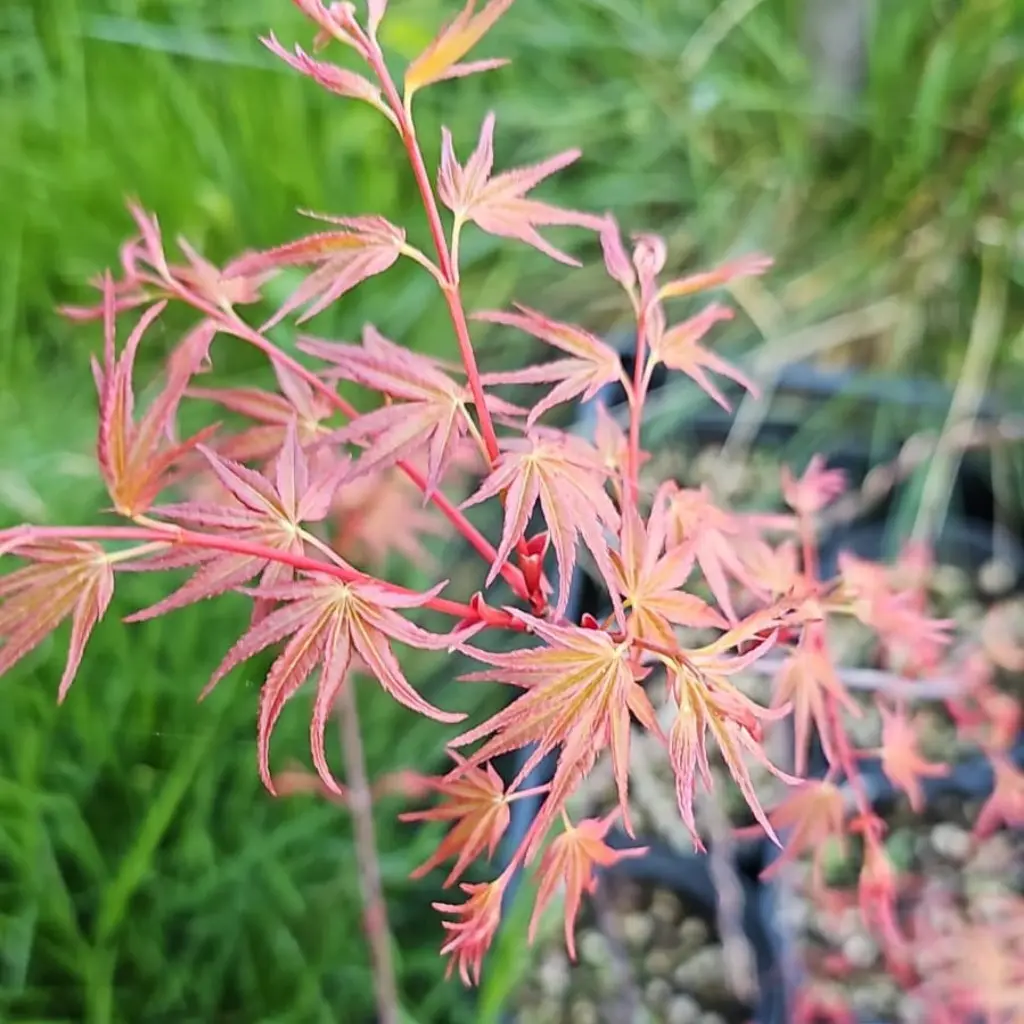
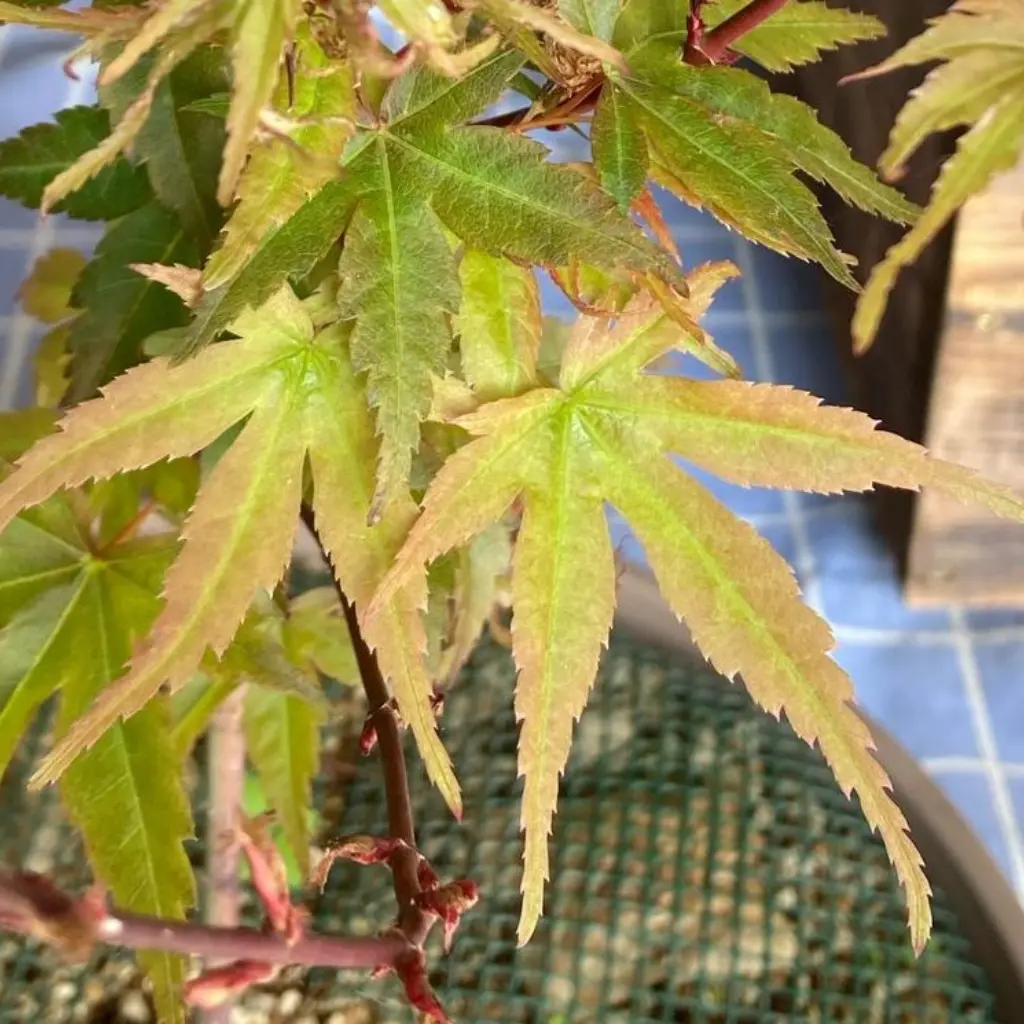
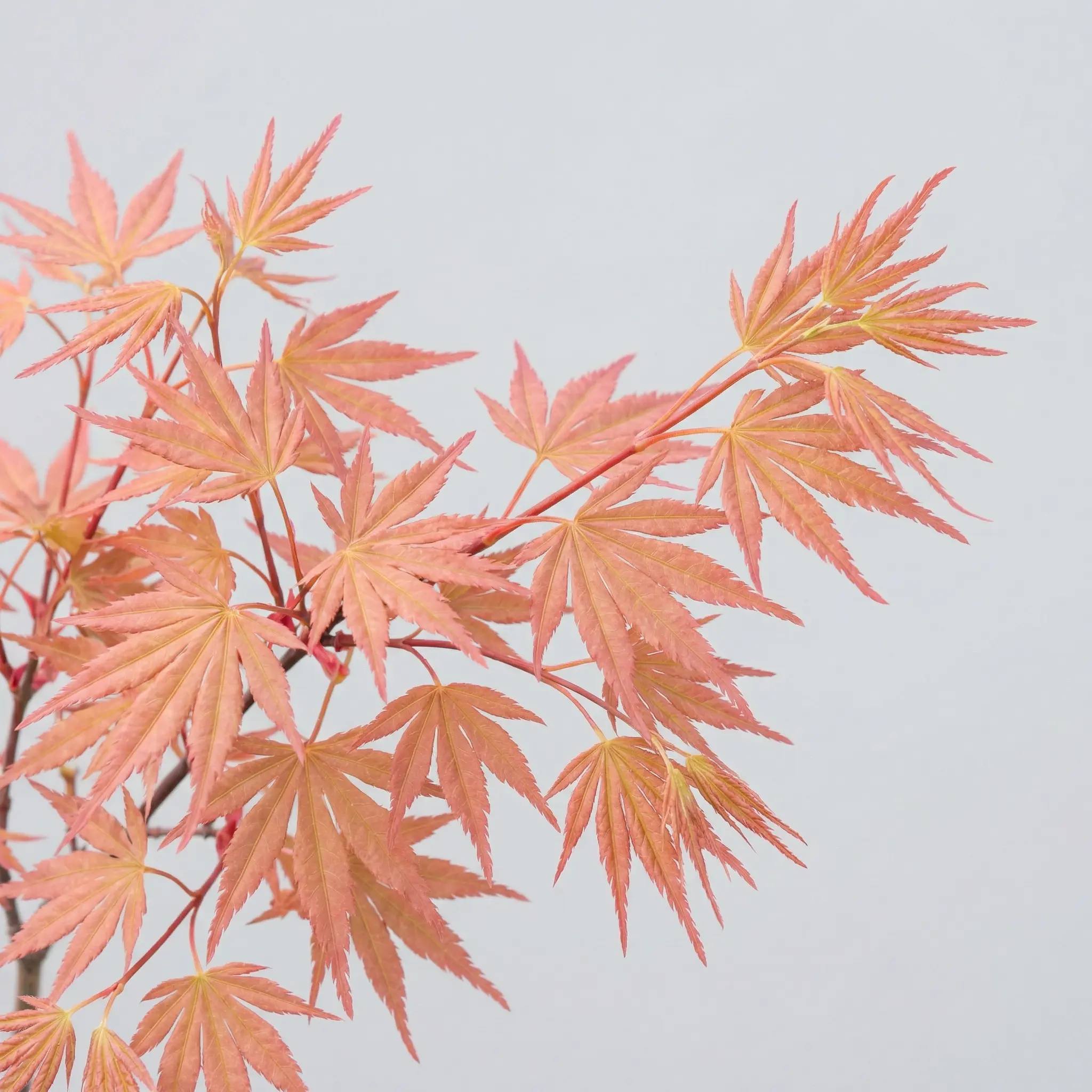
‘Seigen’ is one of the rarest and most sought-after Acer palmatum cultivars for bonsai, displaying a spring colour that few other varieties can match. New foliage emerges in a very intense, light red that borders on purple, then gradually turns light green as the season progresses. In autumn, leaves develop strong red to orange tones before dropping. The colour intensity in spring alone makes this cultivar a standout in any collection.
The cultivar has a semi-dwarf, upright growth habit with medium vigour and medium-length internodes. Leaf size is moderate, well suited for bonsai proportions. Bark is smooth throughout development, showing light green with distinctive red and pinkish tones — an unusual trait that adds visual interest even during the leafless season. In open ground, ‘Seigen’ reaches just 1 to 2 metres, keeping proportions naturally compact.
For bonsai purposes, the combination of moderate growth, manageable internodes, and extraordinary spring colour makes ‘Seigen’ particularly well suited for shohin and display-oriented compositions where colour is the primary design feature.
Cultivation note: ‘Seigen’ develops its most intense spring purple-red with good morning light exposure. The bark’s pinkish tones are more pronounced on sun-exposed branches — position the tree to take advantage of this. Protect from strong afternoon sun in summer to avoid leaf scorch on the delicate spring foliage. This cultivar pairs exceptionally well with Beni Chidori and Orihime in a display collection, offering a distinctly different colour register.
- One of the rarest Acer palmatum cultivars, with a very intense light red to almost purple spring flush that few other varieties can match.
- Semi-dwarf upright habit with medium internodes, ideal for shohin and display-oriented bonsai.
- The colour show doesn't end with spring: after the summer light-green phase, autumn brings a second display of strong red to orange tones before leaf drop.
Why buy from Treevaset
not garden-centre stock.
shipped EU-wide — no customs, no import risk.
cutting-propagated to preserve the cultivar.
Compare Japanese maple cultivars
| Cultivar | Leaf size | Internodes | Growth habit | Spring colour | Bark | Adult size |
|---|---|---|---|---|---|---|
| Orihime | Very small | Short | Dwarf, compact | Light green, bronze margins | Smooth | 1–2m |
| Kotohime | Small | Very short | Dwarf, compact | Green, pink-red margins | Smooth | 1–2m |
| Sei Hime | Small | Short | Dwarf, compact | Yellow-green | Smooth | 1–2m |
| Seigen | Medium | Medium | Semi-dwarf, upright | Red-purple | Smooth | 1–2m |
| Beni Chidori | Medium | Medium | Semi-dwarf, upright | Pink to orange | Smooth | 2–4m |
| Beni Tsukasa | Medium | Medium | Semi-dwarf, upright | Light red, pink tones | Smooth | 2–4m |
| Katsura | Medium | Medium | Upright | Orange to yellow | Smooth | 1–2m |
| Ukon | Medium | Medium | Upright, fast | Emerald green, yellow accents | Smooth | 2–4m |
| Deshojo | Large | Long | Upright, vigorous | Deep red, pink tones | Smooth | 2–4m |
| Allen’s Gold | Large | Long | Upright, vigorous | Golden-chartreuse, pink-red margins | Rough | 3–5m |
| Arakawa | Large | Long | Upright, vigorous | Light green, red margins | Rough (corky) | 3–5m |
Feedback from growers
★★★★★ 4.9/5 · 100+ verified reviews on eBay
Super personal service and wonderful rare Acer varieties. When the courier had delivery problems, Luca was easy to reach and immediately arranged a replacement. Absolute recommendation!
Acer Palmatum CultivarsExtremely happy with my Acer palmatum — it's exactly what I wanted. Serious, kind and competent, with an excellent quality-price ratio. I'll definitely buy again.
Young Pre-BonsaiVery well packaged, a beautiful larch, exactly as described. Clear recommendation.
Outdoor BonsaiEverything perfect — the little plant arrived well packed and healthy, and I used it right away for a root graft.
Young Pre-BonsaiA lovely larch with a beautiful trunk base. Perfect packaging and fast shipping.
Young Pre-BonsaiFAQs
Is Acer palmatum Seigen good for bonsai?
What is the difference between Seigen, Beni Chidori and Orihime for bonsai?
Why is Seigen so rare?
When does Seigen develop its best spring colour?
Can Acer palmatum Seigen be grown indoors?
Related products
Related products
- Bonsai
Itoigawa Juniper (Juniperus chinensis ‘Itoigawa’) – Young Pre-Bonsai
12 € – 17 €Price range: 12 € through 17 € Select options This product has multiple variants. The options may be chosen on the product page