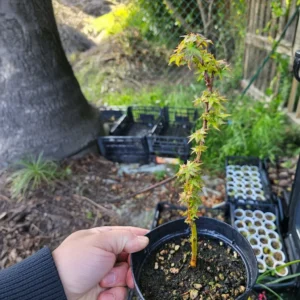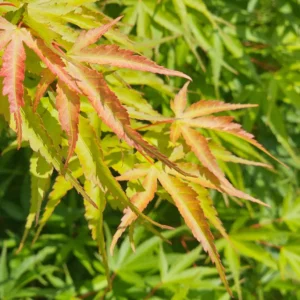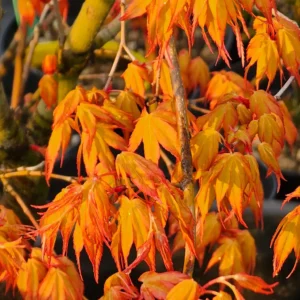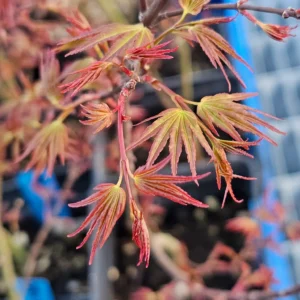
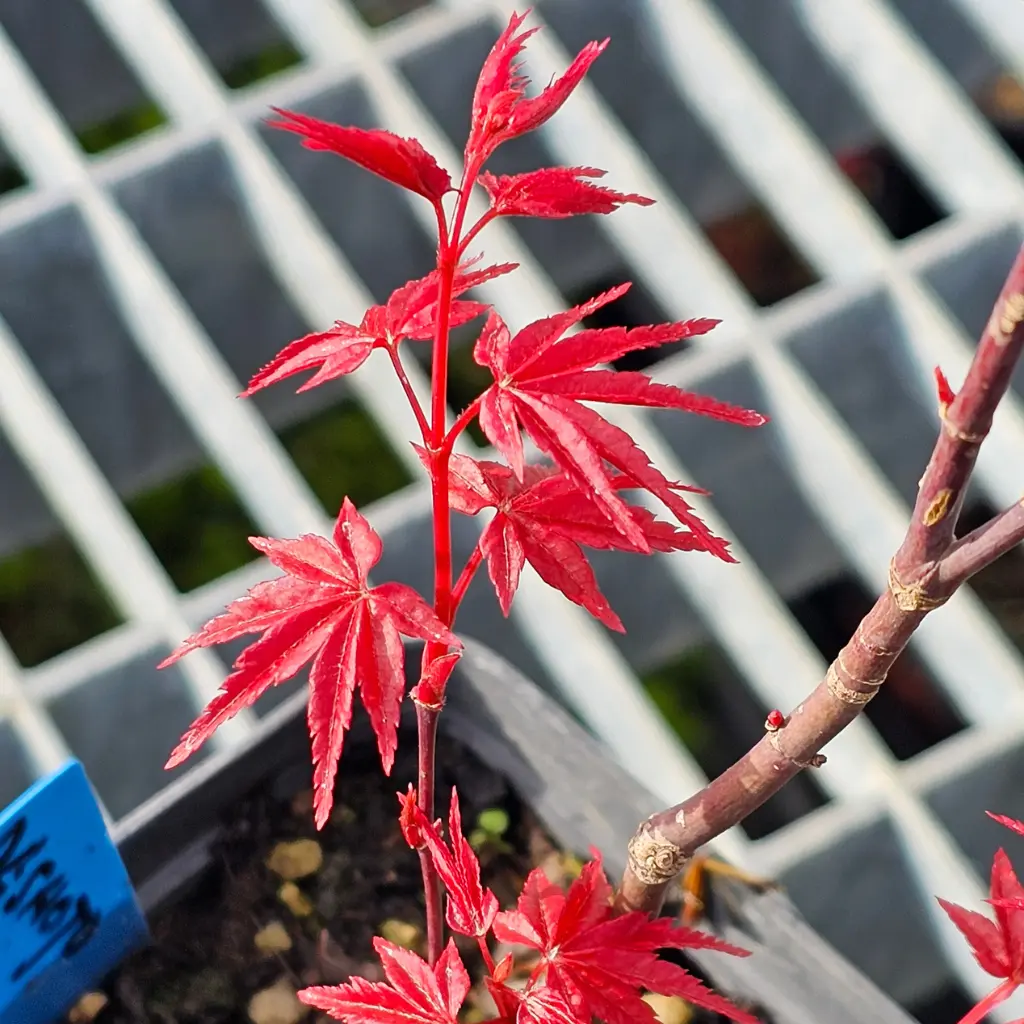
Acer palmatum ‘Deshojo’ – Japanese Maple for Bonsai
35 €
Out of stock
Leave your email and you’ll be first to know when the next batch is ready.
- Healthy arrival guarantee
- Free EU shipping from €70
- Photos of trees in stock available on request
Before you buy
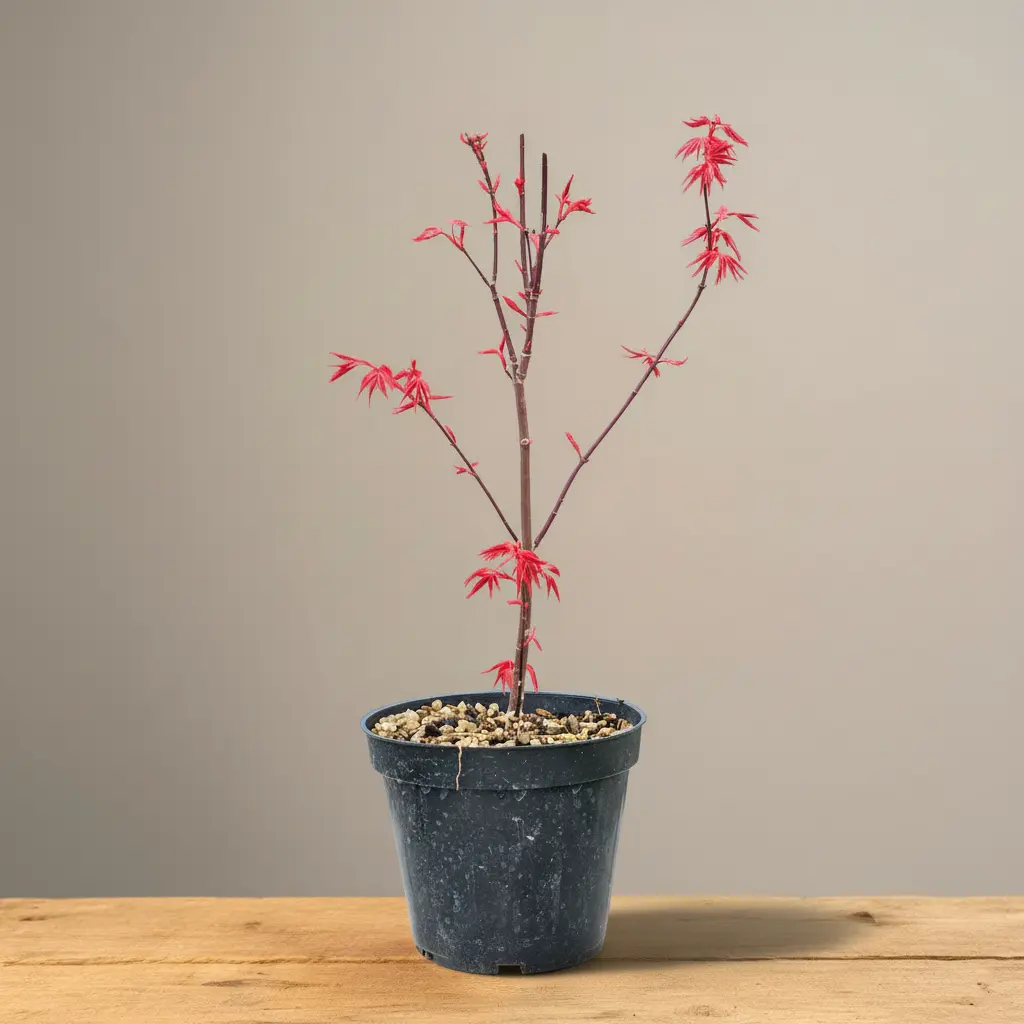
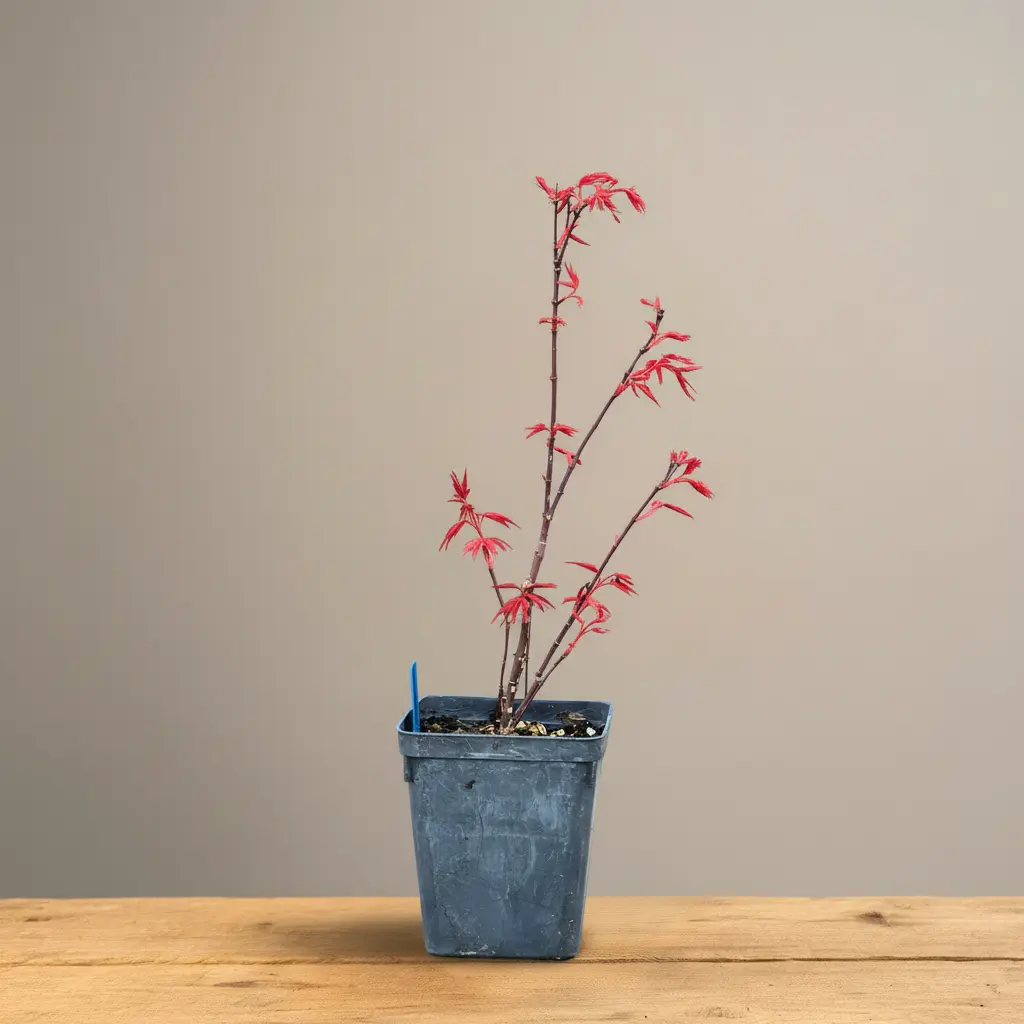
Each tree is unique and photos are for reference. You can request current photos of available trees before buying.
Care details
Full sun to partial shade, with protection from intense midday sun to preserve leaf colour.
Keep soil consistently moist with good drainage.
Regular feeding during the growing season to support balanced growth and colour expression.
Every 2–3 years in early spring, before bud break.
Slightly acidic to neutral, free-draining substrate.
Prune after shoot hardening to maintain structure and support fine ramification.
Every tree has more than one path. Book a 1-to-1 consultation with Luca to map out styling and next steps for this exact material, from €29.
Complete your collection
You may also like…
- Bonsai
Itoigawa Juniper (Juniperus chinensis ‘Itoigawa’) – Young Pre-Bonsai
12 € – 17 €Price range: 12 € through 17 € Select options This product has multiple variants. The options may be chosen on the product page
Acer palmatum ‘Deshojo’ — Characteristics & Bonsai Use
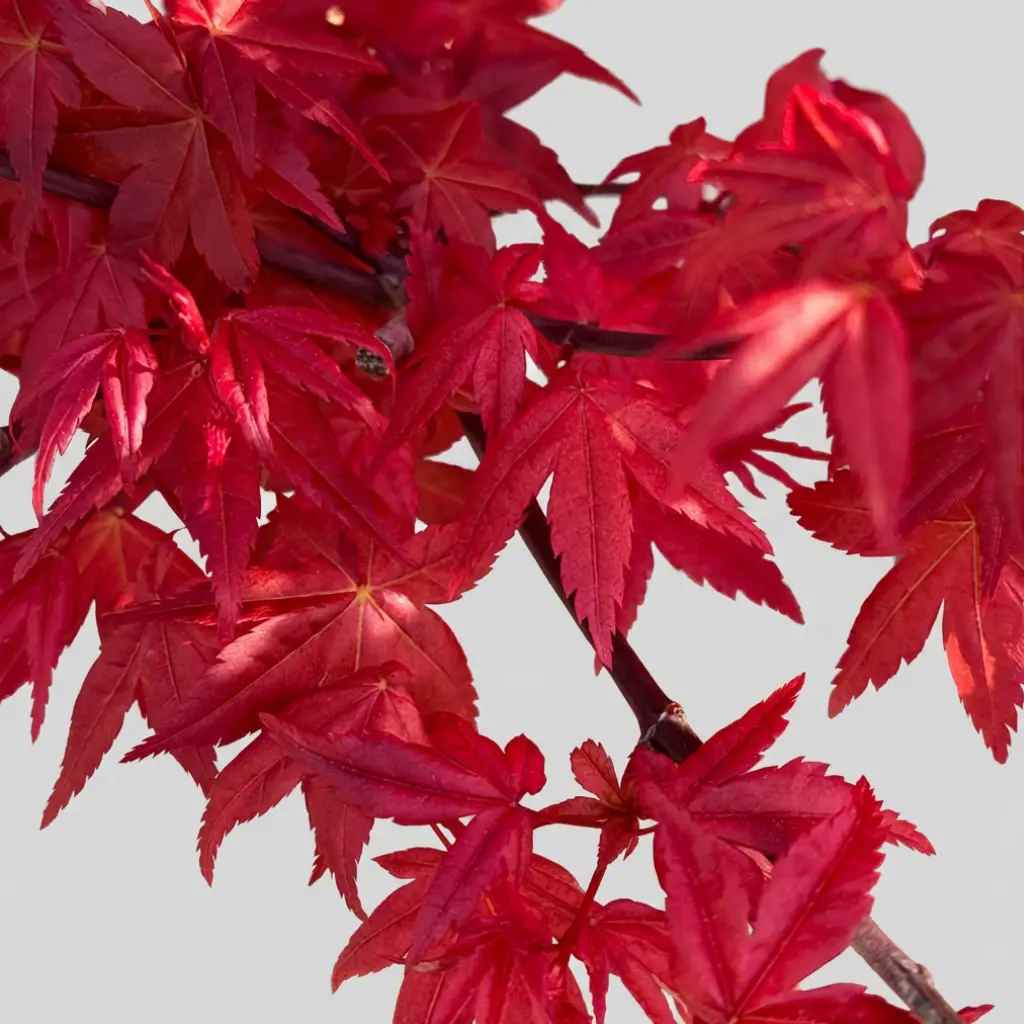
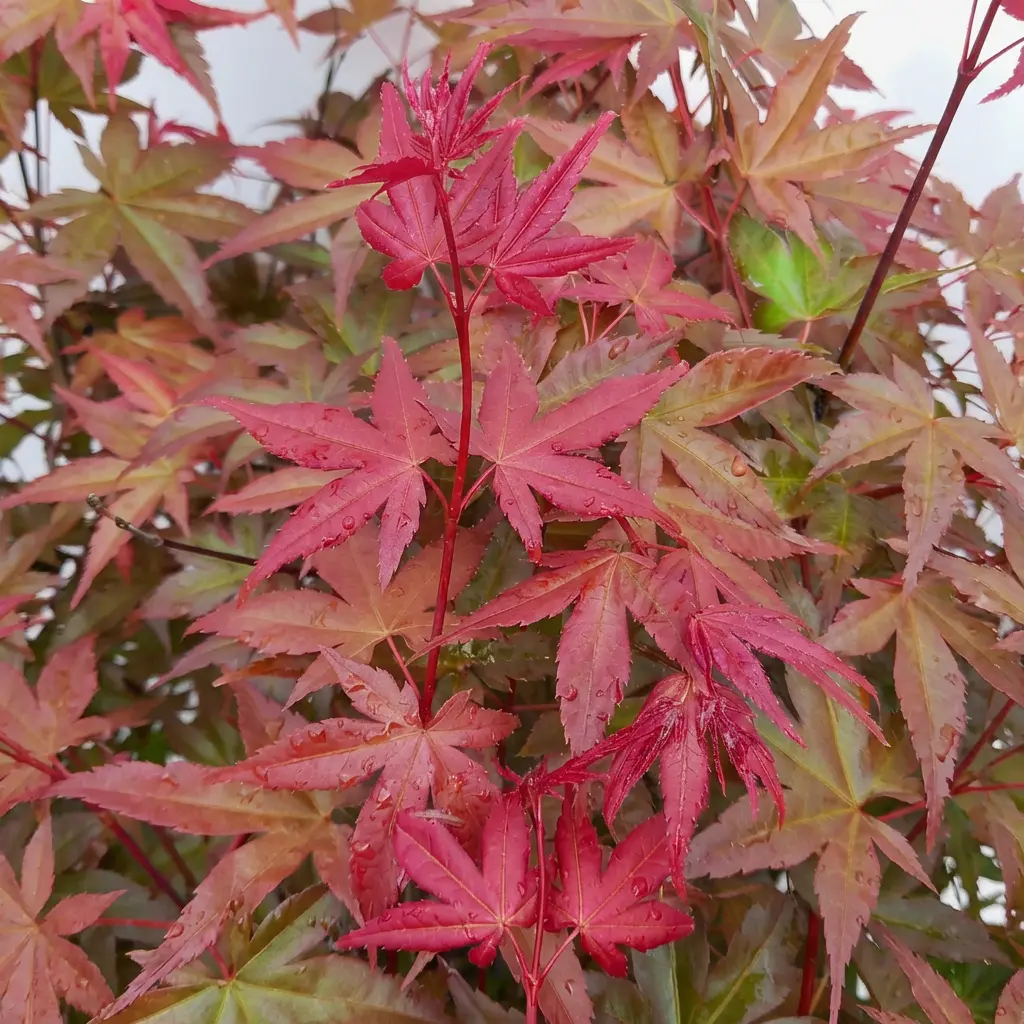
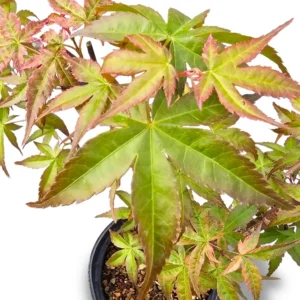
‘Deshojo’ is a great classic for bonsai — this traditional Japanese cultivar is the most popular variety among maple bonsai enthusiasts, and for good reason. New foliage emerges in deep red with pink tones, then transitions to dark green through the growing season before developing orange to red hues in autumn. Its spring colour is simply stunning, and its ability to adapt leaf and internode size to bonsai culture makes it an evergreen among deciduous cultivars.
Growth is fast and vigorous with an upright habit and naturally long internodes — characteristics that require active management but reward growers with rapid structural development. Leaf size is large in open growth but reduces effectively with proper technique. Bark is smooth, displaying red or green tones depending on sun exposure. In open ground, ‘Deshojo’ reaches 2 to 4 metres.
For bonsai purposes, the combination of vigour, colour intensity, and proven responsiveness to training make ‘Deshojo’ one of the most reliable cultivars for building structure from a young stage. It works across a wide range of styles and sizes, from medium compositions to more ambitious development projects where trunk thickening is a priority.
Cultivation note: ‘Deshojo’ needs active internode management — its natural vigour pushes long growth that must be controlled with timely pruning. Pinch or cut new shoots early in the season to keep proportions tight. The deep red spring colour intensifies with good light, but this cultivar is sensitive to strong midday sun in hot climates and can scorch. Bark colour (red vs green) varies with sun exposure — both are normal.
- The most popular traditional Japanese cultivar among maple bonsai enthusiasts, with an extraordinary deep red spring flush.
- Fast, vigorous upright growth with long internodes that adapt remarkably well to bonsai culture over time.
- Colour bookends the season: the celebrated deep red spring flush deepens to green through summer, then returns as orange-red in autumn before leaf drop.
Why buy from Treevaset
not garden-centre stock.
shipped EU-wide — no customs, no import risk.
cutting-propagated to preserve the cultivar.
Compare Japanese maple cultivars
| Cultivar | Leaf size | Internodes | Growth habit | Spring colour | Bark | Adult size |
|---|---|---|---|---|---|---|
| Orihime | Very small | Short | Dwarf, compact | Light green, bronze margins | Smooth | 1–2m |
| Kotohime | Small | Very short | Dwarf, compact | Green, pink-red margins | Smooth | 1–2m |
| Sei Hime | Small | Short | Dwarf, compact | Yellow-green | Smooth | 1–2m |
| Seigen | Medium | Medium | Semi-dwarf, upright | Red-purple | Smooth | 1–2m |
| Beni Chidori | Medium | Medium | Semi-dwarf, upright | Pink to orange | Smooth | 2–4m |
| Beni Tsukasa | Medium | Medium | Semi-dwarf, upright | Light red, pink tones | Smooth | 2–4m |
| Katsura | Medium | Medium | Upright | Orange to yellow | Smooth | 1–2m |
| Ukon | Medium | Medium | Upright, fast | Emerald green, yellow accents | Smooth | 2–4m |
| Deshojo | Large | Long | Upright, vigorous | Deep red, pink tones | Smooth | 2–4m |
| Allen’s Gold | Large | Long | Upright, vigorous | Golden-chartreuse, pink-red margins | Rough | 3–5m |
| Arakawa | Large | Long | Upright, vigorous | Light green, red margins | Rough (corky) | 3–5m |
Feedback from growers
★★★★★ 4.9/5 · 100+ verified reviews on eBay
Super personal service and wonderful rare Acer varieties. When the courier had delivery problems, Luca was easy to reach and immediately arranged a replacement. Absolute recommendation!
Acer Palmatum CultivarsExtremely happy with my Acer palmatum — it's exactly what I wanted. Serious, kind and competent, with an excellent quality-price ratio. I'll definitely buy again.
Young Pre-BonsaiVery well packaged, a beautiful larch, exactly as described. Clear recommendation.
Outdoor BonsaiEverything perfect — the little plant arrived well packed and healthy, and I used it right away for a root graft.
Young Pre-BonsaiA lovely larch with a beautiful trunk base. Perfect packaging and fast shipping.
Young Pre-BonsaiFAQs
Is Acer palmatum Deshojo the best Japanese maple for bonsai?
What is the difference between Deshojo and Beni Chidori?
Why does Treevaset sell Deshojo from cuttings, not grafted?
How long does Deshojo take to develop as bonsai?
Can I grow Deshojo Japanese maple indoors?
Related products
Related products
- Bonsai
Acer palmatum ‘Arakawa’ – Japanese Maple for Bonsai
25 € – 60 €Price range: 25 € through 60 € Select options This product has multiple variants. The options may be chosen on the product page - Bonsai
Acer palmatum ‘Orihime’ – Japanese Maple for Bonsai
35 € – 45 €Price range: 35 € through 45 € Select options This product has multiple variants. The options may be chosen on the product page