Yamadori (山採り, “taken from the mountain”) is the bonsai term for a tree collected from the wild. In practice it also covers the hedge that is being grubbed out and the garden shrub nobody wants any more. What makes a yamadori worth the effort is the one thing a nursery cannot produce in a hurry: a trunk with decades of movement, taper and bark. What makes it risky is everything else — roots cut to a fraction, years of recovery before the first styling, and a tree that owes you nothing.
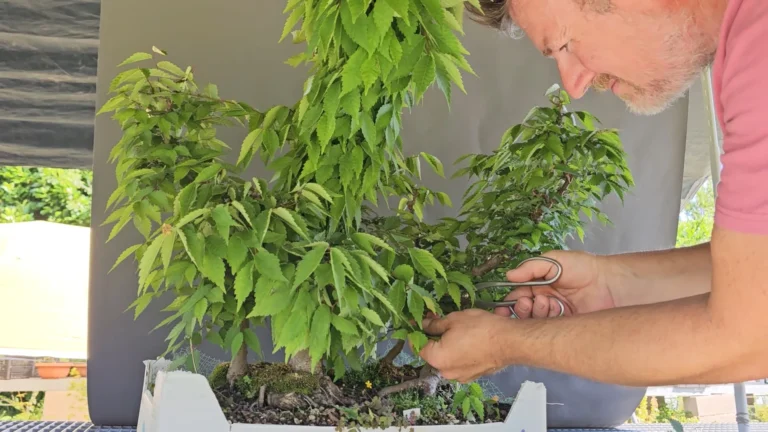
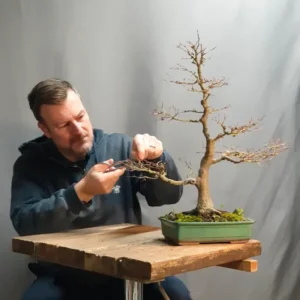
At Treevaset we grow most of our trees from seed and cuttings, but there are collected hornbeams on our benches and we have filmed every step on two of them: the first styling of a yamadori hornbeam and the radical root pruning of a collected twin-trunk. This guide is what those two trees taught us about what to dig, what to leave in the ground, when to go, and what the first two years really look like.
What yamadori means, and what it doesn’t
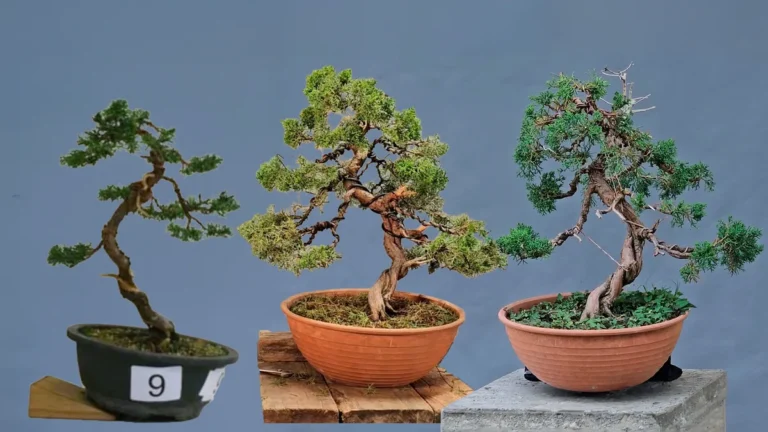
Yamadori is not a style and not a species. It is an origin: the tree started life in the ground, shaped by wind, grazing, a hedge-cutter or simply decades of neglect, and it is lifted with the intention of making a bonsai from it. The word is used both for the raw material fresh out of the soil and for the finished tree years later. The larches of the Alps and the Juniperus sabina of the Mediterranean mountains are the famous cases; the hornbeam at the edge of a field is the realistic one.
The appeal is straightforward: a trunk that would take a lifetime to grow in a pot. The cost is just as real. A collected tree arrives with a handful of roots, often no usable branches, and it needs years before it will tolerate the work that turns it into a bonsai. Nothing on a yamadori is given; everything must be chosen or rebuilt. That is exactly why the only question that matters at the moment of digging is the trunk.
Before the spade: permission
A tree that is not yours is not a yamadori, it is theft. Never dig without the explicit permission of the landowner. Protected areas, nature reserves and protected species are off limits everywhere, and in many mountain regions collecting is regulated or forbidden outright. The rules differ by country, region and even municipality, so the answer is always the same: ask before you go, and get it in writing when you can.
The good news is that the best legal material is rarely in the mountains. Hedges being removed, gardens being redesigned, building plots being cleared, old farm boundaries — these are the places where an owner is glad to see a tree leave with you, and where the trees have usually been cut back for years, which is precisely what makes them good candidates.
What to collect
The trunk is the only thing you cannot make. Branches regrow — a hornbeam cut back to a bare stump will push shoots along its whole length within one season, as ours did. Roots are rebuilt over two or three repottings. Even the apex can be replaced from almost any strong shoot. The trunk, with its movement, its taper and its bark, is fixed the day you dig it. So look at nothing else first: does the trunk leave the soil with intent, does it move, does it get thinner as it rises, does the bark already show age? If the answer is no, the branches will not save it.
Choose species that forgive. For a first yamadori, deciduous trees that back-bud readily and tolerate heavy root loss are the ones that bring you home with a living tree: hornbeam (Carpinus betulus), field elm, hawthorn, blackthorn, field maple, privet. Conifers — larch, Scots pine, mountain pine, juniper — make some of the most spectacular yamadori in Europe, but they are far less forgiving of root work and far slower to show you whether they have survived. Common juniper in particular resents it. Our advice is to learn on a hornbeam or an elm before you put a spade near a pine.
Look for the signs of a tree that will survive. Fine roots close to the trunk are the currency of collecting. You find them on trees growing in thin, poor soil, on rock, or on trees that have been cut back before: a coppiced or pollarded tree has already been forced, repeatedly, to rebuild a compact root system and to sprout from old wood. The hornbeam in our video had been cut hard high on the trunk in a previous life and arrived with no branches at all — which looked like a handicap and turned out to be the gift that made the whole first styling possible.
Collect what you can carry and care for. A trunk that needs three people to lift will need a container, a space and a watering regime to match, for years. The right size is the one you would be proud to see in a pot in ten years and can keep alive in a box until then.
What to leave in the ground
- The big tree in deep soil with one taproot and no fine roots nearby. These are the most spectacular trunks in the wood and the ones most likely to die in a box. Without fine roots near the base there is nothing left to feed the tree once the taproot is cut.
- Straight trunks without taper. A straight trunk is a straight trunk forever; no amount of branch work changes it.
- Trees whose interest is in the branches. The branches are the first thing to go in the first styling. If you take away the canopy in your mind and what is left is dull, leave it.
- Anything protected, anywhere protected, and anything without permission.
- Anything you cannot look after for two years. A yamadori is a two-year commitment before the real work even begins. If you have no shaded corner, no time to water in July, no patience for a tree that merely sits there, the tree is better off where it is.
- Conifers, if this is your first attempt. Come back for them with two or three successful deciduous collections behind you.
When to collect
For deciduous trees the window is the end of dormancy: late winter, once the hardest night frosts are over and before the buds begin to swell. Our hornbeams came out of the ground in February and at the end of January. Lifted then, the tree goes into spring with its wounds already made and its reserves intact, and it can start rooting the moment the soil warms. The wrong moments are just as clear — in full growth, in high summer, or stacked on top of another major intervention in the same season.
It is the tree that sets the calendar, not the calendar the tree. A week of mild weather in February is a better signal than a date, and a tree whose buds have already moved should be left for next year.
Collection day, the way we do it
Enjoying this tutorial? Subscribe to our YouTube channel for more bonsai videos →
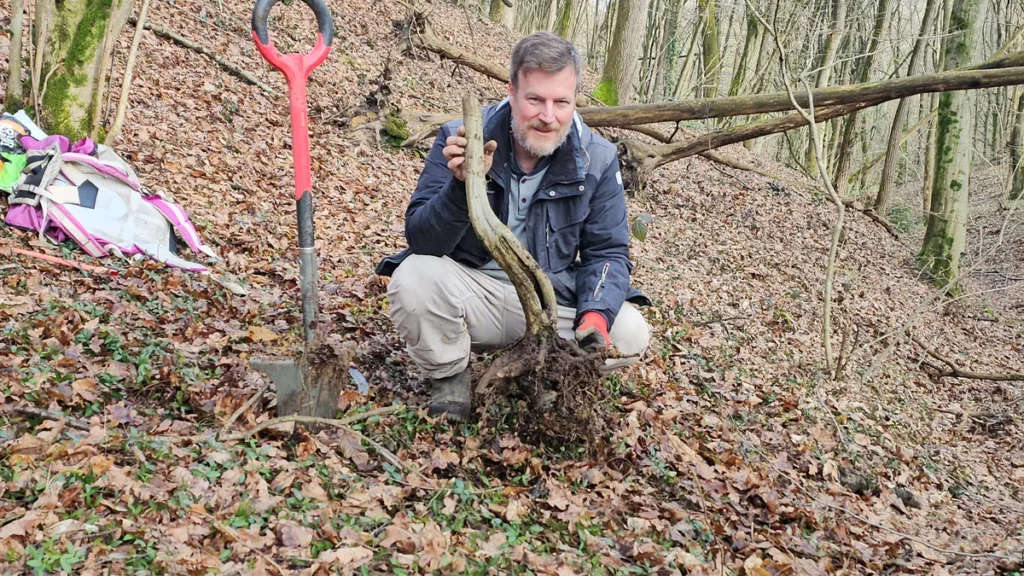
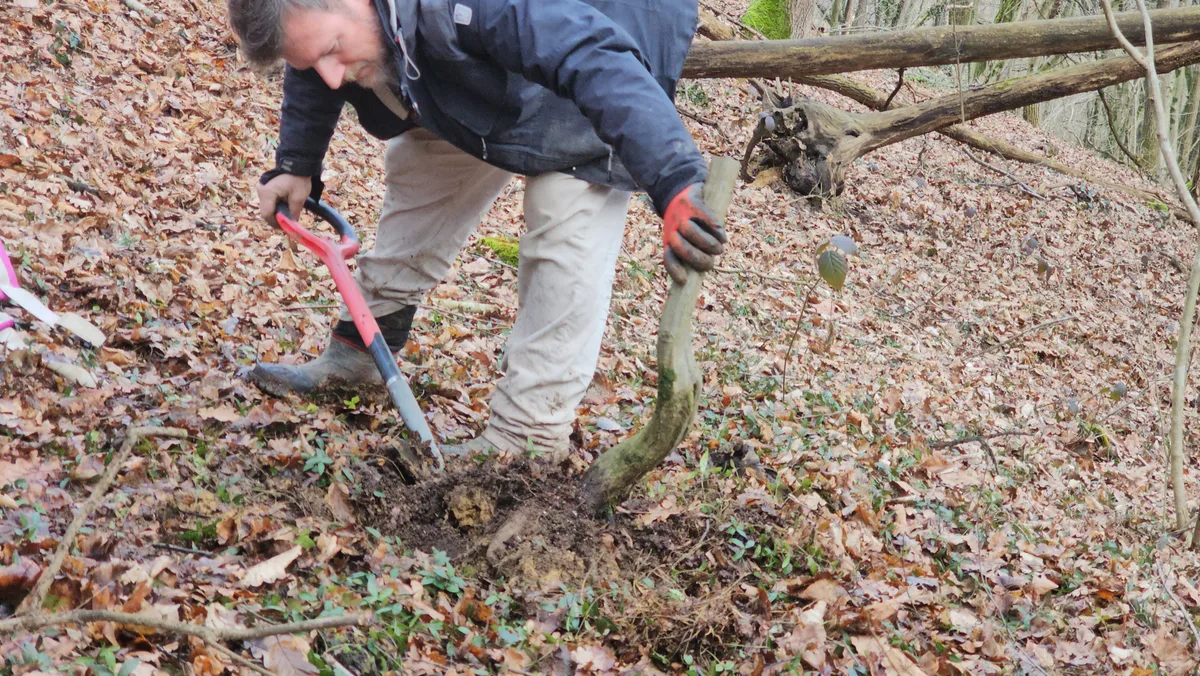
Make the heaviest cuts in the field. The taproot, the thick anchor roots, the upper trunk you will never use — all of it goes on the day of collection, so the tree only ever has to survive one large amputation at a time. Our twin-trunk hornbeam could take a radical root pruning two years later only because its biggest cuts had already been made the day it came out of the wood.
Keep the original soil the first time. The soil around a collected root ball is usually poor — heavy, airless, exactly what you would never choose for a pot. Keep it anyway. Replanting the tree in its own soil means the surviving roots are not disturbed twice in one go. The day of collection is about survival, not about substrate; the substrate comes at the first real repotting, years later.
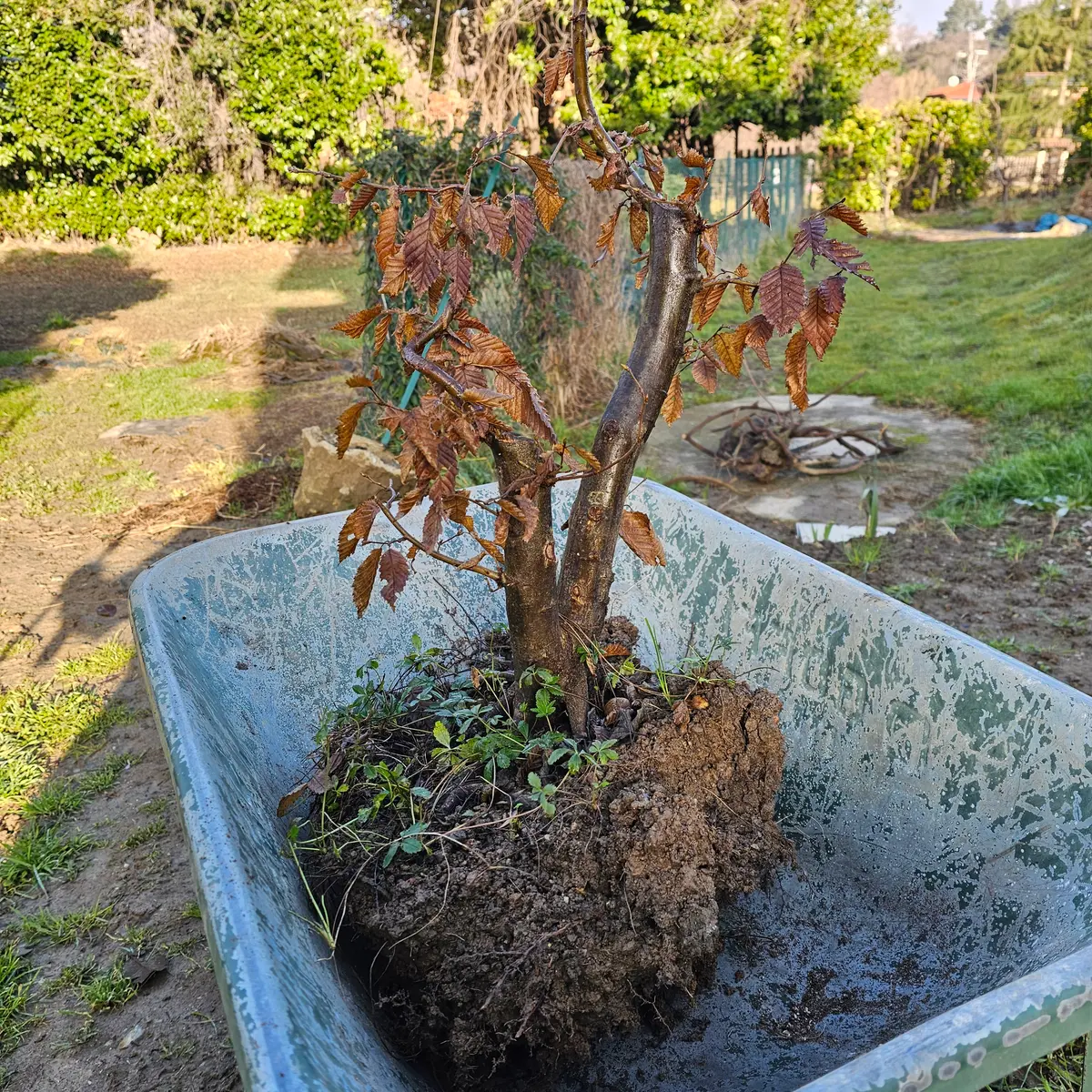
A box or a corner of the garden, not a bonsai pot. A plastic crate with mesh over the holes, or a patch of open ground, gives the roots room and gives you nothing to fuss over. Wire the tree firmly to its box — a tree that rocks tears off the very roots it needs most — and plant it deep, with only a shallow layer of substrate under the base, so the trunk itself is encouraged to push new roots exactly where a future nebari wants them.
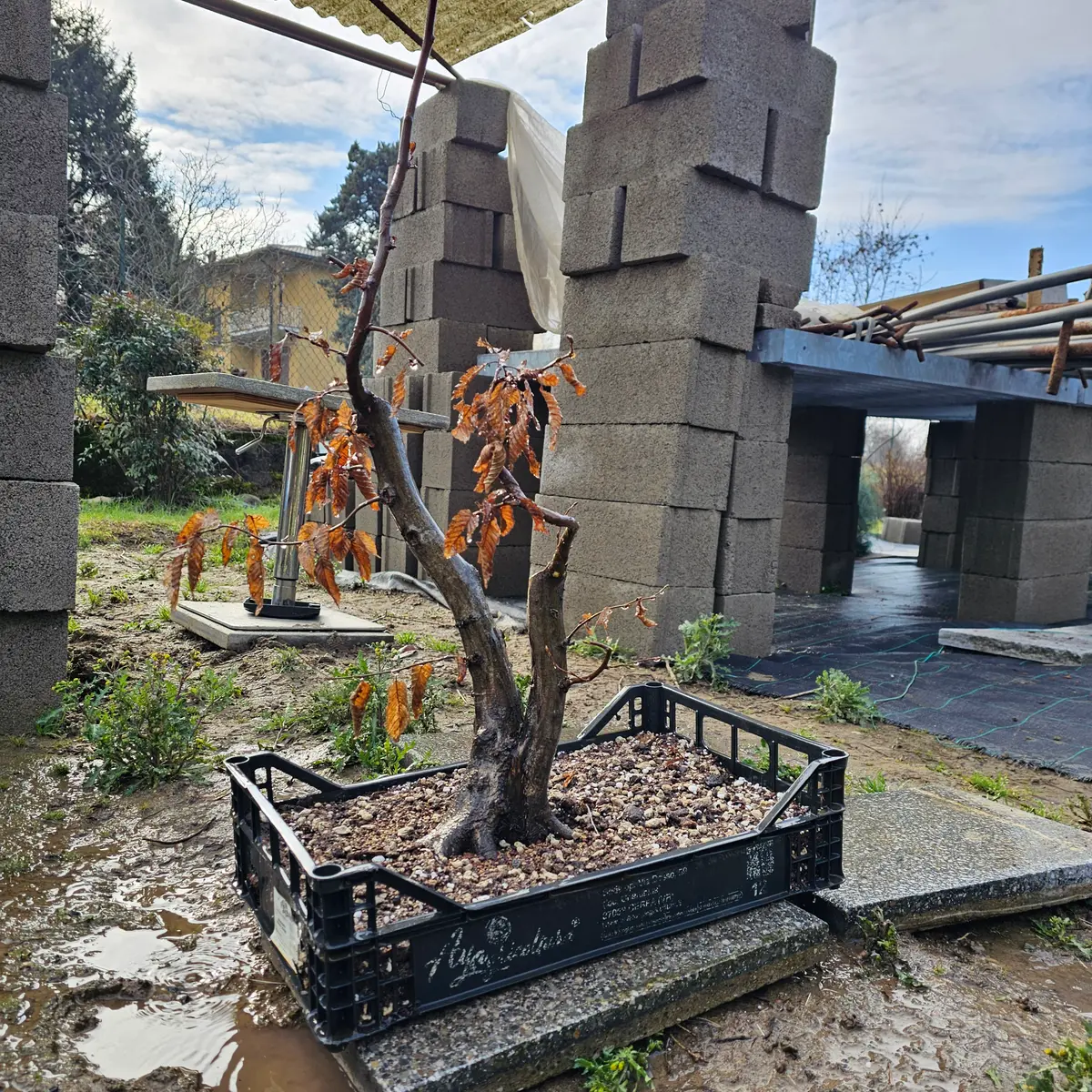
Water thoroughly, then protect. Straight after planting the tree goes to a sheltered, shaded spot — no full sun — and stays there until mid-spring. Fertiliser and full sun come only when the tree shows vigour, and in the dose that its growth justifies. The aftercare begins on the workbench, not afterwards.
The two quiet years
Then comes the part that impatience skips and regrets: you do nothing. The collected tree spends one or two full seasons building a net of fine roots close to the base — reserve roots, in effect — and pushing shoots from old wood. No wiring, no pruning beyond removing what is obviously dead, no root work. A tree that is merely surviving, with few roots and weak extension, gets another undisturbed year, however much you want to start.
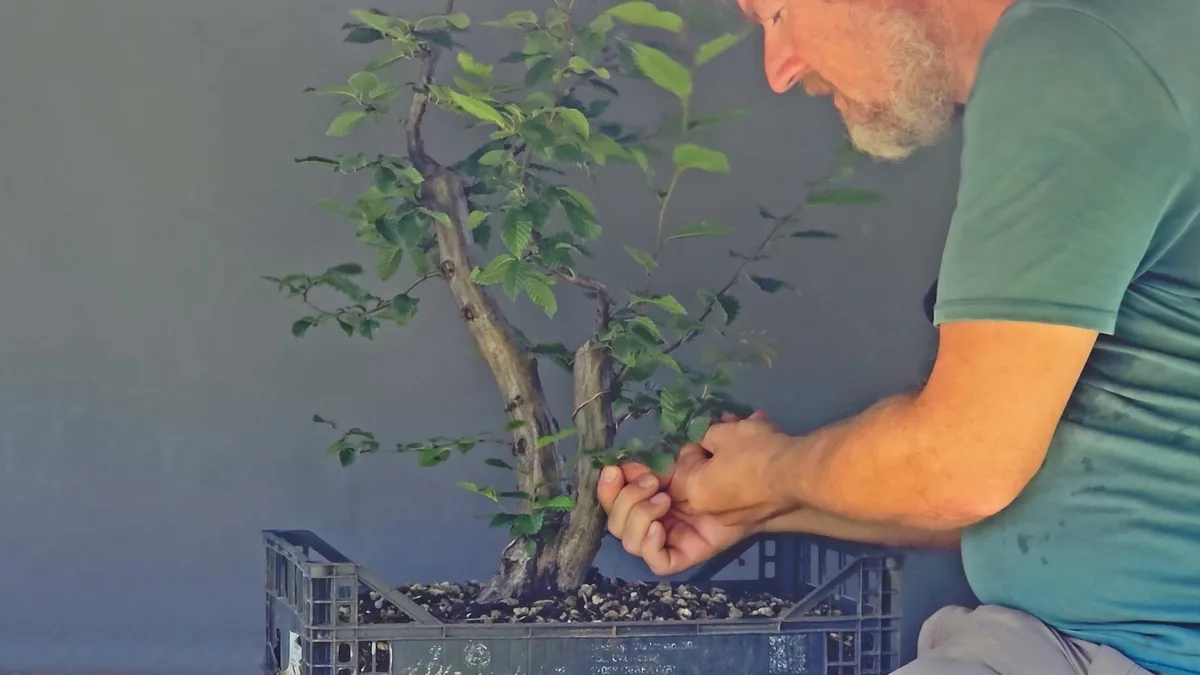
The signal that the tree has earned its first session is unmistakable: roots visible through the drainage holes or filling the box, and strong shoots along the whole trunk, not just at the top. Our pollarded hornbeam gave that signal six months after collection and had its first styling in late summer of the same year — front first, then apex, then the few branches worth keeping, in that strict order, because everything else on a collected tree is easier to correct than a badly chosen front. The structural logic is the one we lay out in our guide to the bonsai apex and first branch.
The radical root work — washing off the field soil, choosing the roots that will define the nebari, moving into proper substrate — waits until fine roots near the trunk are ready to take over from the thick ones you remove. For our twin-trunk that was two years after collection; the full story, including how much root a tree can actually lose, is in the root pruning article. After that session the roots get another two undisturbed years before the next repotting. If you are still deciding whether your tree is ready at all, start with our guide on when to repot a bonsai and when to wait.
Don’t want to dig? Yamadori versus pre-bonsai
Collecting is not for everyone, and it does not have to be. A pre-bonsai grown in a nursery will never have the story of a yamadori — but it arrives healthy, with roots already used to a container, and you can start building its structure in the first year instead of the third. It is also the only route to species that make poor yamadori in the first place. If what you want is to practise styling rather than survival, start with a young pre-bonsai and read what a pre-bonsai actually is. And if you have already collected a tree and are unsure how far you can go with it, our one-to-one bonsai consultation exists for exactly that kind of decision.
Key takeaways
- Yamadori is an origin, not a style: a tree lifted from the wild — or from a hedge, a garden, a building plot — to become a bonsai.
- Never without the landowner’s permission; protected areas and species are off limits, and rules vary by region.
- Dig for the trunk and nothing else: movement, taper and bark cannot be made later. Branches, roots and apex all can.
- Start with forgiving deciduous species — hornbeam, field elm, hawthorn — and leave conifers for later.
- Look for fine roots near the trunk: thin soil, rock, or trees that have been cut back before.
- Collect at the end of dormancy, make the heaviest cuts in the field, keep the original soil, tie the tree down, plant it deep, shade it until mid-spring.
- Then do nothing for one or two years. Style only when the box is full of roots and the trunk is covered in shoots.
Frequently asked questions
What does yamadori mean?
Yamadori is Japanese for “taken from the mountain”. In bonsai it means a tree collected from the wild — or, in practice, from any place where it grew in the ground: a hedge, a garden, a field margin — to be developed into a bonsai. The word is used both for the freshly dug material and for the finished tree.
When is the best time to collect a yamadori?
For deciduous trees, the end of dormancy: late winter, after the hardest frosts and before the buds swell. Our hornbeams were collected at the end of January and in February. Collected then, the tree starts rooting as soon as the soil warms and faces spring with its wounds already made. Avoid full growth, high summer, and any season in which the tree has already had major work.
Is it legal to dig up trees for bonsai?
Only with the explicit permission of the landowner, and never in protected areas or with protected species. Many mountain regions regulate or forbid collecting entirely, and rules change by country, region and municipality. The most reliable legal sources are hedges being removed, gardens being redesigned and plots being cleared, where the owner wants the tree gone.
Which species are best for a first yamadori?
Deciduous trees that back-bud readily and tolerate heavy root loss: hornbeam, field elm, hawthorn, blackthorn, field maple, privet. Conifers such as larch, pine and juniper make superb yamadori but are much less forgiving of root work and slower to show whether they have survived, so they are better left until you have a few successful deciduous collections behind you.
How long after collecting can I style a yamadori?
When the tree has proved it is alive, not when the calendar says so: roots filling the box and strong shoots along the whole trunk. A vigorous hornbeam can reach that point in a single season, as ours did; a tree that is only surviving gets another undisturbed year. The first session stays light — choosing the front, the apex and the few branches to keep — and the radical root work waits until fine roots near the trunk are ready to take over.