Acer palmatum ‘Beni Tsukasa’ – Japanese Maple for Bonsai
45 €
Out of stock
Leave your email and you’ll be first to know when the next batch is ready.
- Healthy arrival guarantee
- Free EU shipping from €70
- Photos of trees in stock available on request
Before you buy
Each tree is unique and photos are for reference. You can request current photos of available trees before buying.
Care details
Morning sun to support spring colour intensity; protect from strong afternoon sun in peak summer.
Keep soil consistently moist with good drainage; sensitive to both waterlogging and drought.
Moderate, balanced feeding throughout the growing season; avoid high nitrogen to preserve colour quality.
Every 2–3 years in early spring before bud break.
Slightly acidic to neutral, free-draining substrate; akadama-based mix recommended.
Prune after new shoots harden to control internode length; wire in autumn after leaf drop.
Every tree has more than one path. Book a 1-to-1 consultation with Luca to map out styling and next steps for this exact material, from €29.
Complete your collection
You may also like…
-
Bonsai
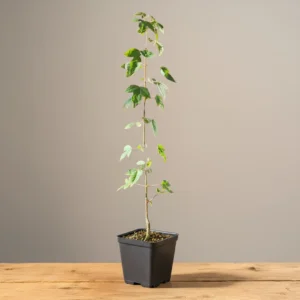
Trident Maple (Acer buergerianum) – Young Pre-Bonsai
8 € – 40 €Price range: 8 € through 40 € Select options This product has multiple variants. The options may be chosen on the product page -
Bonsai
Acer palmatum ‘Arakawa’ – Japanese Maple for Bonsai
25 € – 60 €Price range: 25 € through 60 € Select options This product has multiple variants. The options may be chosen on the product page
Acer palmatum 'Beni Tsukasa' — Characteristics & Bonsai Use
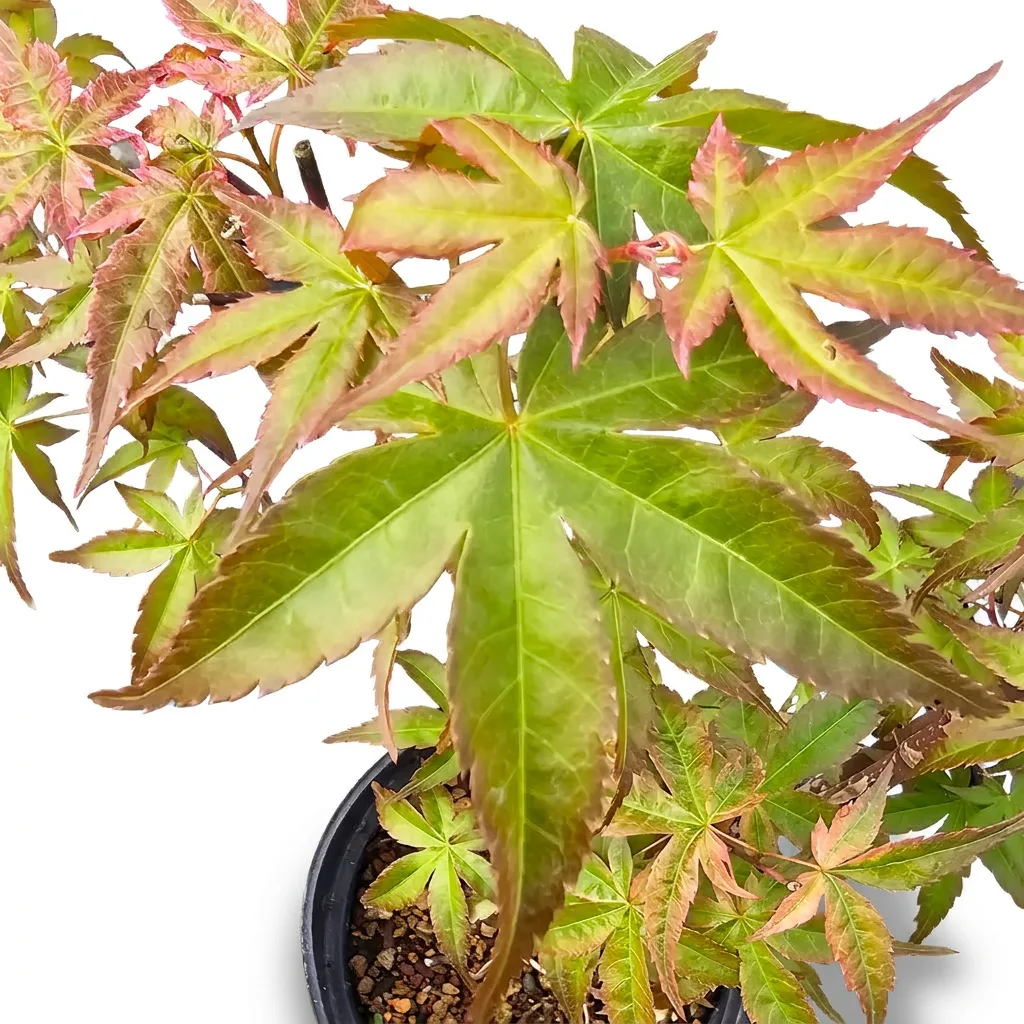
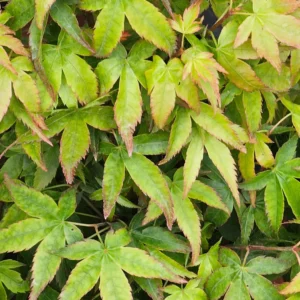
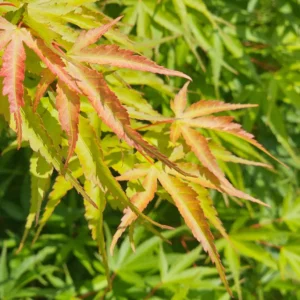
‘Beni Tsukasa’ is a Japanese maple cultivar that shares much of its character with Deshojo — the same red spring flush, the same seasonal drama — but with meaningful differences that make it a distinct choice for bonsai development. The leaves are more slender, the summer green is lighter, and critically, Beni Tsukasa shows much better resistance to powdery mildew, a common issue that can compromise leaf quality in other red cultivars during humid conditions.
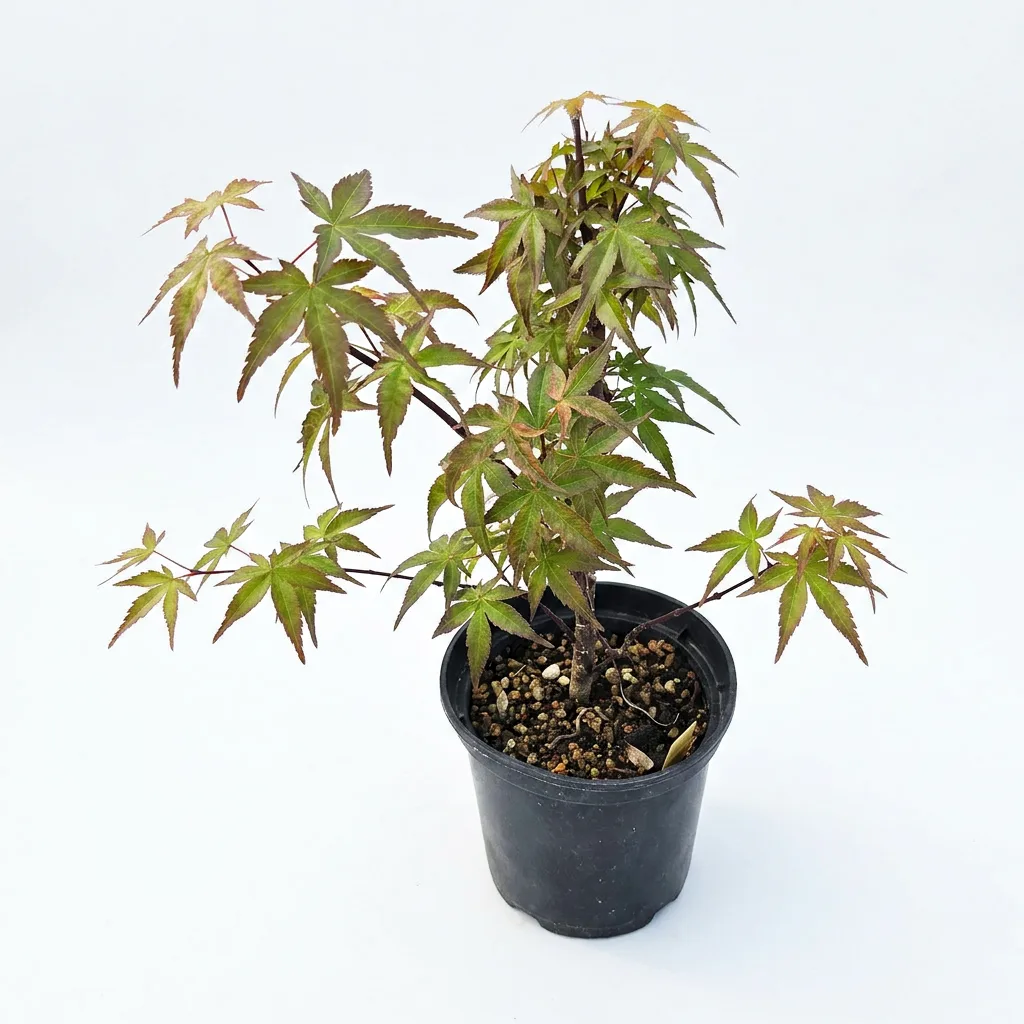
Growth is semi-dwarf and upright with medium pace, medium internodes and medium-sized leaves. In open ground, Beni Tsukasa reaches 2 to 4 metres. For bonsai, this balanced vigour profile sits between the compact dwarfs (Koto Hime, Ori Hime) and the vigorous trunk builders (Deshojo, Arakawa). The medium internode spacing responds well to pruning control, and the semi-dwarf habit means less corrective work during refinement than faster cultivars require.
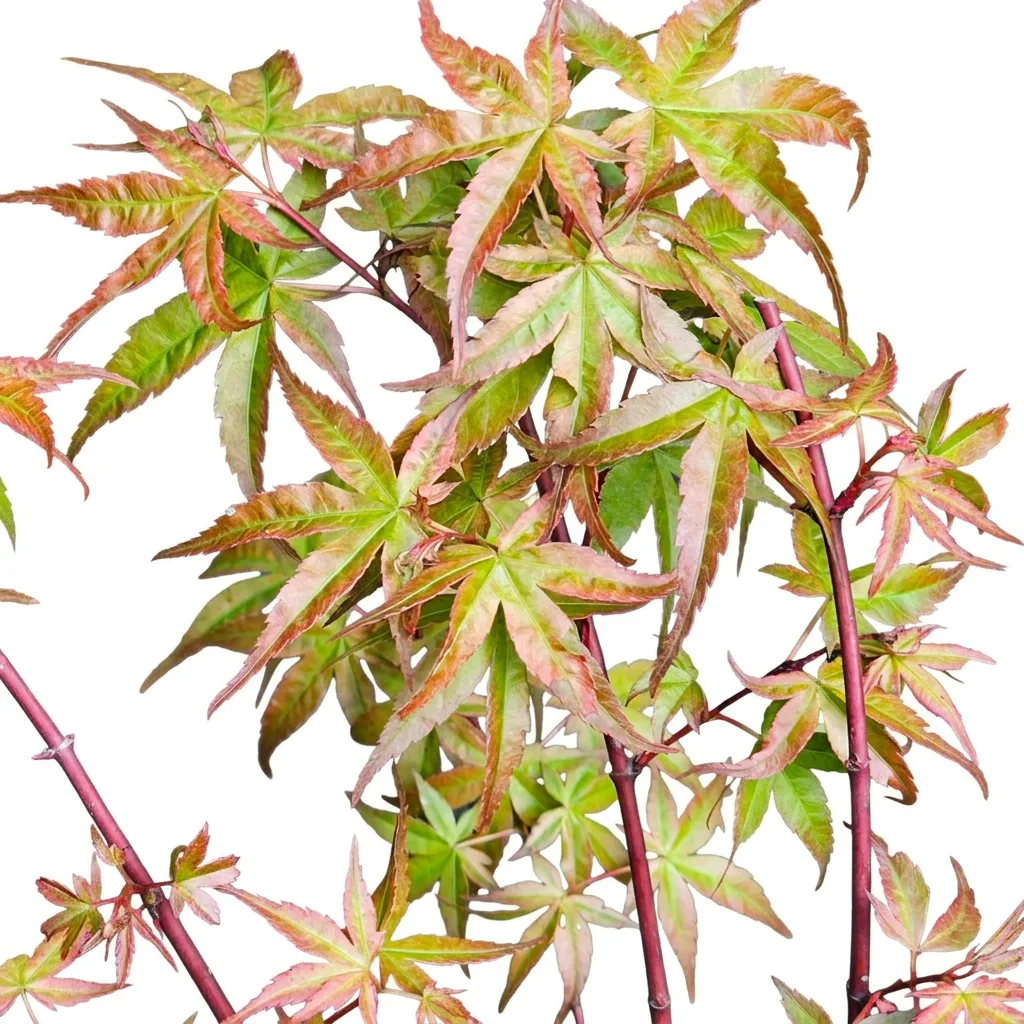
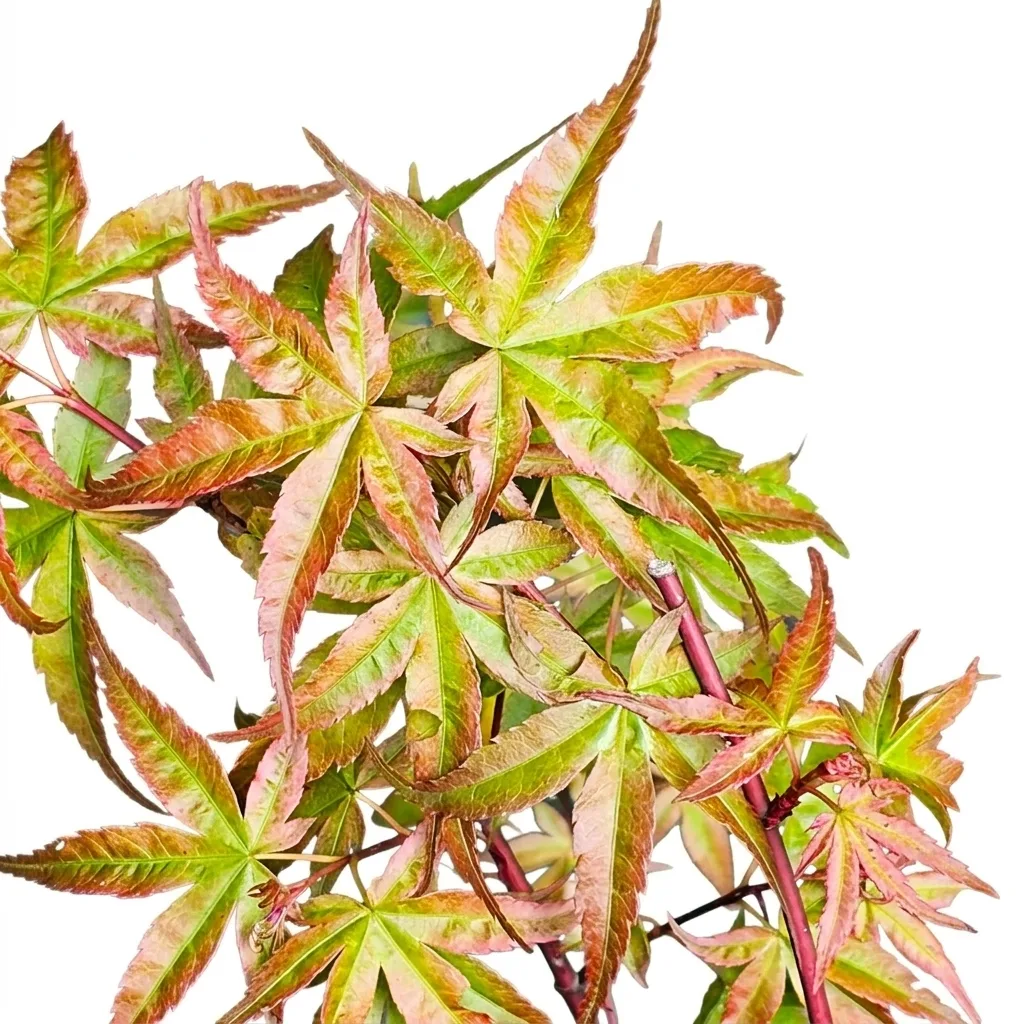
Seasonally, Beni Tsukasa opens with light red leaves carrying pink tones that gradually transition to green through summer, then return as orange to crimson red in autumn. Bark is smooth, displaying green, pink or red tones depending on sun exposure — progressing to grey with maturity. The colour palette mirrors Deshojo but with a lighter, more refined register. For bonsai, informal upright and medium-scale training projects suit it well — particularly for growers who want Deshojo-type colour without the internode management challenges that come with Deshojo’s faster growth. For the full side-by-side, see the complete Deshojo bonsai guide.
Cultivation note: Beni Tsukasa’s mildew resistance is a real practical advantage in humid European climates. Where Deshojo and similar red cultivars can develop white powdery patches on leaves during wet summers, Beni Tsukasa typically stays clean. This means better leaf quality through the season and less need for fungicide intervention. Feed moderately — balanced nutrition supports the colour transitions without pushing excessive extension.
- Deciduous Japanese maple with delicate red-pink spring colour and slender leaf structure — a refined alternative to Deshojo.
- Semi-dwarf upright growth with medium internodes, well suited for balanced structural development.
- Notably better powdery mildew resistance than Deshojo — cleaner foliage through humid European summers.
Why buy from Treevaset
not garden-centre stock.
shipped EU-wide — no customs, no import risk.
cutting-propagated to preserve the cultivar.
Compare Japanese maple cultivars
| Cultivar | Leaf size | Internodes | Growth habit | Spring colour | Bark | Adult size |
|---|---|---|---|---|---|---|
| Orihime | Very small | Short | Dwarf, compact | Light green, bronze margins | Smooth | 1–2m |
| Kotohime | Small | Very short | Dwarf, compact | Green, pink-red margins | Smooth | 1–2m |
| Sei Hime | Small | Short | Dwarf, compact | Yellow-green | Smooth | 1–2m |
| Seigen | Medium | Medium | Semi-dwarf, upright | Red-purple | Smooth | 1–2m |
| Beni Chidori | Medium | Medium | Semi-dwarf, upright | Pink to orange | Smooth | 2–4m |
| Beni Tsukasa | Medium | Medium | Semi-dwarf, upright | Light red, pink tones | Smooth | 2–4m |
| Katsura | Medium | Medium | Upright | Orange to yellow | Smooth | 1–2m |
| Ukon | Medium | Medium | Upright, fast | Emerald green, yellow accents | Smooth | 2–4m |
| Deshojo | Large | Long | Upright, vigorous | Deep red, pink tones | Smooth | 2–4m |
| Allen’s Gold | Large | Long | Upright, vigorous | Golden-chartreuse, pink-red margins | Rough | 3–5m |
| Arakawa | Large | Long | Upright, vigorous | Light green, red margins | Rough (corky) | 3–5m |
Feedback from growers
★★★★★ 4.9/5 · 100+ verified reviews on eBay
Super personal service and wonderful rare Acer varieties. When the courier had delivery problems, Luca was easy to reach and immediately arranged a replacement. Absolute recommendation!
Acer Palmatum CultivarsExtremely happy with my Acer palmatum — it's exactly what I wanted. Serious, kind and competent, with an excellent quality-price ratio. I'll definitely buy again.
Young Pre-BonsaiVery well packaged, a beautiful larch, exactly as described. Clear recommendation.
Outdoor BonsaiEverything perfect — the little plant arrived well packed and healthy, and I used it right away for a root graft.
Young Pre-BonsaiA lovely larch with a beautiful trunk base. Perfect packaging and fast shipping.
Young Pre-BonsaiFAQs
Is Acer palmatum Beni Tsukasa good for bonsai beginners?
What is the difference between Beni Tsukasa and Deshojo?
Why does cutting propagation matter for Beni Tsukasa?
Does Beni Tsukasa really resist powdery mildew better than Deshojo?
Can I grow Beni Tsukasa indoors?
Related products
Related products
-
Bonsai
Flowering Quince Bonsai ‘Chojubai’ (Chaenomeles japonica)
35 € – 125 €Price range: 35 € through 125 € Select options This product has multiple variants. The options may be chosen on the product page