The short answer: a bonsai costs anything from 8 euros to more than a car. At our nursery a two-year-old seedling costs 8 to 12 euros, a complete kit 49, a tree with five years of work in it 85, and a thirty-year-old wild olive 465. At specialist nurseries exhibition trees start at a few hundred euros and run to several thousand; the world record, a Japanese pine several centuries old, went for more than a million dollars.
What I would like to explain here is the why. Between the seedling and the exhibition tree the species does not change, and often the height does not either: what changes is the years of work someone has already done in your place. Once that is clear, choosing what to buy on your budget becomes simple.
What you pay for in a bonsai
The years, and where they were spent
This is the main factor. A bonsai is built in stages that cannot be skipped: roots and a stem in the first years, the trunk line while the wood is still flexible, then thickening, then fine ramification, then the years in a bonsai pot during which the leaves reduce and the bark matures. Each of those stages is a person’s time: watering, feeding, pruning, repotting, deciding. A twenty-year-old tree has twenty years of decisions in it.
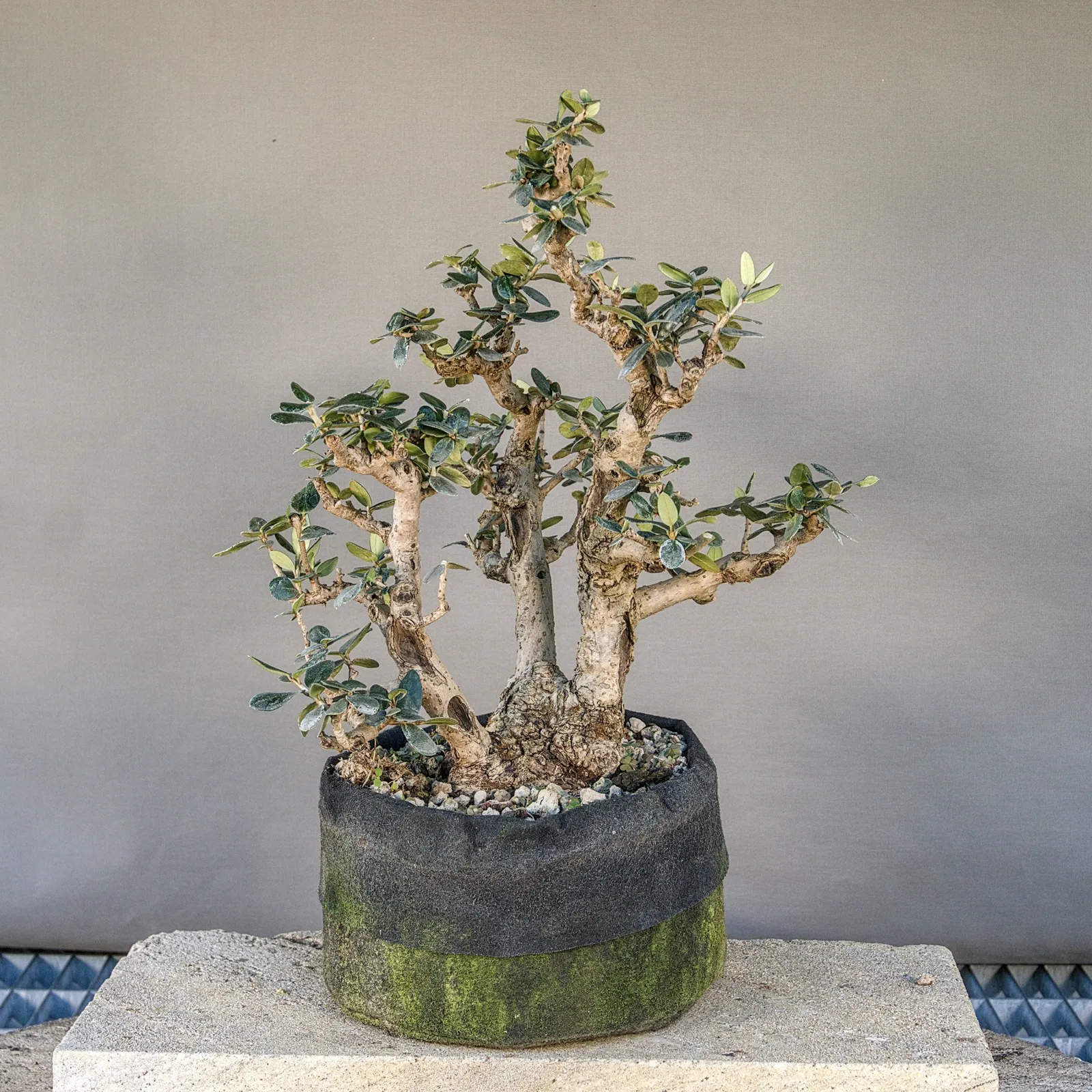
Where it spent those years matters too. A tree grown in the ground thickens fast, but arrives with roots to rebuild and little ramification; a tree kept in a bonsai pot for fifteen years has fine roots, small leaves and a formed base, and that is what you pay for. Our wild olive is about thirty years old, fifteen of them in a pot: the price reflects the fifteen, not the thirty.
The work already done
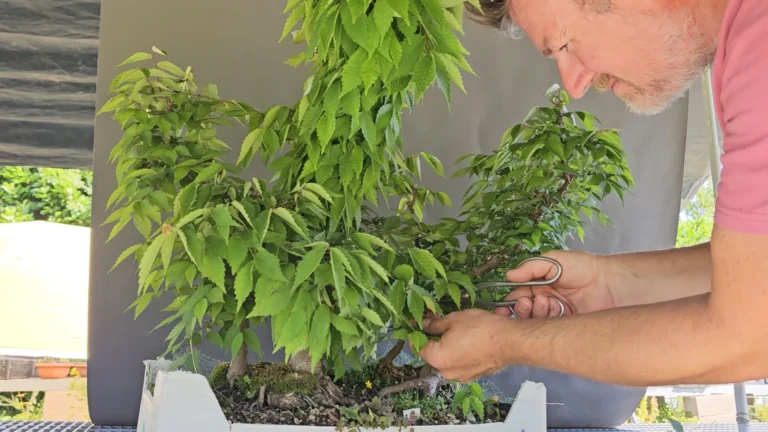
Two trees of the same age can differ in price by a factor of three. What makes the difference is the state of the base (the nebari, the roots spreading at the surface), the trunk line and its taper, the ramification and any worked deadwood. Everything you read in a tree’s description as “already set” is work you will not have to do, and would do worse without experience.
The species
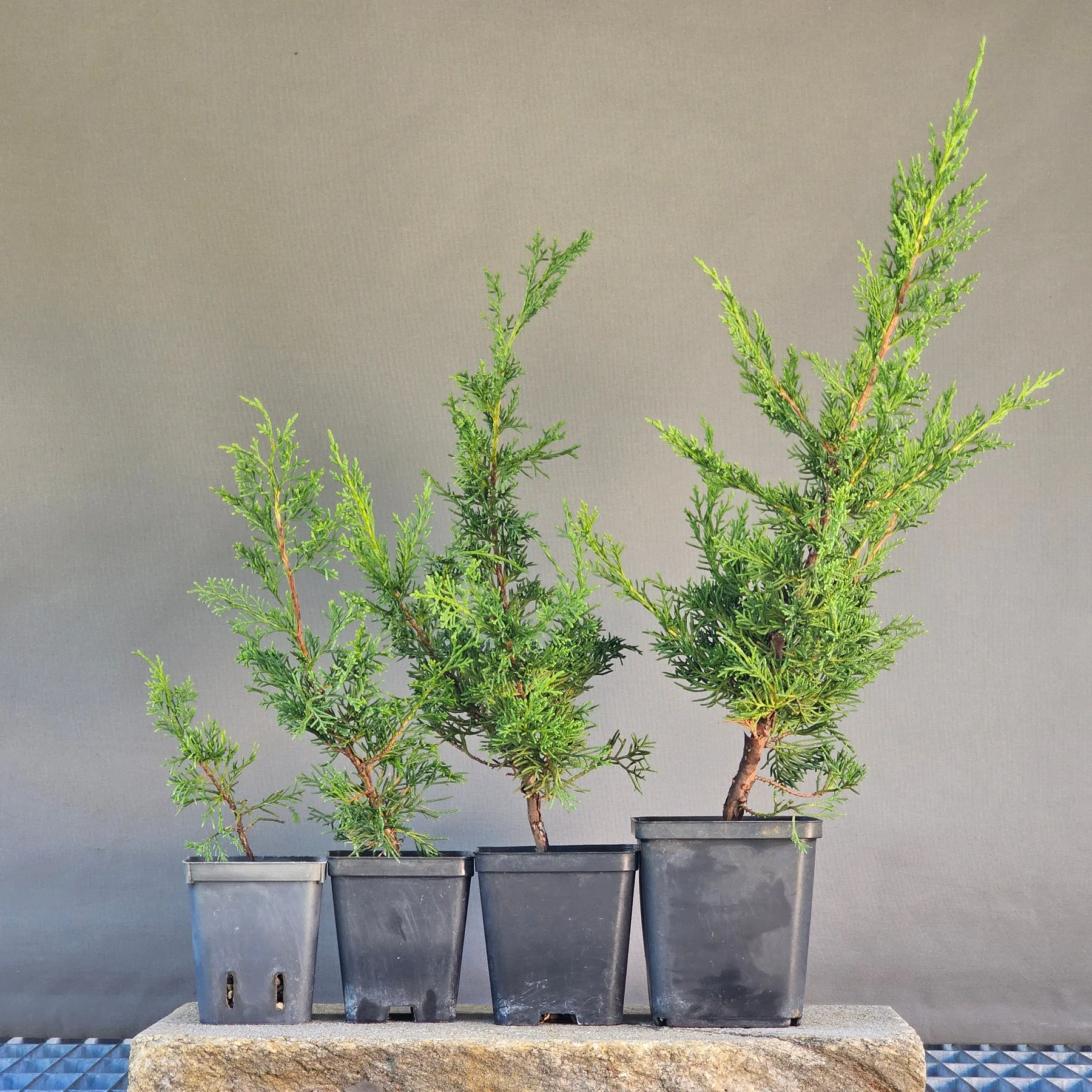
Each species has its own speed. A juniper from a cutting is bent at three years and has a trunk line at five; a yew adds a few millimetres of girth a year, and a trunk with character is bought, not grown. An olive ages early in its bark; a rare Japanese maple cultivar costs more as a young plant because the genetics are rare, not because it is old. For the same number of years, a slow species costs more than a fast one.
The origin
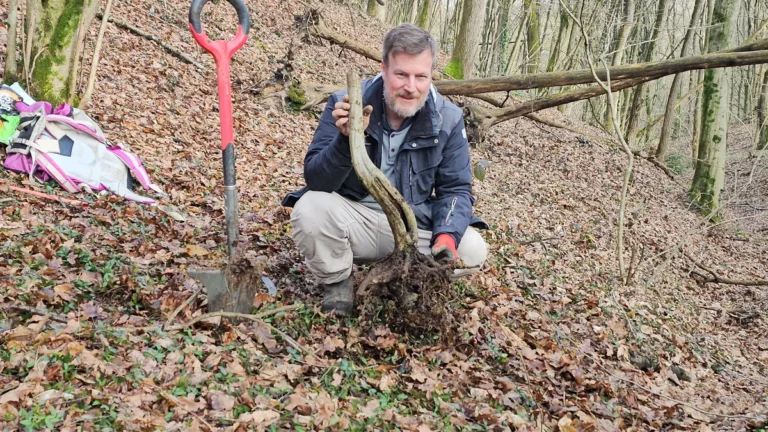
A tree grown from seed or cuttings costs little in its first years because the nursery produces them by the hundred. One collected from the wild, a yamadori, brings a trunk no nursery can produce, plus two or three years of recovery, and is priced accordingly. A tree imported from Japan pays for the journey, the quarantine and the years in a Japanese nursery. None of the three origins is better in itself: they are three prices for three different things.
Size, but not the way you think
Height says little. A bent tree is shorter than a straight one of the same age with the same trunk, and a fifteen-centimetre shohin with twenty years of work costs more than a sixty-centimetre tree grown free. What counts is the ratio of trunk diameter to height, and the fineness of the ramification: things you can see in a photo, if the photo is an honest one.
What does not set the price
A handsome pot does not make a mediocre tree better, even if it makes it look finished. An “indoor bonsai” label on a juniper is a warning sign, not a mark of value: that tree is about to die in a living room. And a stated age with no history and no photos of what the tree looked like before is just a word: on our product pages we write “about” before the years, and when we bought the tree we say from whom and when. Be wary of round numbers with no before.
Prices at our nursery
Our numbers, as a yardstick. These are today’s prices, October 2026, with delivery across Europe included for the trees in training.
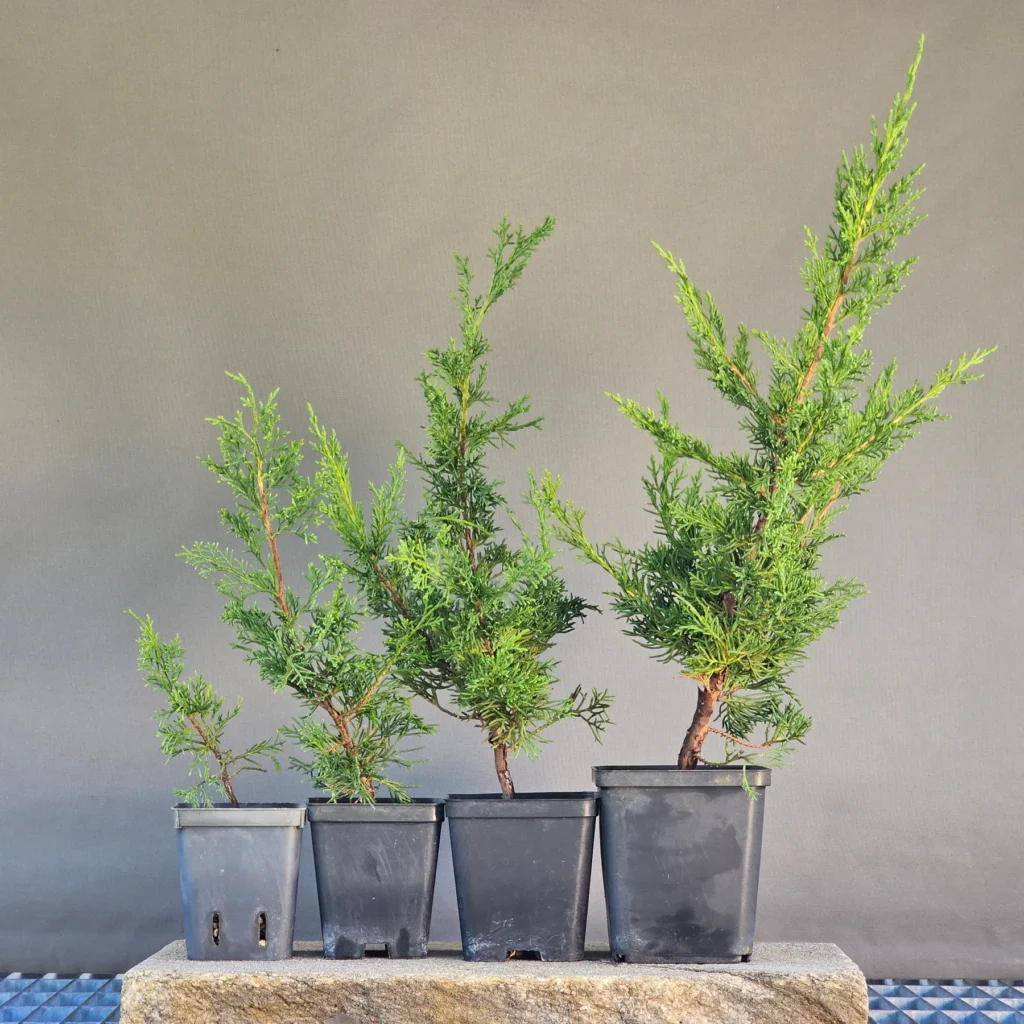
- 8 to 60 euros: young pre-bonsai. Seed- or cutting-grown plants of two to five years, with a straight stem or the first bend already set. The two-year-old juniper costs 12 euros; the same juniper at five years, bent, 33. Rare Japanese maple cultivars sit at the top of the range because the genetics are rare. They are the same plants that, if unsold, become our trees in training.
- 49 euros: the kit. A plant, the pot, the soil, the wire and the instructions: the most direct way to make a first bonsai with your own hands without buying ten things separately.
- 85 to 465 euros: bonsai in training. One of each, with five to thirty years of work in them and the structure already decided. Today: three six-year-old mugo pines between 85 and 105 euros, a twenty-year-old yew with deadwood at 305, a twenty-year-old trident maple over rock at 265, a thirty-year-old wild olive at 465. The work left is refinement, and fine ramification is also the most enjoyable work there is.
Above 500 euros our nursery does not go today: that is the range of the long-established nurseries and of collectors. For a sense of scale, in the “specimen” sections of specialist nurseries in Italy prices start at 160 to 600 euros and the median sits between 1,500 and 3,000; at the top German nurseries the median is above 6,000. Those are trees with thirty, forty, fifty years of work and often an exhibition history.
How much is a twenty-year-old bonsai? And a thirty-year-old?
It is the question Google asks most often, and the plain answer is “it depends on who spent those years and how”. At our nursery a twenty-year-old tree costs between 265 and 305 euros and a thirty-year-old 465, because the years in a pot are between five and fifteen and the structure is done but the refinement is not. A tree of the same age with fifteen years in a bonsai pot, leaves already reduced and a few shows behind it costs four or five times as much, and rightly so. A twenty-year-old tree sold for 60 euros, on the other hand, is almost always a tree grown free in the ground and only just potted: it has the age, not the work.
What to buy on each budget
Under 20 euros. A seedling or a rooted cutting and the patience to grow it. It is the best way to learn: no mistake is expensive and, if the plant dies, you have lost twelve euros and gained a lesson. Our guide to what a pre-bonsai is says what to look at.
30 to 60 euros. A young tree with the first decision already taken, the bend in the trunk, or a complete kit. The difference between a 12-euro tree and a 33-euro one is three years of work: you pay for three years so as not to wait for them.
85 to 500 euros. A tree with its structure done, to be refined. The right choice if you want a bonsai that looks like a bonsai from day one and work that is enjoyable rather than constructive. It is also the range for serious gifts.
Beyond. Collection specimens, from long-established nurseries, with an exhibition past. They are bought in person, after seeing the tree, with someone beside you who can read it.
One rule that holds for every range: do not buy a tree for indoors unless it is a species that can live there. The most expensive bonsai you can buy is the one that dies in the living room, whatever it cost.
Frequently Asked Questions
How much does a bonsai cost to start with?
8 to 50 euros: a two- or three-year-old seedling, or a complete kit with plant, pot, soil and wire. You do not need more to learn the basic techniques.
How much does an olive bonsai cost?
A two- or three-year-old wild olive seedling costs a few tens of euros and is a ten-year project. An olive with a formed base and mature bark costs hundreds: our thirty-year-old is 465 euros. The large garden-centre “bonsai” olives in tubs are a different thing and follow ornamental olive prices. Care is in our olive bonsai guide.
Why are bonsai so expensive?
Because the price is a person’s time. A twenty-year-old tree has twenty years of watering, pruning, repotting and decisions in it, and those stages can be neither hurried nor skipped. The pot, the shipping and the species matter less than the years.
What is the most expensive bonsai in the world?
The reported record is a Japanese pine several centuries old, sold at auction in Japan for more than a million dollars. Collection specimens in Europe move between a few thousand and a few tens of thousands of euros.
Is a cheap bonsai a bad bonsai?
No, if it is a young, healthy plant of an outdoor species: it is a bonsai at the start of its road. It is, if it is a juniper or an olive sold as an “indoor bonsai” in a decorative pot: there you pay for the pot and buy a tree destined to die.
How long does a bonsai live?
As long as its species does in nature, if it is looked after: decades for most broadleaves, centuries for pines, yews and olives. The oldest documented bonsai are several hundred years old and have passed from hand to hand.