A bonsai does not grow in garden soil or in universal compost. It grows in a granular mix that drains in seconds, holds water inside the grains and leaves air between them. This guide explains the mix we use at our nursery in Merate, what each component does, and how to adjust it to your tree: by species, and by the stage the tree is in.
Bonsai soil at a glance
- Base mix
- Mostly mineral: pumice and lava as the bulk, zeolite, a small share of peat
- Akadama
- Optional; for finer roots and a little more moisture, as in maples
- Adjust for
- The species (thirsty or dry-loving) and the stage (building or refining)
- Grain size
- Roughly 2 to 6 mm, with the dust sieved out
- When to change it
- At repotting, when the tree needs it, not by calendar
- Avoid
- Universal compost or garden soil on their own
The short answer
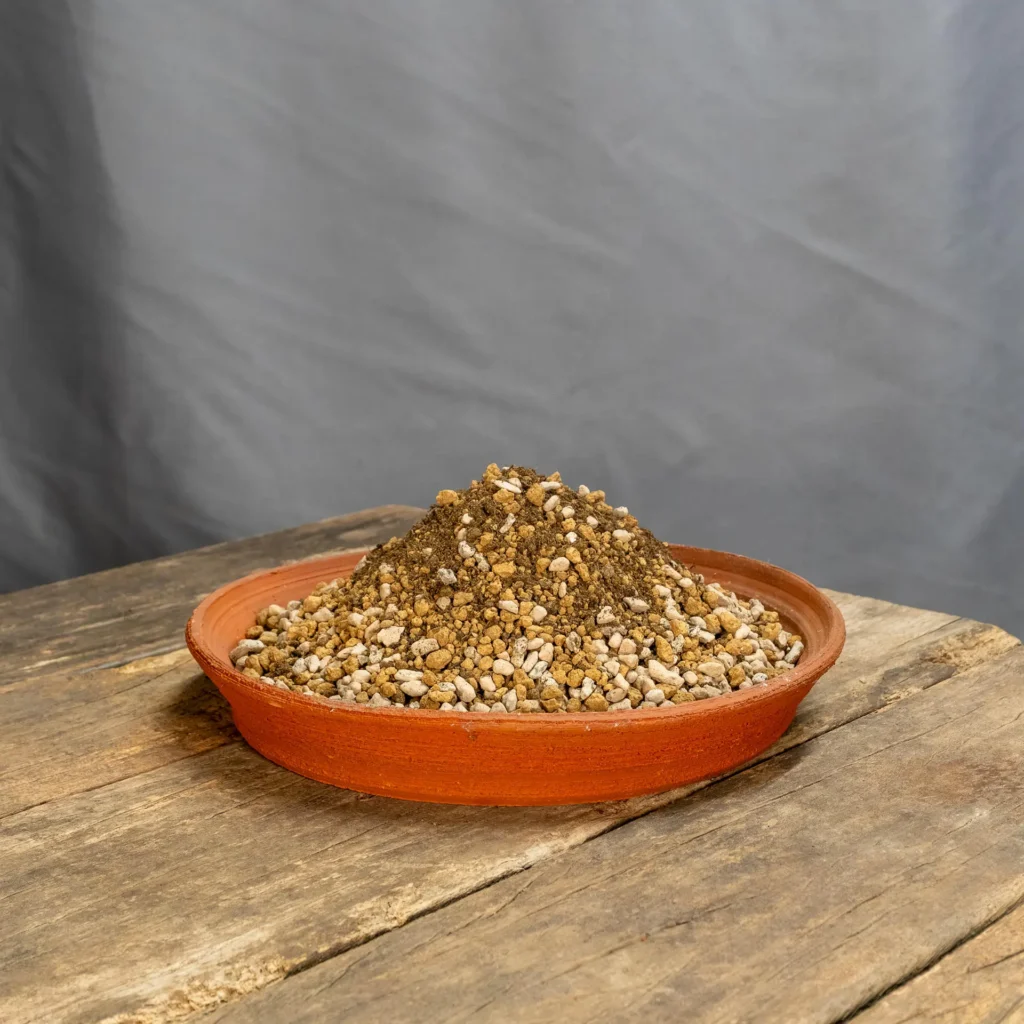
For young trees, our nursery mix is mostly mineral: pumice and lava make up the bulk, with zeolite and a small share of peat. From there you adjust. Thirsty species get a little more water-holding material, pines and junipers get more drainage, and once a tree moves from building to refining, the mix gets leaner and more mineral.
There is no single best bonsai soil. There is a good base, and a few reasons to move away from it.
Why normal potting soil fails in a bonsai pot
A bonsai pot is shallow. Fine, peaty compost stays wet at the bottom, compacts within a season and pushes the air out, and roots without air rot. When the same compost dries out it turns water-repellent: water runs off the surface instead of soaking in, which is one of the signs in our repotting guide that a tree needs repotting.
A granular mix keeps its structure. Each watering flows through, pushes stale air out of the gaps and pulls fresh air in behind it, while the grains themselves stay moist. That combination of water and air is what a bonsai substrate is for.
What goes into bonsai soil
Pumice
Light, porous volcanic stone. It holds water inside the grain, drains freely between grains and does not break down over time. In a lean mix for a tree in refinement, pumice is the main ingredient.
Lava rock
Heavier and rougher than pumice. It gives the mix structure and weight, which helps keep a tree stable in the pot, and it drains fast while holding less water.
Zeolite
A mineral that holds water and nutrients and releases them slowly. It is part of our usual nursery mix and of the lean mix we use on trees in refinement.
Peat and pine bark
The organic share. A small amount keeps more water in the mix and lowers the pH slightly, which maples and yew appreciate. In our nursery mix it is peat; for yew, pine bark works too. Keep it small: the more organic matter, the closer the mix gets to compost.
Akadama
Fired Japanese clay granules. Roots branch very finely in it and it holds water well. It also changes colour as it dries, so you can see when to water. We use it where we want fine roots and a little more moisture: in maples, on top of a nebari plate, around a weakened base, and as our preferred substrate for air layers. It slowly breaks down into fine particles over two or three years, which is one more reason to repot.
Sphagnum moss
Not a potting mix. It is used for air layers and packed around fresh root cuts to encourage new roots, as in our olive repotting.
Match the mix to the stage, not only to the species
This is the decision most guides skip. A young tree that is being built needs vigour: a bit more water and organic matter, so it grows fast and thickens. A tree in refinement needs restraint: a lean, airy, mostly mineral mix, so the shoots stay short and the roots stay fine.
From the nursery “On a tree this far along I add a lot of pumice, zeolite and a little akadama, with very little peat: I do not want vigorous shoots, I want roots that breathe.” Luca, on a wild olive in refinement
Every young pre-bonsai we ship is in the building stage. At its first repotting with you, the nursery mix described above is the right one. The seedlings in our nebari project went into the same mix.
Bonsai soil by species
Start from the nursery mix and adjust as below. Each species name links to its full care guide.
| Species | Mix | Why |
|---|---|---|
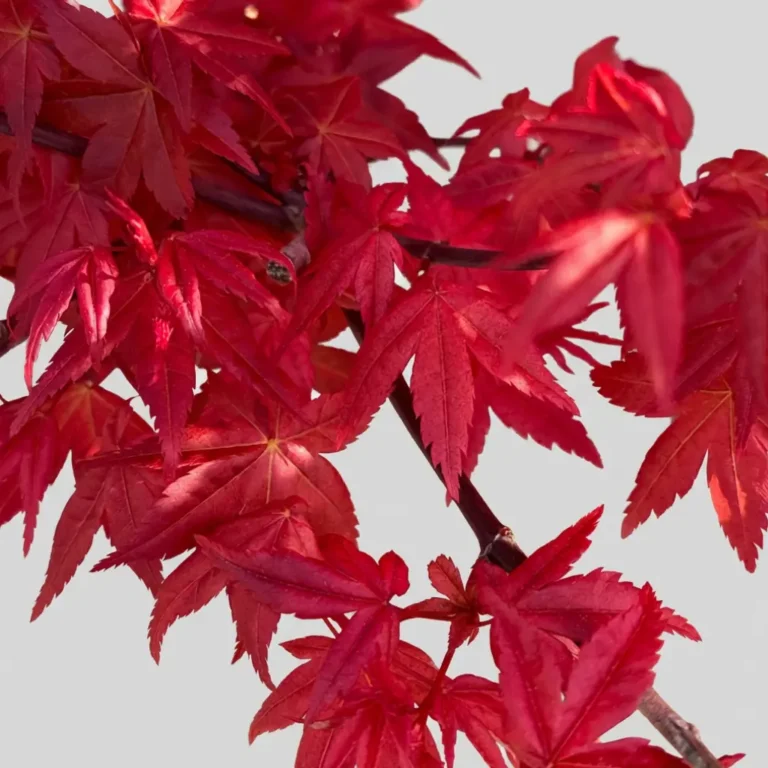
| Japanese maple (incl. Deshojo) | Nursery mix with akadama; slightly acidic, pH 5.5 to 6.5 | Fine roots; maples dislike both drought and standing water |
| Trident maple | Nursery mix with akadama | Fine roots for the nebari |
| Field elm | Nursery mix | Tolerant, no special needs |
| Privet | Nursery mix | Tolerant, no special needs |
| Hawthorn | Nursery mix | Tolerant, no special needs |
| Crepe myrtle | Nursery mix | Tolerant, no special needs |
| Japanese quince | Nursery mix | Tolerant, no special needs |
| Olive | Nursery mix, leaner; in refinement mostly pumice, lava and zeolite, a little akadama, minimal peat | Copes even with alkaline soil; what it resents is suffocation |
| Scots pine | Nursery mix with less peat, more pumice and lava | Pines want the mix to dry a little between waterings |
| Mugo pine | Nursery mix with less peat, more pumice and lava | Pines want the mix to dry a little between waterings |
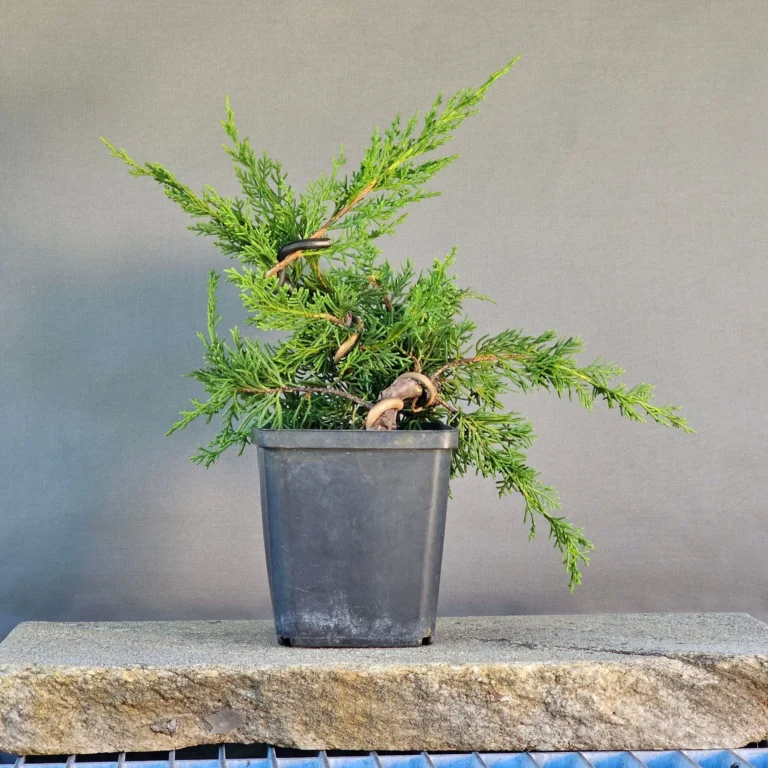
| Junipers (Kishu, Itoigawa) | Nursery mix with less peat and a little more lava | They forgive a dry spell, not wet roots |
| Norway spruce | Nursery mix | Even moisture, good drainage |
| Larch | Nursery mix; it can hold a little more water | Likes steady moisture |
| Dawn redwood | Nursery mix with more akadama or peat | Thirsty in summer |
| Bald cypress | Nursery mix with more akadama or peat | A tree of wet ground; the mix should hold moisture without staying soggy |
| Yew | Nursery mix, organic share as peat or pine bark | Likes slightly acidic soil |
How to make bonsai soil yourself
- Sieve every component. Throw away the dust and anything finer than about 2 mm: dust fills the gaps the air needs. For young trees in small pots, grains of roughly 2 to 6 mm work well; larger pots take slightly larger grains.
- Mix it dry. Pumice, lava and zeolite as the bulk, a small share of peat, akadama where the species calls for it.
- Moisten it lightly before repotting, so it settles around the roots instead of running off them.
If you buy a ready-made bonsai soil, open the bag and look: it should be granular. If it looks like compost, it will behave like compost.
Frequently Asked Questions
What is the best soil for bonsai?
There is no single best mix. A mostly mineral base (pumice, lava and zeolite with a small share of peat) suits most young trees; you adjust it for the species and for the stage of the tree.
Can I use universal potting compost for a bonsai?
Not on its own. In a shallow pot it compacts, stays wet at the bottom and pushes out the air the roots need.
Do I need akadama?
No. Our nursery mix for young trees works without it. Add it where you want finer roots and a little more moisture, as with maples.
How often should I change bonsai soil?
When the tree tells you, not by calendar: water that no longer soaks in, roots circling the pot, soil rising above the rim. Young, fast-growing trees need it more often than mature ones.
Which soil mix for a pine or a juniper?
The nursery mix with less peat and more pumice and lava, so it dries a little between waterings. Both tolerate a short dry spell far better than wet roots.